
Last updated September 20, 2026
Full 25-point door and opener safety check with every visit - springs, cables, rollers, tracks, and your LiftMaster or Chamberlain opener included
You get a price before we start. It does not change when the truck arrives.
LiftMaster openers
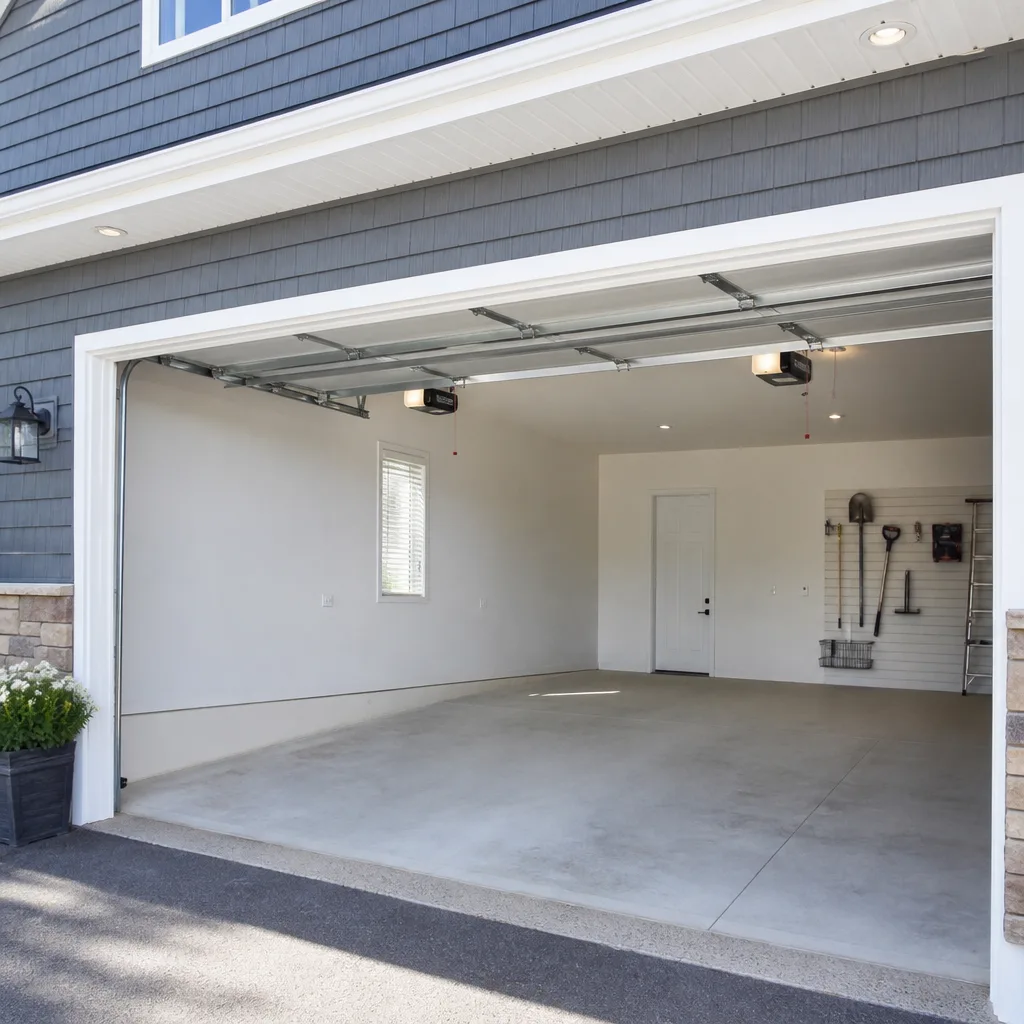
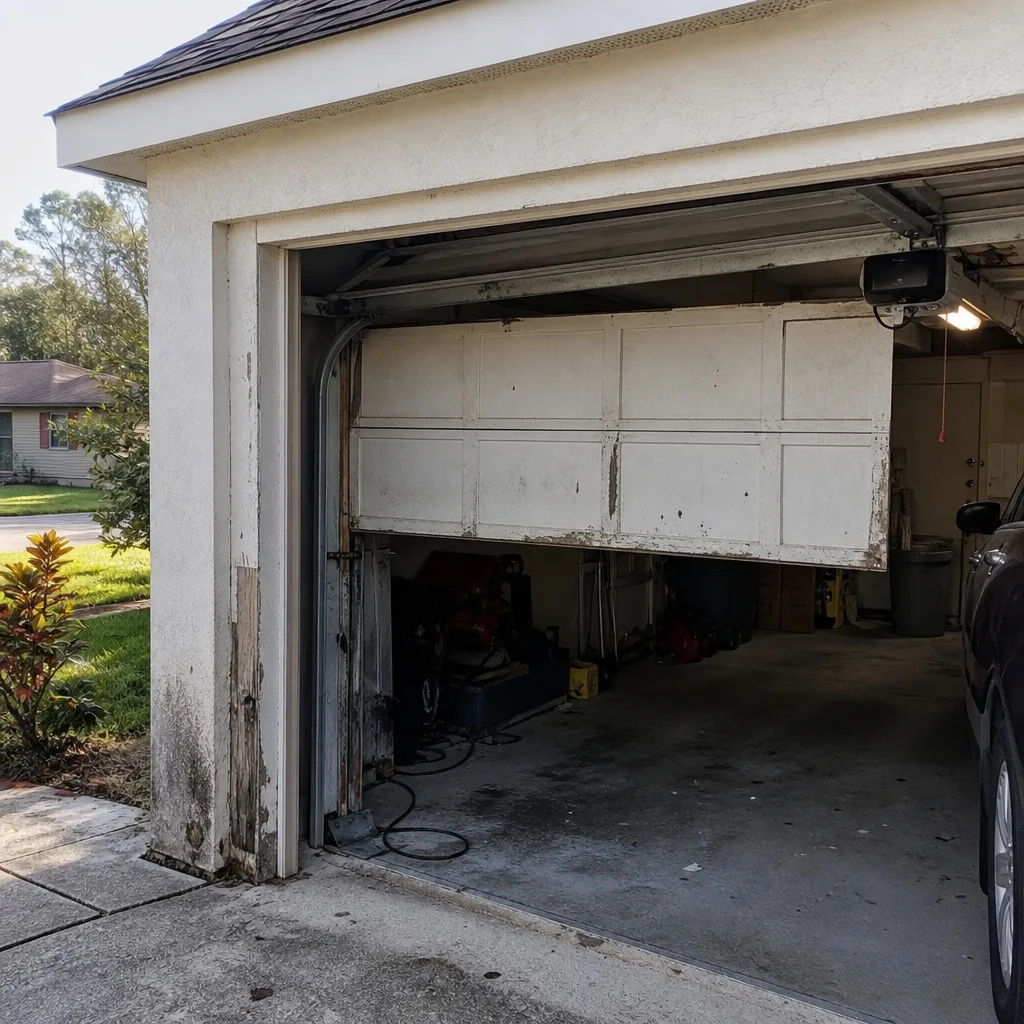 Before
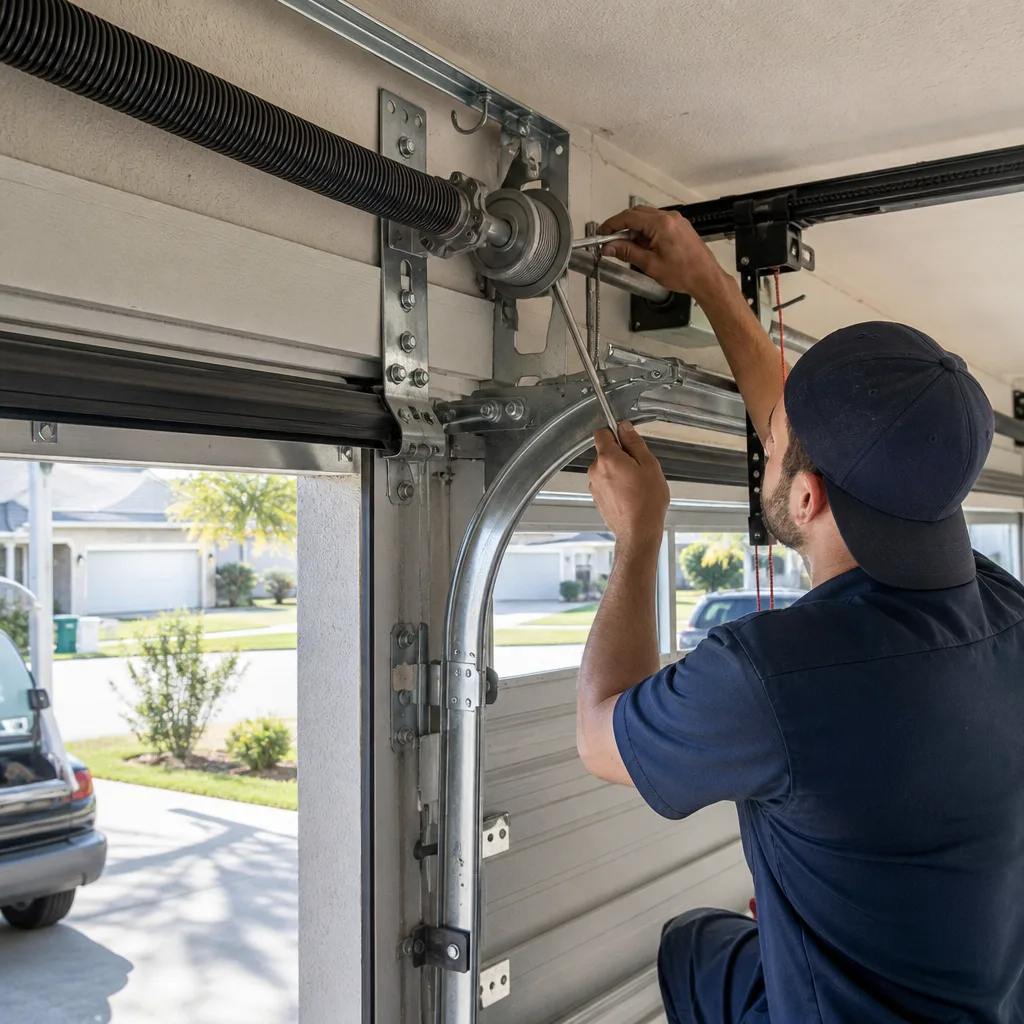 After
After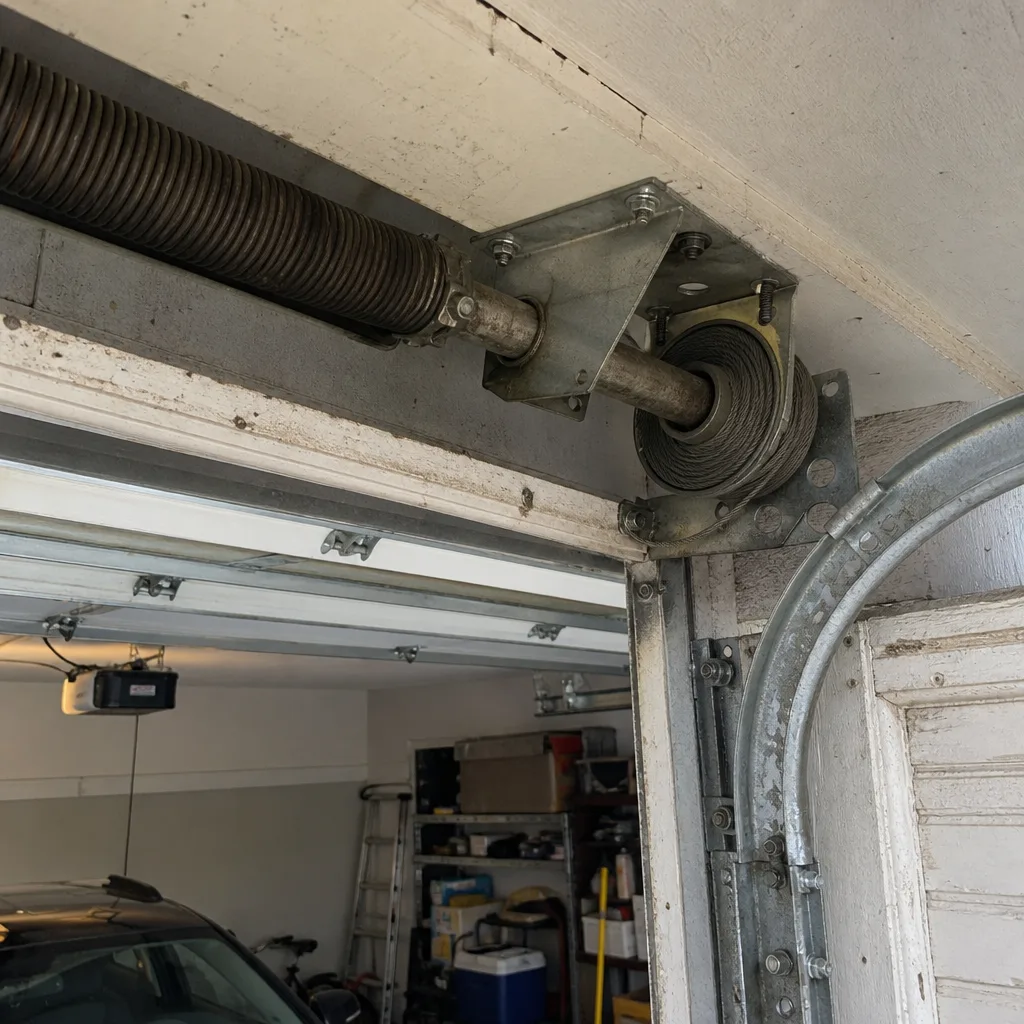 Before
 After
After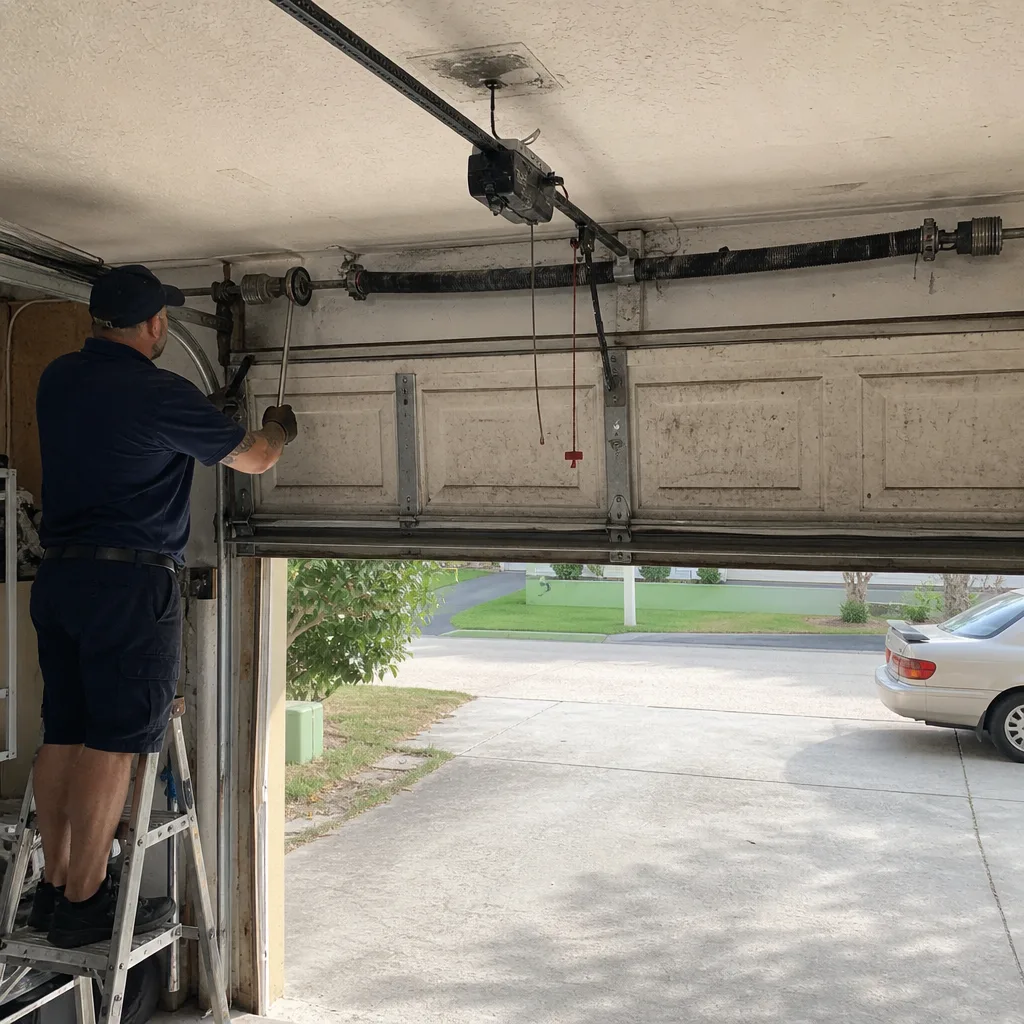 Before
 After
AfterThe Complete Guide to Garage Door in Clermont
A standard two-car garage door system in Clermont contains roughly 47 moving and load-bearing parts. Most service calls involve exactly one of them - and most overcharges happen because the homeowner couldn’t name which one. This guide maps all seven components, what failure looks like in Clermont’s specific climate, and the documented price range for each category before any contractor steps onto your driveway. For a broader look at budgeting, see our Garage Door Cost Breakdown: The Clermont Homeowner’s Reference for 2026. You’ll learn how to read an invoice, what questions to ask, and why a photographed part - not a sales pitch - is the dividing line between a repair and an upsell.
Quick Answer
A garage door is not one product. It is a system of seven interdependent components: springs, cables, tracks, rollers, panels, the opener, and weatherseal. In Clermont, most repairs involve one of two parts - a torsion spring (which fails from fatigue) or a trolley carriage (which wears from daily cycling) - and both should be quoted in writing, with the failed part photographed, before any work begins.
Table of Contents
- The Seven Components: What Actually Moves When the Door Opens
- Springs: The Load-Bearing Core and Clermont’s Biggest Failure Point
- Cables and Tracks: What Keeps the System in Line
- Rollers and Panels: Wear Parts and Cosmetic Loads
- The Opener: Motor, Logic Board, and Why “Openers Are All the Same” Is False
- Weatherseal: The Part Clermont Humidity Destroys First
- How to Read a Garage Door Service Invoice in Clermont
- What a Photographed-Before-Quoted Repair Looks Like
- Documented Price Corridor: Clermont and Lake County Baseline
- Common Mistakes to Avoid
- When to Call a Professional
- Frequently Asked Questions
- The Bottom Line
BeforeAfterThe Seven Components: What Actually Moves When the Door Opens
When you press the wall button, you set off a chain of maybe five mechanical events in under two seconds. The opener’s motor spins. The trolley carriage slides along a rail. The arm pulls the door’s top section. The door itself rolls up the tracks on rollers. And the entire weight of the door - 150 to 300 pounds for a typical Clermont two-car setup - is counterbalanced by springs under enormous tension. Each of those events depends on a specific component. When one fails, it rarely takes the others with it. That is the core distinction this guide teaches: a garage door fails component by component, not as a unit.
In our experience across Clermont, the average service call involves one failed part and three or four that are fine. The problem is that condensed sales training, not mechanical necessity, turns “one failed part” into “replace the whole system.” Knowing the seven components by name is the single most effective defense against that.
Here are the seven components, in order of how often we replace them in Clermont:
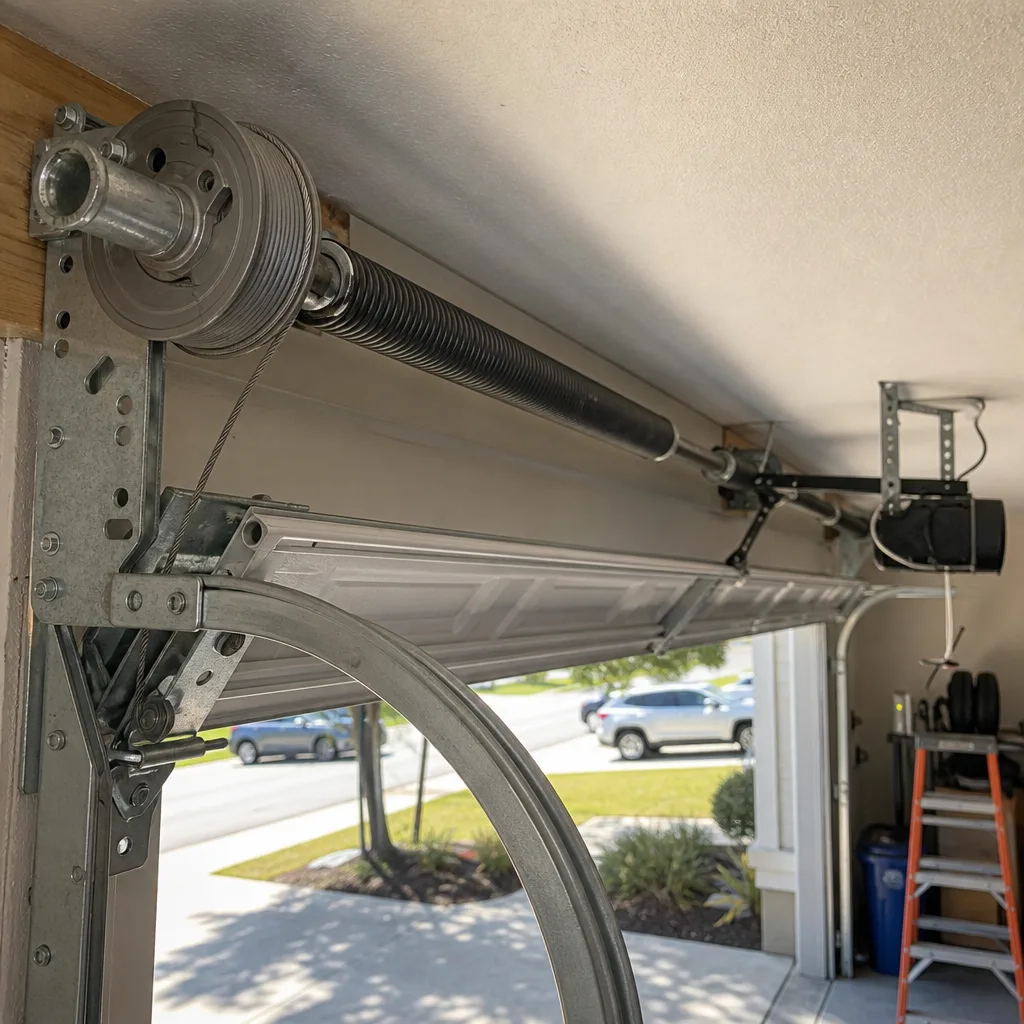
- Torsion springs - the counterbalance system mounted on a bar above the door opening. They carry the door’s full weight every cycle.
- Rollers - the wheels that carry the door along the tracks. Nylon rollers wear quieter; steel rollers last longer in humid air but are noisier.
- Cables - galvanized steel lines that transfer spring tension to the bottom of the door. They can fray, kink, or snap when a spring fails first.
- Tracks - vertical and horizontal steel channels that guide the door. In Clermont, the concern is corrosion at the base where standing water collects after storms.
- Panels - the visible sections of the door, typically steel or aluminum with an insulating core. Dents and rust are the usual calls.
- The opener - the motor unit, the logic board, the rail, the trolley carriage, and the safety sensors. Multiple failure points in one housing.
- Weatherseal - the rubber or vinyl strip along the bottom and sides. It perishes in Clermont’s humidity and is the cheapest fix in the system.
Once you can name these seven parts, you are already ahead of most homeowners in Lake County. The rest of this guide walks through each one: what it does, what failure looks like, and what it should cost in Clermont.
Springs: The Load-Bearing Core and Clermont’s Biggest Failure Point
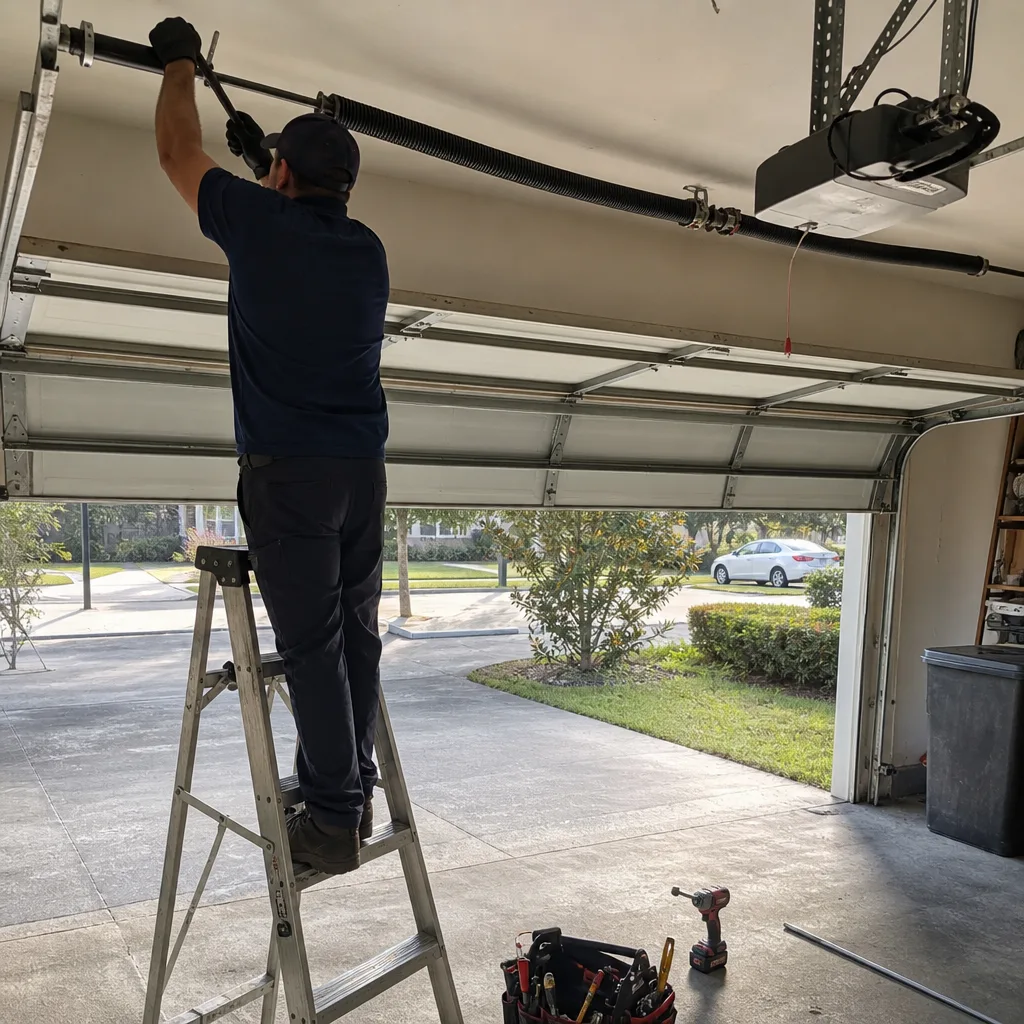
Torsion springs do one job: they hold the door’s weight so the motor only has to overcome inertia. A door that weighs 200 pounds, without a spring, would rip a standard opener off its mounting bracket. The spring is wound under tension - typically 7 to 8 full turns for a Clermont two-car door - and that tension is released and re-applied every time the door cycles.
Here is what Clermont homeowners should know: heat and humidity accelerate spring fatigue. Metals expand and contract with temperature swings, and Clermont’s summer cycles - 90-plus degrees in the afternoon, cooling into the 70s at night, with dew points that keep the air saturated - put micro-stress on the coil every single day. National manufacturers rate torsion springs for 10,000 cycles, which translates to roughly 7 to 8 years of typical use. In Clermont’s climate, we regularly see springs fail at the 5-to-6-year mark.
The telltale sign of a spring failure is not subtle. The door feels suddenly heavy when you try to lift it manually, or the opener strains and trips its force limiter. When you look above the door opening, you will see a visible break in the coil - a clean, often shiny separation. That is the fatigue point. A spring does not “wear out” gradually in a visible way; it breaks. What it looks like before the break is invisible to the eye, which is why age and cycle count matter more than appearance.
One more point, and it is the one that matters most for safety: a torsion spring under tension is the most dangerous component in your home’s mechanical system. The energy stored in a wound spring can release instantly and cause severe injury. Never attempt to remove, adjust, or “unwind” a torsion spring yourself. The tooling is specialized, the risk is real, and the cost of a professional repair - with the failed spring photographed before replacement and the work completed under a written scope - is far lower than the cost of a hospital visit. If you’re weighing whether to tackle any repair yourself, our DIY vs Professional Garage Door: The Clermont Homeowner’s Decision Guide covers how to decide safely.
Cables and Tracks: What Keeps the System in Line
The cables are lift cables: galvanized aircraft-wire grade steel, typically 1/8 inch or 3/32 inch diameter depending on the door weight. They attach at the bottom corners of the door and run up to the spring assembly. Their job is to transfer the spring’s counterbalance force to the door itself, so the door lifts evenly on both sides.
When a torsion spring breaks, the cable on the broken side often goes with it. The sudden release of tension causes the cable to snap or unwind from the drum, leaving it tangled at the top of the track. That is why a broken spring repair in Clermont typically includes cable inspection and, about half the time, cable replacement on the affected side. It is also why a reputable technician will look at both cables before quoting anything.
In Clermont, the specific concern with cables is corrosion at the bottom bracket. The point where the cable attaches to the door sits low, close to the concrete floor. After heavy summer rain, runoff from the driveway can pool at the base of the door, and that moisture wicks up the cable. We see bottom-bracket rust on doors that are otherwise in good shape. It is worth checking twice a year - look for white or orange crust at the cable’s anchor point.
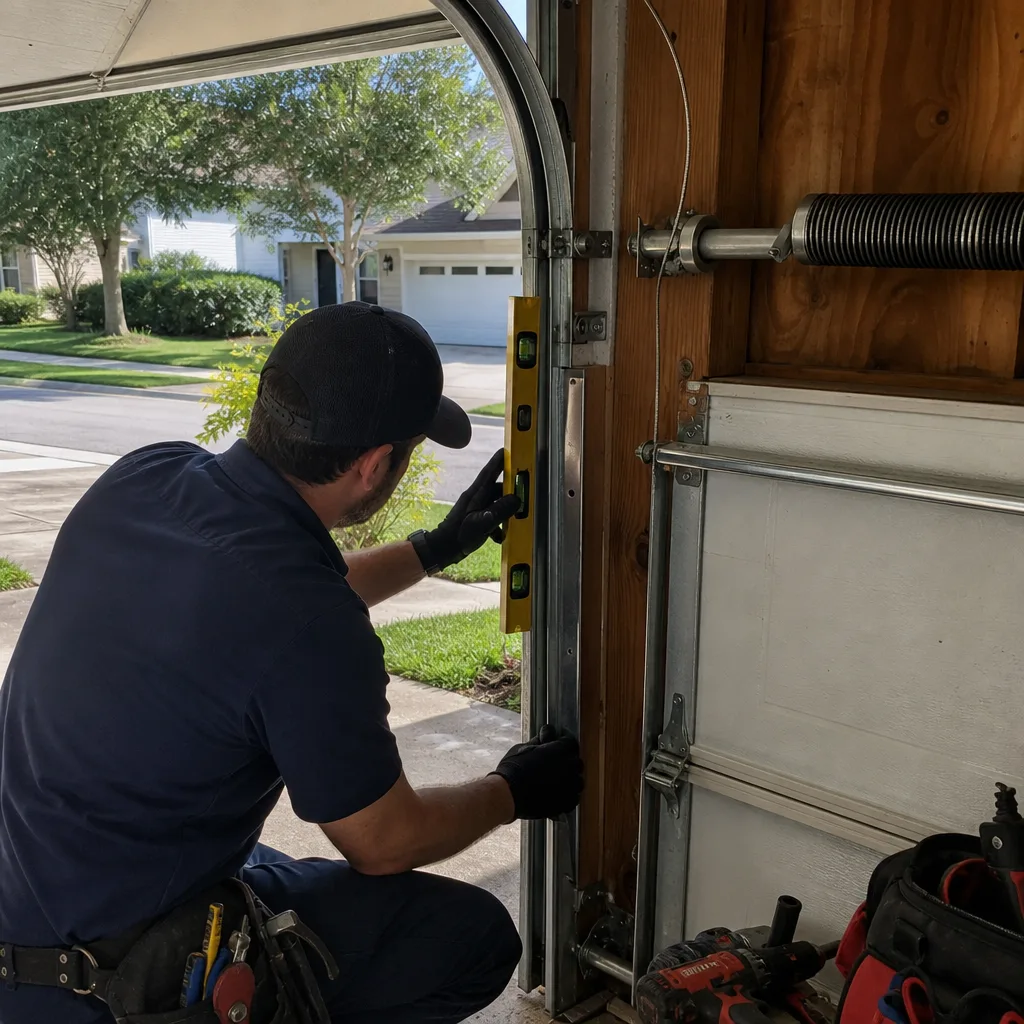
Tracks are the dumbest component - steel channels with no moving parts - but they matter because everything measures off them. A door that rumbles or scrapes is often rubbing against a track that has been knocked out of vertical by a car bumper or a yard tool. In Clermont garages, which double as storage space, we see more track damage from bicycles and ladders than from door operation itself.
Track replacement is rarely needed. Most track problems are alignment problems, and alignment is a correction, not a replacement. If a quote calls for new tracks, ask to see the bend or the damage before you approve anything.
Rollers and Panels: Wear Parts and Cosmetic Loads
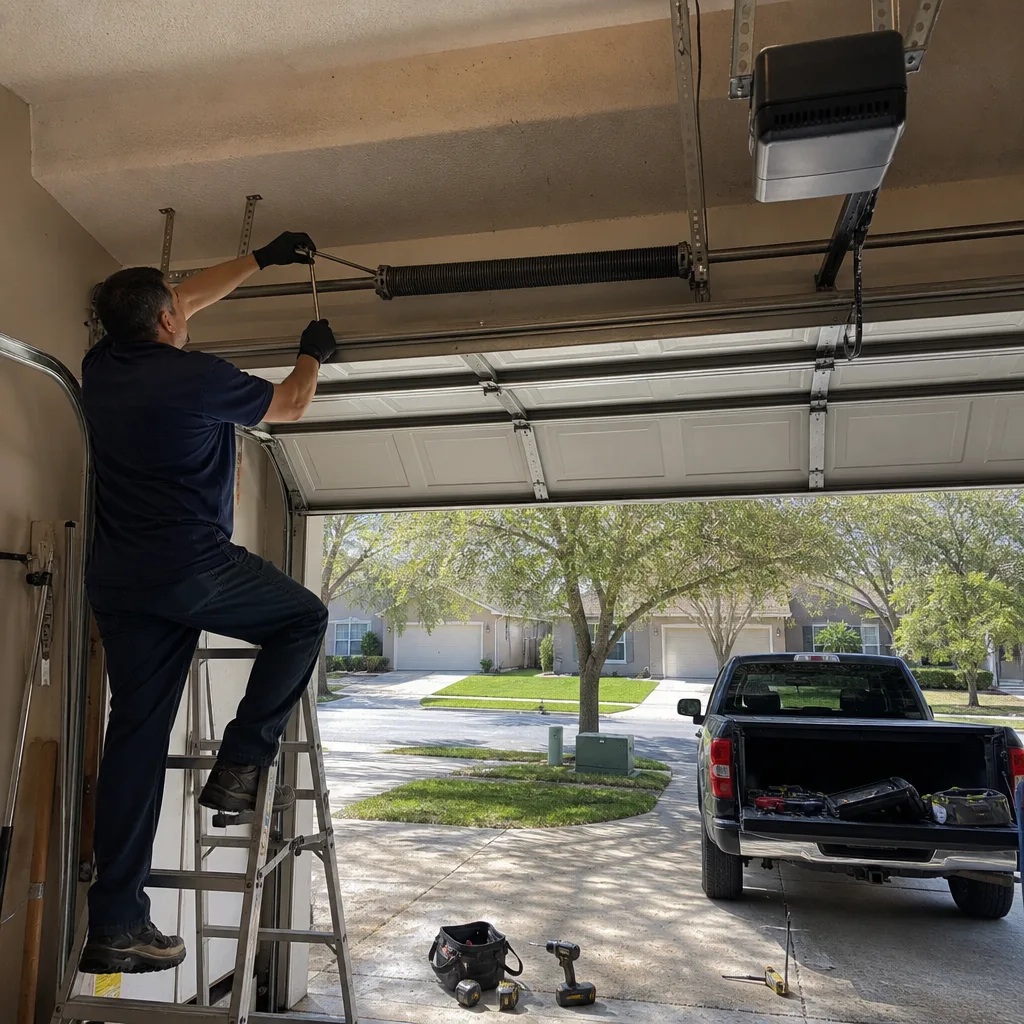
Rollers are the small wheels mounted on hinges and stems that run inside the track. A standard Clermont two-car garage door has between 10 and 12 rollers. They are rated by cycle life: steel rollers with unsealed bearings run 5,000 to 7,000 cycles; nylon rollers with sealed bearings run 10,000 to 15,000. In Clermont humidity, nylon is the better choice - it doesn’t corrode, and the sealed bearings stay greased longer.
You’ll know a roller is failing before you see it. A door that sounds like a shopping cart with a bad wheel, or one that jerks slightly at the same point in every cycle, is telling you a roller bearing has gone dry or seized. Replacing a single roller is not expensive. Replacing all twelve at once is usually unnecessary - but some service companies will recommend it anyway because it inflates the ticket.
Our position, for what it’s worth: if one roller is seized, inspect the rest. Replace what’s worn. Photograph what you found. And leave the good ones alone.
Panels are the section faces. They are the largest visible component and the most commonly misdiagnosed as “the problem” when something else is wrong. A dented panel does not make a door heavy. A rusted panel does not cause a spring to break. What panels do affect is insulation, weather resistance, and street appeal - and in Clermont, where HOA standards are common in communities like Kings Ridge and Legends, a damaged panel can become an enforcement issue.
Individual panel replacement is possible on most doors. A full door replacement is only warranted when the panel damage is structural - cracked through, or warped to the point that the door no longer seals - or when the door is old enough that matching a new panel is impossible. Ask to see the panel’s condition and the match option before approving either route.
The Opener: Motor, Logic Board, and Why “Openers Are All the Same” Is False
The garage door opener is a small machine, not a single part. Inside the housing you have a motor, a logic board, a capacitor, limit switches, and in modern units a wireless receiver. Outside the housing you have a rail, a trolley carriage, a belt or chain, a curved door arm, and two safety sensors. Failure in any one of these produces a distinct symptom.
The two failure points that dominate Clermont service calls are the logic board and the trolley carriage. Logic boards fail from power surges - and Clermont’s summer thunderstorm season is a reliable trigger. A board that has failed typically presents as a dead opener: no response to the wall button, the remote, or the keypad. The board is replaceable, and on LiftMaster and Chamberlain openers the board swap is a common, straightforward repair that costs far less than a full opener replacement.
The trolley carriage is the shuttle that moves along the rail, pulling the door arm. It is, mechanically speaking, the hardest-working part of the opener - it cycles every time the door moves. When a carriage strips or the internal gear shears, the motor still runs but the door doesn’t move. That is the diagnostic difference: a motor that hums and runs while the door stays still points to the carriage.
Where Clermont homeowners get pressured is the “full opener replacement” pitch the moment a single component fails. A logic board is not an opener. A carriage is not an opener. On modern Chamberlain and LiftMaster units, most components are individually serviceable. The question to ask is always: “Which part failed, and can that part be replaced?” If the answer is vague or the explanation jumps straight to “new unit,” get a second read.
Weatherseal: The Part Clermont Humidity Destroys First
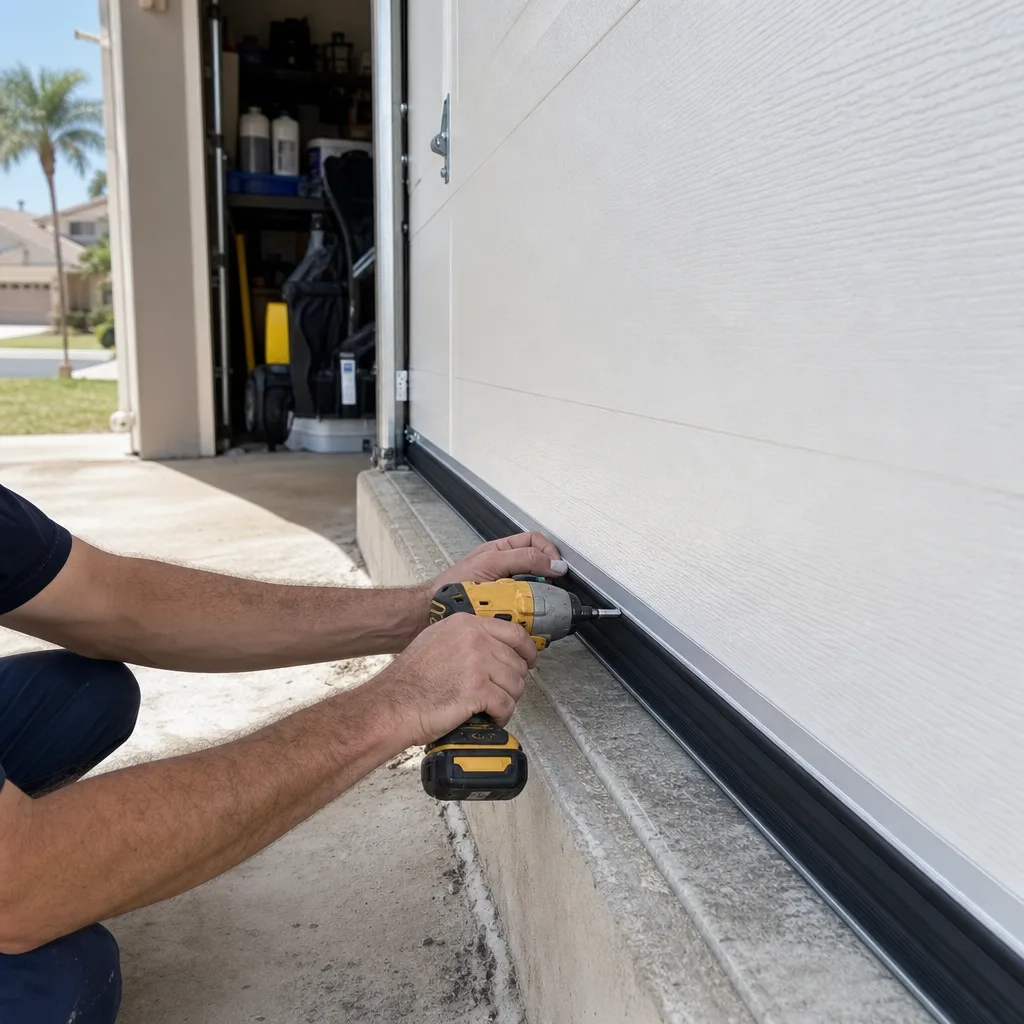
The weatherseal is the rubber or vinyl strip that runs along the bottom of the door and, on some doors, along the sides and top. Its job is not cosmetic - it blocks water, keeps out insects and rodents, and slows air exchange. In Clermont, where afternoon storms can dump an inch of rain in twenty minutes and summer humidity hovers near saturation, the bottom seal is the first component in the system to fail.
Rubber perishes in this climate. Ultraviolet exposure and ozone break down the polymer chain, and what was once a flexible seal becomes brittle, cracked, and shrunken. You’ll see daylight under the door at the corners, or a line of dampness on the concrete floor along the door’s path after rain. That is a seal failure. It is also the cheapest fix in the entire system - a replacement bottom seal for a typical 16-foot door runs well under $100 installed in Clermont.
A weatherseal replacement is one of the few things in this guide we’d call genuinely preventative. A failed seal is how moisture enters the garage, and moisture is what accelerates corrosion on tracks, brackets, and cables. Replacing a $35 rubber strip once a year is cheaper than replacing rusted bottom brackets once every few years.
One common name in seals: Clopay and Raynor doors use a T-style seal that slides into a retainer channel. If the retainer itself is damaged - pulled loose by a car tire or bent by impact - the seal alone won’t fix the gap. The photo of the channel, not the seal, tells you which one you need.
How to Read a Garage Door Service Invoice in Clermont
An invoice is either documentation or a sales receipt. A garage door invoice in Clermont should tell you three things in writing: the part that failed, the evidence it failed, and the exact price approved before work began. If any of those three is missing, you are not looking at a repair record - you are looking at a bill with a story attached.
Here is the step-by-step read we tell every Clermont homeowner to do before paying:
- Look for the failed component name. “Torsion spring, right side, 0.243-inch wire, 1.75-inch inside diameter” is a real line item. “Spring repair” is not. Specificity is the first test.
- Check for a photo or observation note. The best invoices include a photographed part number or a written description of what the technician found - “clean break at coil 9” or “bearing seized, wheel won’t rotate by hand.” If there’s no evidence, ask for it.
- Verify you approved the price before the work. A legitimate repair in Clermont should have a written price or scope delivered pre-work. If the invoice total is a surprise, the process failed, not the door.
- Look for line-item labor and part separation. Bundled pricing - “spring replacement: $495” with no breakdown - is the easiest way for an unnecessary part to hide in the total. Ask for the line items.
- Check the warranty line. What is covered, for how long, and in what form? A verbal warranty is not a warranty. You want a terms page, not a handshake.
In our experience across Lake County, the single line that separates a good invoice from a bad one is the photo, or the missing photo. A technician who photographed the failure before quoting it is a technician who knows precisely what was repaired. A technician who didn’t is asking you to trust that the part they named was the part that failed.
What a Photographed-Before-Quoted Repair Looks Like
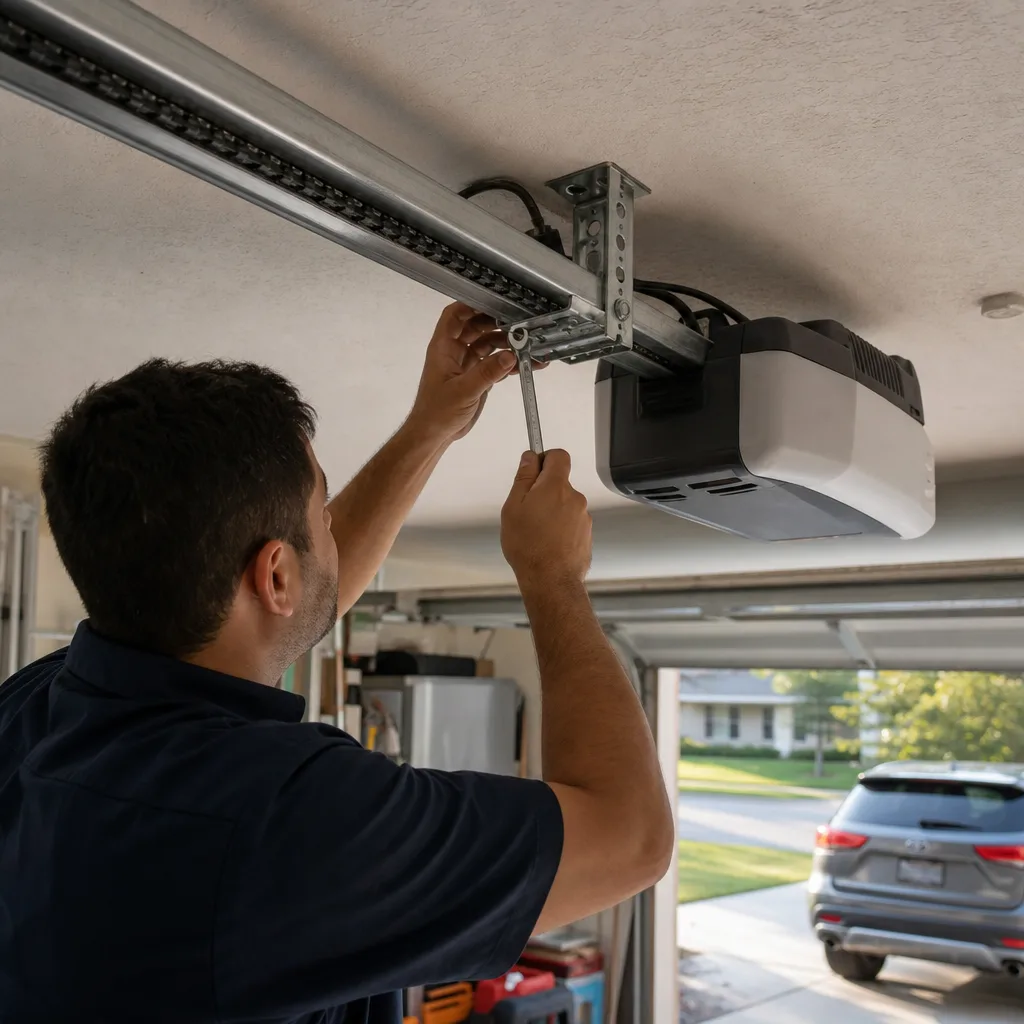
Here is the process we use at Servo Garage Doors Clermont home, and the process you should expect from any contractor worth hiring in this market.
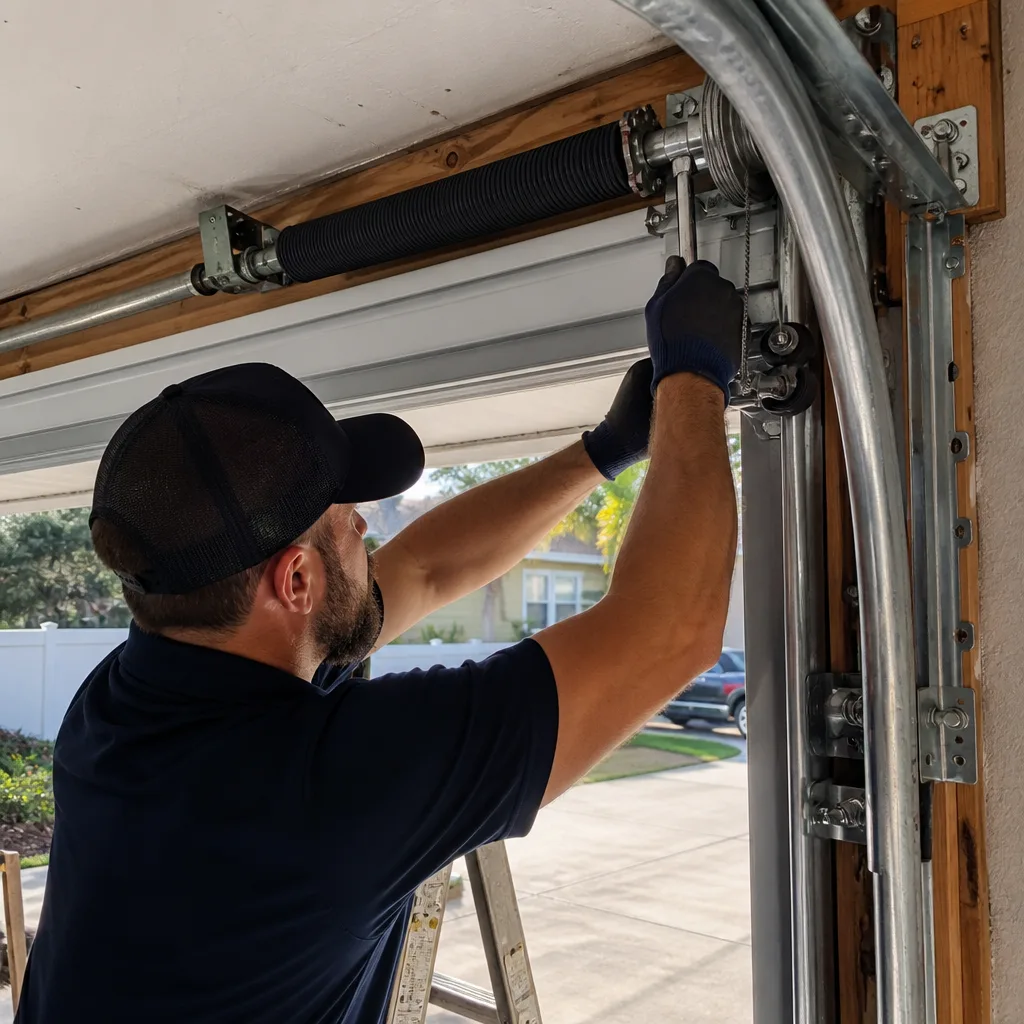
First: the technician arrives, listens to the homeowner’s description of the problem, and then inspects the door with the goal of identifying the specific failed component. Not “the door is broken” - the failed component. The torsion spring with the clean break. The roller with the seized bearing. The logic board with the scorched capacitor.
Second: the technician photographs the failed component. Not a photo of the garage; a photo of the part, close enough that you can see the failure. This is not theater. It is the founding rule our business was built on in 2015 - the customer sees the failed part before anyone quotes a replacement - and it is codified as Clause 4 of The Haven Standard, the documentation system we work under.
Third: the technician writes the scope and the flat price. Written. In dollars. Before any work starts. You see the part, you see the price, you decide. There is no “call the office for a quote” and no price that changes once the part is on the bench.
Fourth: the work happens, and the technician photographs the completed repair - the new spring in place, the adjusted track, the replaced board. You receive both photos, the written scope, and the warranty. What leaving looks like is documented before the truck even arrives.
Why this changes the dynamic: a tech who must show you the failed part before quoting cannot pad the diagnosis. If the part is not actually failed, the photo shows that too. The process makes accuracy the only available sales tactic.
Documented Price Corridor: Clermont and Lake County Baseline
These are the ranges we see in Clermont and the surrounding Lake County market as of this guide’s publication. They are not quotes - no honest company can quote through a website without seeing the door - but they are the corridor you should expect to hear. If a price is dramatically below this range, be suspicious of the part quality or the scope. If it is dramatically above, ask what additional work is being included.
| Component Category | Typical Price Range in Clermont | Notes |
|---|---|---|
| Torsion spring replacement (one spring) | $180 - $340 | Range reflects wire size, door weight, and whether a second spring is recommended |
| Torsion spring replacement (pair) | $320 - $580 | Both springs typically replaced together when one fails on a two-spring door |
| Roller replacement (individual) | $15 - $35 per roller | Nylon sealed-bearing rolls at the higher end |
| Roller replacement (full set, 10-12 rollers) | $150 - $350 | Often unnecessary; inspect rather than default to full replacement |
| Cable replacement (one side) | $90 - $180 | Typically done with spring replacement on the failed side |
| Weatherseal replacement (bottom) | $65 - $120 | Cheapest fix in the system; annual replacement common in Clermont humidity |
| Logic board replacement | $140 - $280 | Model-dependent; LiftMaster and Chamberlain boards are the most commonly stocked |
| Trolley carriage replacement | $100 - $220 | Includes adjustment; done on the existing rail |
| Full opener replacement (motor unit only) | $350 - $650 | Excludes new rail if existing rail is serviceable |
| Panel replacement (single section) | $250 - $600 | Match-dependent; steel exterior insulated panel |
| Full door replacement (standard 16×7 two-car) | $1,400 - $3,200 | Material, insulation level, and hardware quality drive the spread |
Two things to note. First, these ranges assume a written, line-item invoice with parts and labor separated. If a “bundled” price comes in above this corridor and can’t be broken down, that is a red flag. Second, Clermont prices run slightly below the Orlando metro average for door work - Lake County has enough independent operators to keep the market competitive. You should never pay more than this corridor without a documented explanation of why.
If you’re comparing written estimates from other companies, Garage Door Repair in Clermont covers what to look for in detail.
Common Mistakes to Avoid
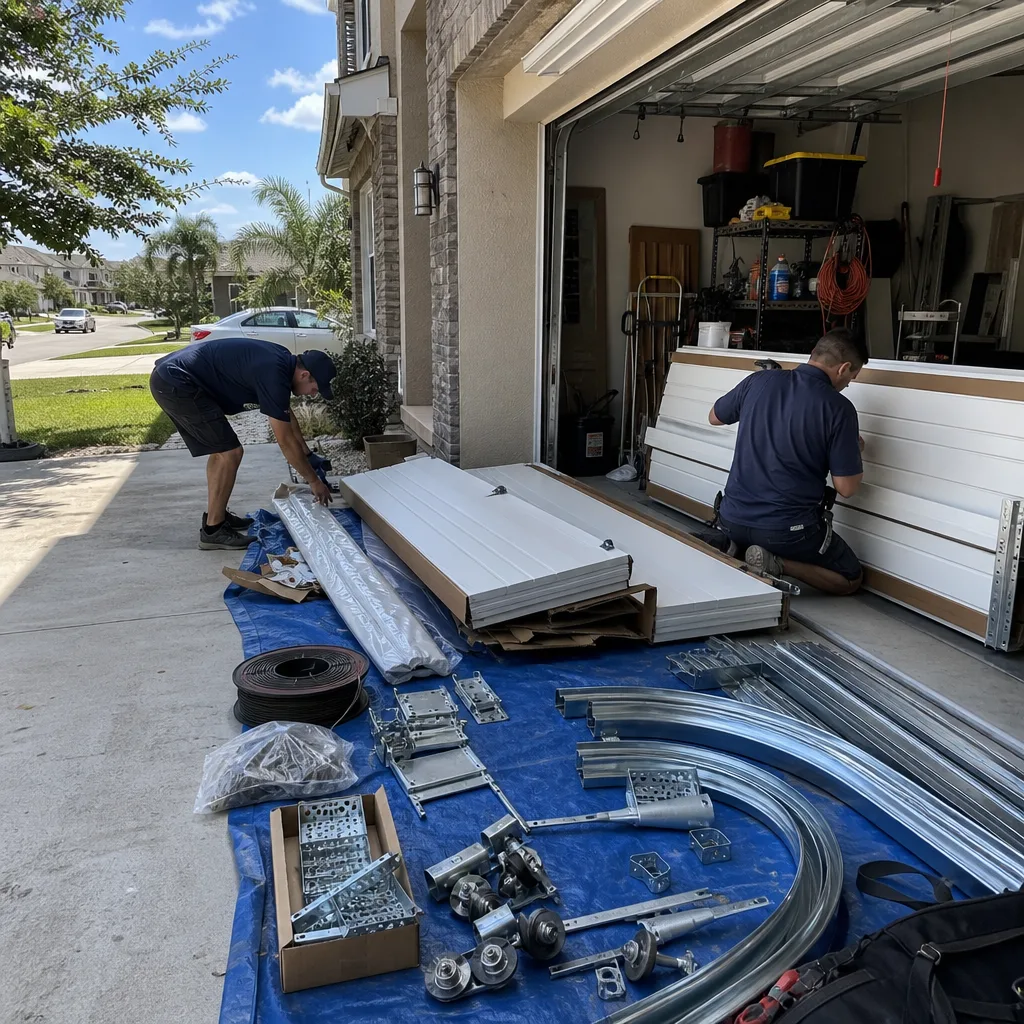
- Replacing the opener when the problem is a spring. A door that won’t open and a motor that works are two different problems. A failed spring makes the door heavy; a failed opener makes the motor dead. Diagnose before you buy.
- Accepting a quote without a written scope. Verbal pricing is not pricing. If the number isn’t on paper before work starts in Clermont, you lose leverage the moment the wrench comes out.
- Paying for a full roller replacement because one roller is noisy. Inspect the set, replace what’s worn, and keep the receipt. Replacing 12 good rollers to fix one bad one is a parts-padding tactic.
- Ignoring a failed weatherseal for months. In Clermont’s humidity, a torn seal is an open invitation for corrosion on the brackets and tracks below it. A $65 seal now is cheaper than a $300 bracket repair later.
- Skipping the photo documentation. If your technician cannot show you a photograph of the failed part, you have no evidence the part failed. Ask for the photo before you approve anything.
- Choosing a contractor by price alone without checking the documentation process. The cheapest price in Lake County is worthless if there’s no written scope, no photo record, and no warranty in writing. You’ll pay for the correction sooner than you think.
- Trusting “free inspection” deals that become $600 invoices. A free inspection is a marketing cost. Some companies recoup that cost by finding “urgent” issues that aren’t urgent. Get a second opinion on any surprise finding.
When to Call a Professional
Call a professional the moment a torsion spring breaks, a cable snaps, or a door comes off its track - these are the three situations that carry real injury risk, and none of them is a DIY fix. Also call when a door feels dramatically heavier, when the opener runs but the door doesn’t move, or when you see an invoice from another company that doesn’t sit right. For the last one, by the way, we offer a Free Second Opinion on any written estimate - bring the paperwork, and we’ll tell you what’s actually needed and what isn’t. Garage Door Opener Repair & Installation in Clermont covers the opener-specific diagnostics. Servo Garage Doors Clermont offers free estimates throughout Clermont - call (689) 400-2825 to get started.
Frequently Asked Questions
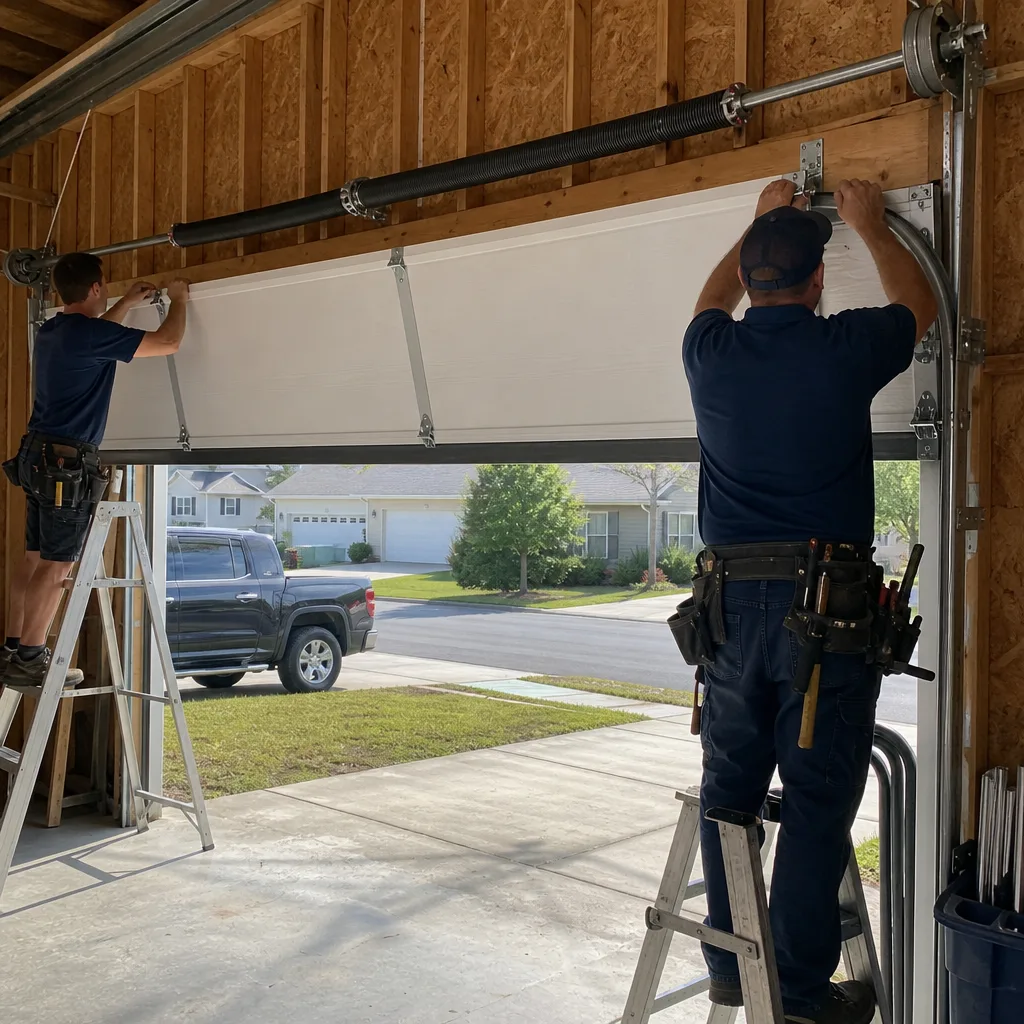
Garage door repair in Clermont typically costs between $90 and $580 depending on the component. Weatherseal replacement runs $65 to $120, while a full pair of torsion springs is $320 to $580. We quote every job in writing with the failed part photographed before any work begins - call (689) 400-2825 for an exact figure.
Garage door springs in Clermont typically last 5 to 6 years versus the national average of 7 to 8. The combination of summer heat expansion and high humidity puts extra stress on the coil at a microscopic level, accelerating fatigue. If your springs are older than five years and the door feels heavy, it’s worth having them measured.
Yes, in most cases. The most common opener failures in Clermont are logic boards, which fail from power surge damage during summer storms, and trolley carriages, which wear from daily cycling. Both are individually replaceable on the major brands - LiftMaster, Chamberlain, Genie, Raynor, and Craftsman - and cost far less than a full unit.
On a two-spring door, yes. When one spring breaks, the other is usually at the same cycle count and will fail soon after. Replacing both at once costs less than two separate service visits, and it keeps the door balanced - which extends the life of the opener and the cables.
It should not. A legitimate company in Clermont quotes a flat, written price and scope before any work starts. If the price changes after the door is open, that is not a repair process; that is a negotiating tactic. Our price is written and approved before a single bolt is turned.
We service and install LiftMaster, Chamberlain, Genie, Raynor, Craftsman, and three other major brands - eight in total. Because we stock parts for the common models across all of them, we can usually repair an opener the same visit rather than ordering parts and returning a week later.
The Bottom Line
A garage door in Clermont is strongest when it is understood as what it is: seven interdependent components, each with a specific job, a specific failure pattern, and a specific price corridor. You now know the names - springs, cables, tracks, rollers, panels, opener, and weatherseal. You know the Clermont-specific failure accelerators: humidity for seals and steel, storm surges for logic boards, and heat cycling for springs. You know the price ranges. And you know what documentation should look like: a photo of the failed part, a written scope, and a flat price before work begins. Bring that knowledge to any service call, and you’ll pay for the part that failed - not the one the sales pitch invented. Garage Door Installation in Clermont covers full-door decisions when replacement is the right call. Ready to get started? Call (689) 400-2825 for a free estimate.
Written by Marcus Deller, Owner at Servo Garage Doors Clermont, serving Clermont since 2015.