
Last updated September 20, 2026
Full 25-point door and opener safety check with every visit - springs, cables, rollers, tracks, and your LiftMaster or Chamberlain opener included
You get a price before we start. It does not change when the truck arrives.

LiftMaster openers
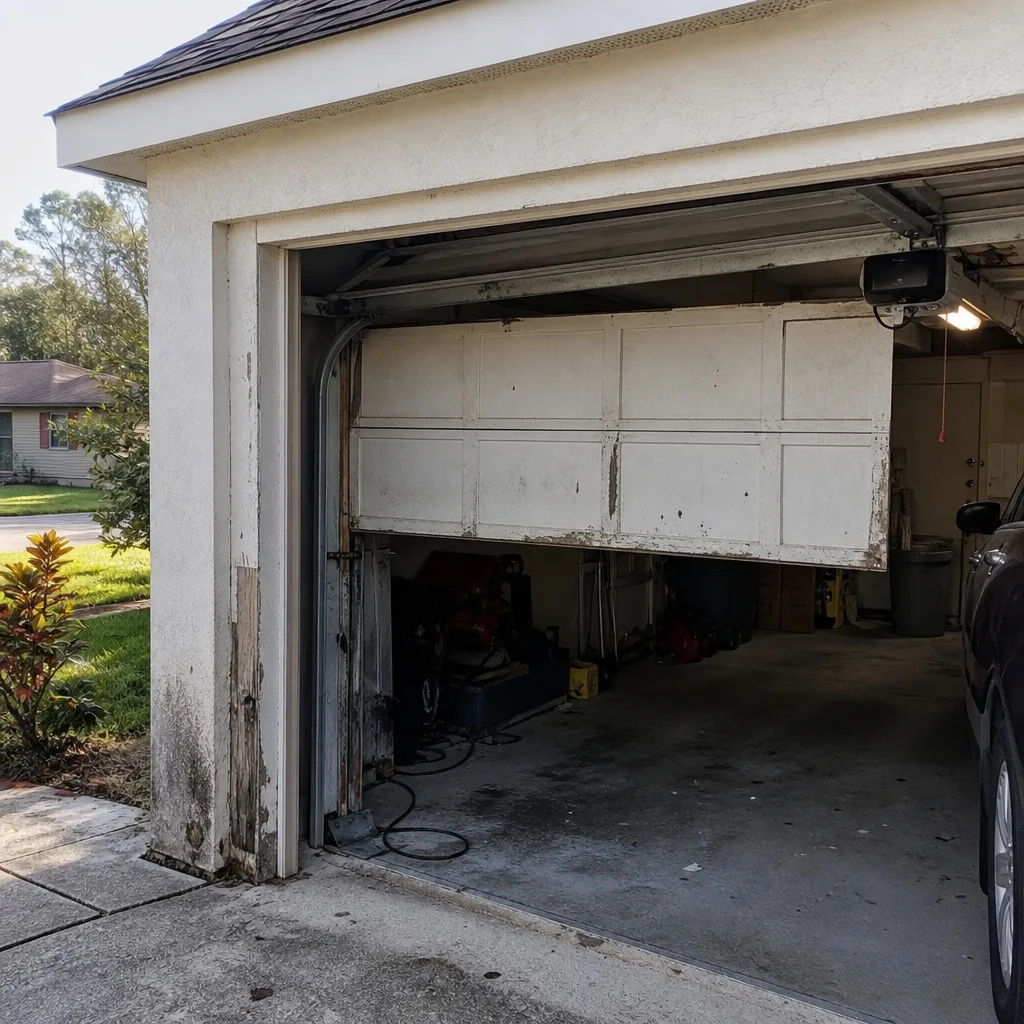 Before
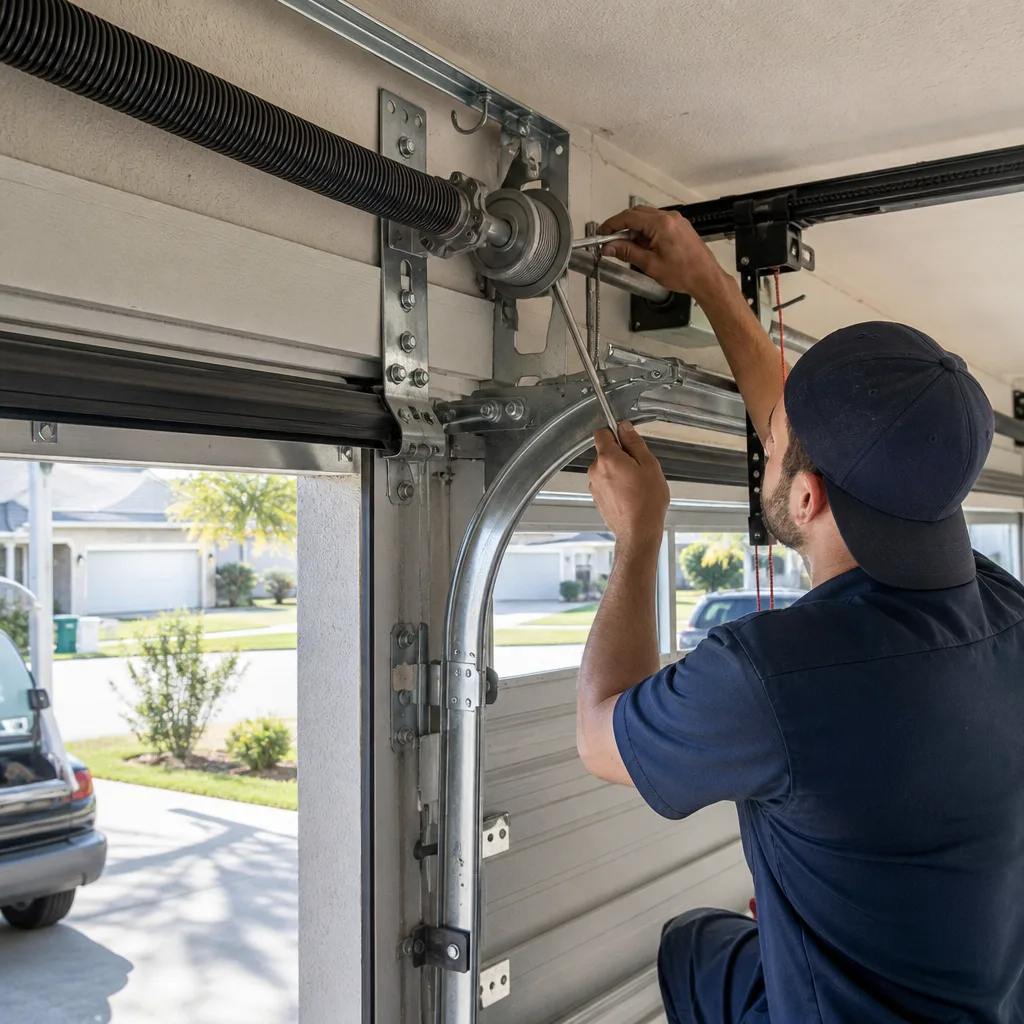 After
After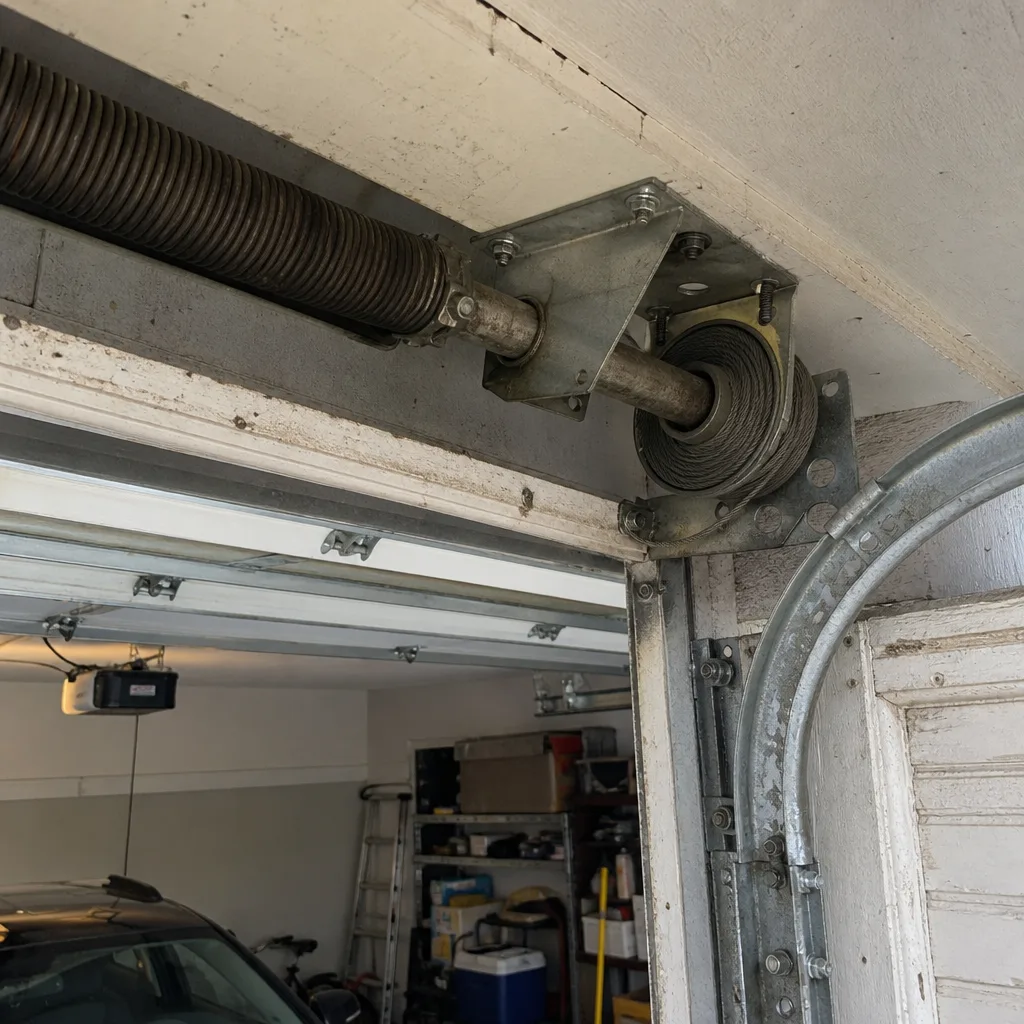 Before
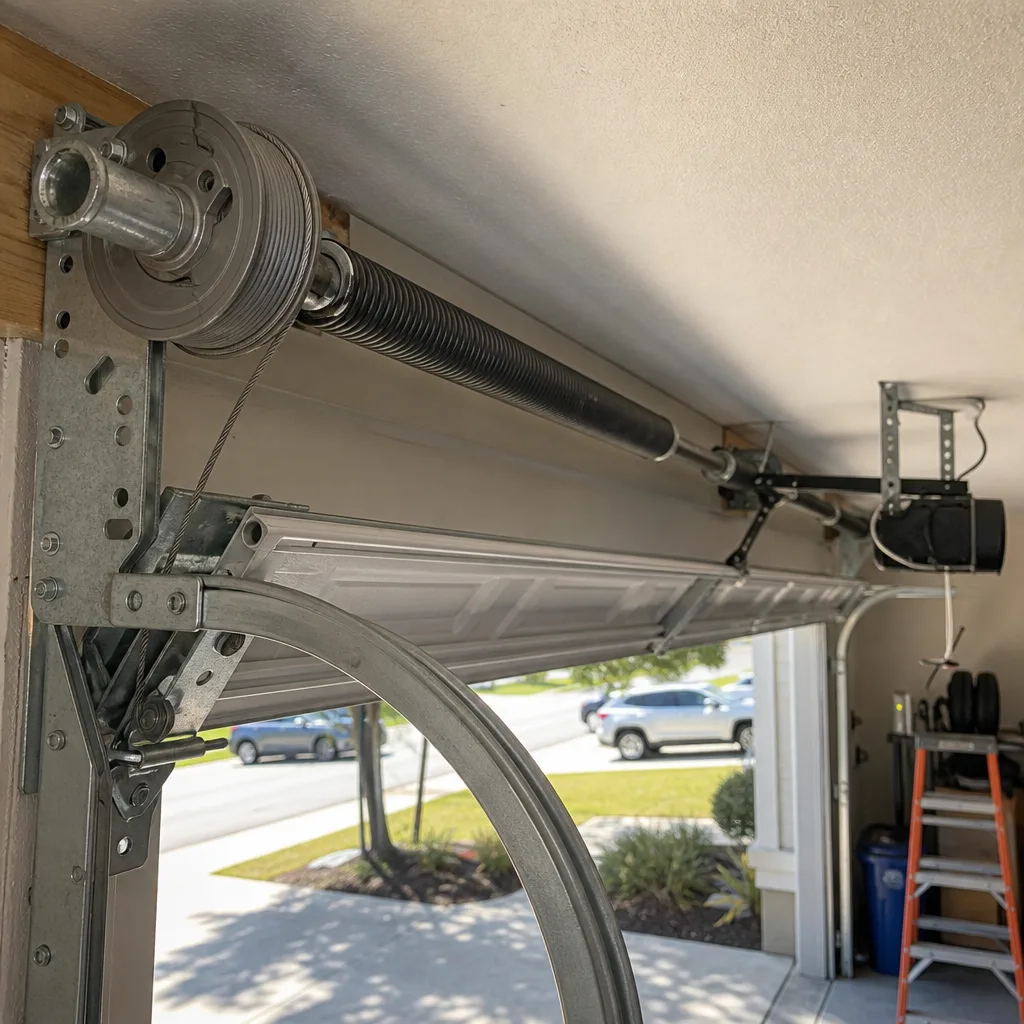 After
After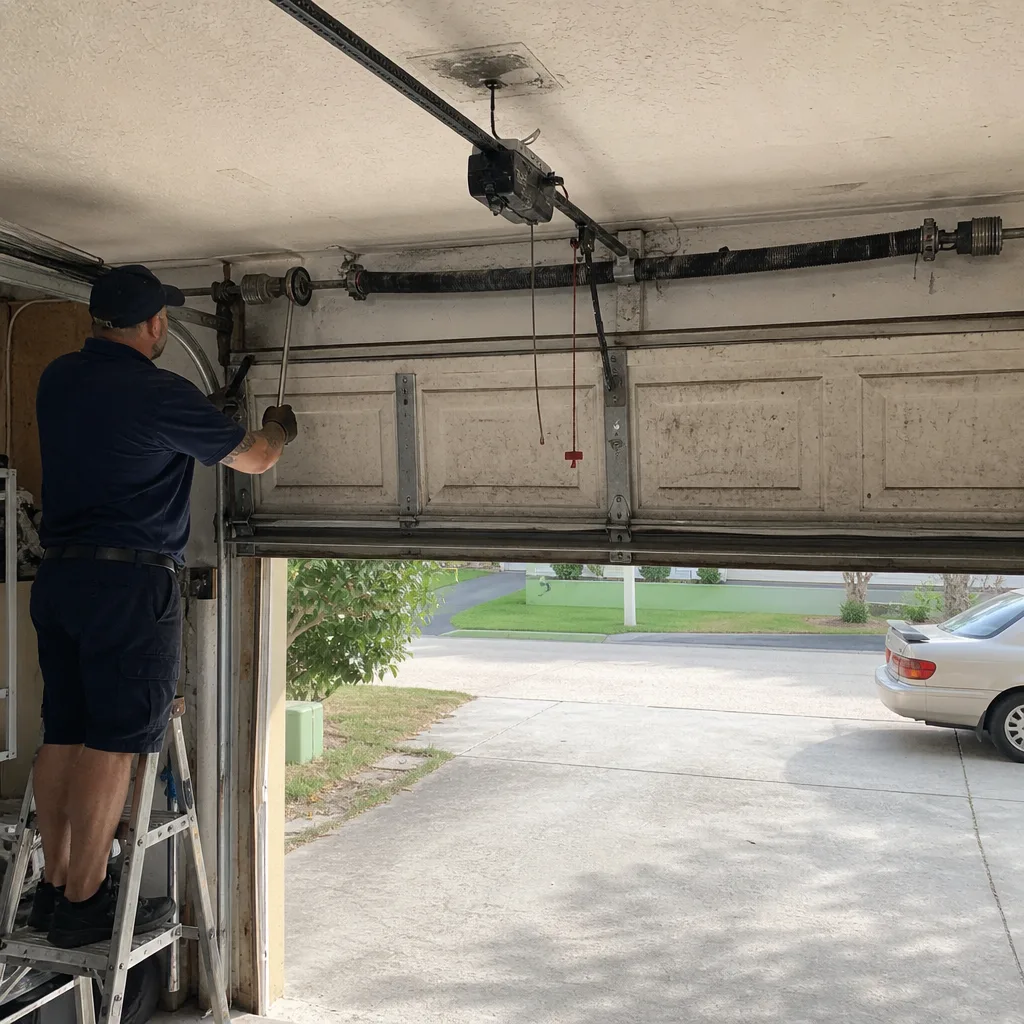 Before
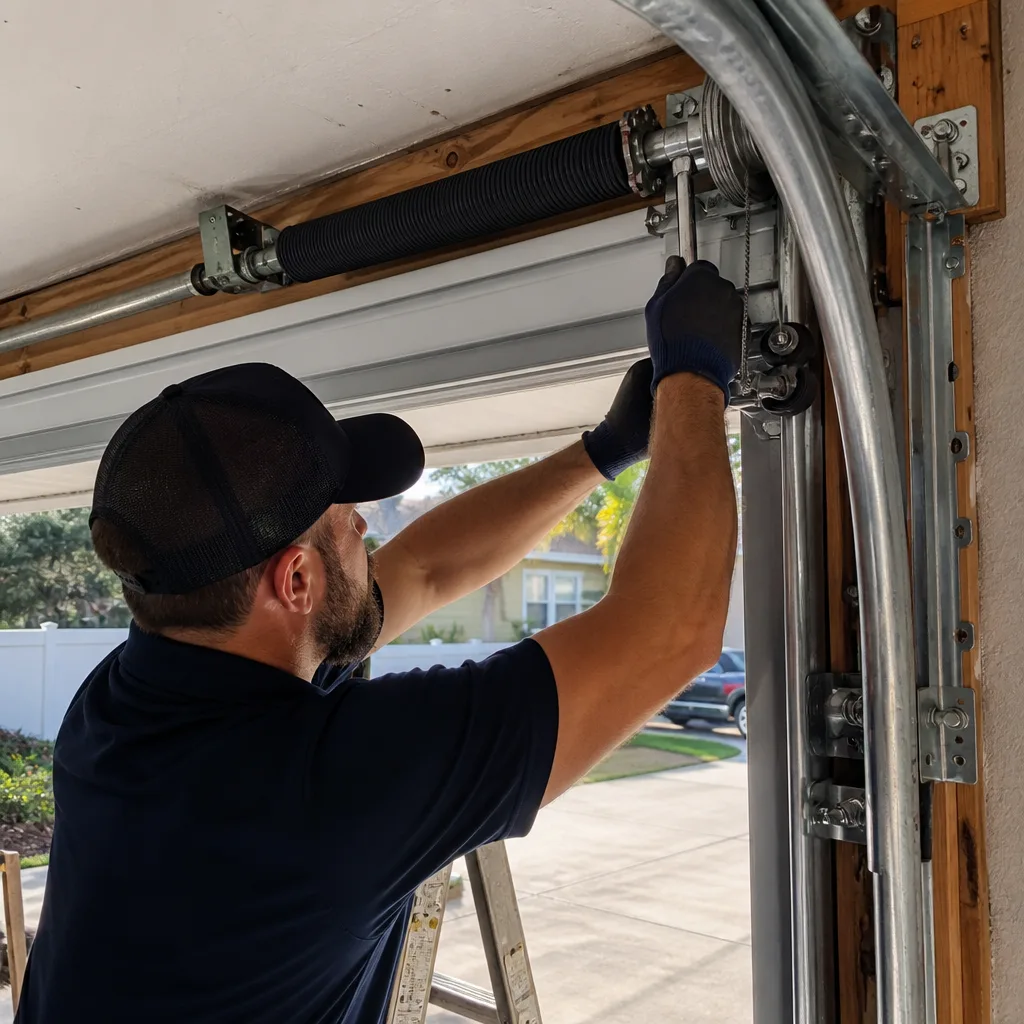 After
AfterDIY vs Professional Garage Door: The Clermont Homeowner’s Decision Guide
The garage door is the largest moving object in your home. It weighs between 130 and 400 pounds depending on the material, cycles open and closed roughly 1,500 times a year, and relies on a system of springs, cables, tracks, and rollers that most homeowners never see until something fails. The DIY-versus-professional conversation usually starts with “how hard could it be” and ends at an emergency room or a bent track. This guide draws the line precisely where it belongs: at load-bearing risk, not general difficulty. For more guides & resources, visit our blog. We’ll walk through each component, the Florida Building Code provisions that apply in Clermont, what the torque numbers actually mean, and what documentation you should keep either way.
Quick Answer
Most garage door maintenance in Clermont is safe for a careful homeowner: lubrication, sensor alignment, weatherseal replacement, and track cleaning don’t involve stored energy or structural load. But torsion spring replacement, cable replacement, and opener logic board work involve either high stored torque or live electrical components, and on those, professional service is not just advisable, it’s the safer and often cheaper choice once diagnostic errors and tool costs are counted. If the component is under load or tension when the door is stationary, call a professional.
Table of Contents
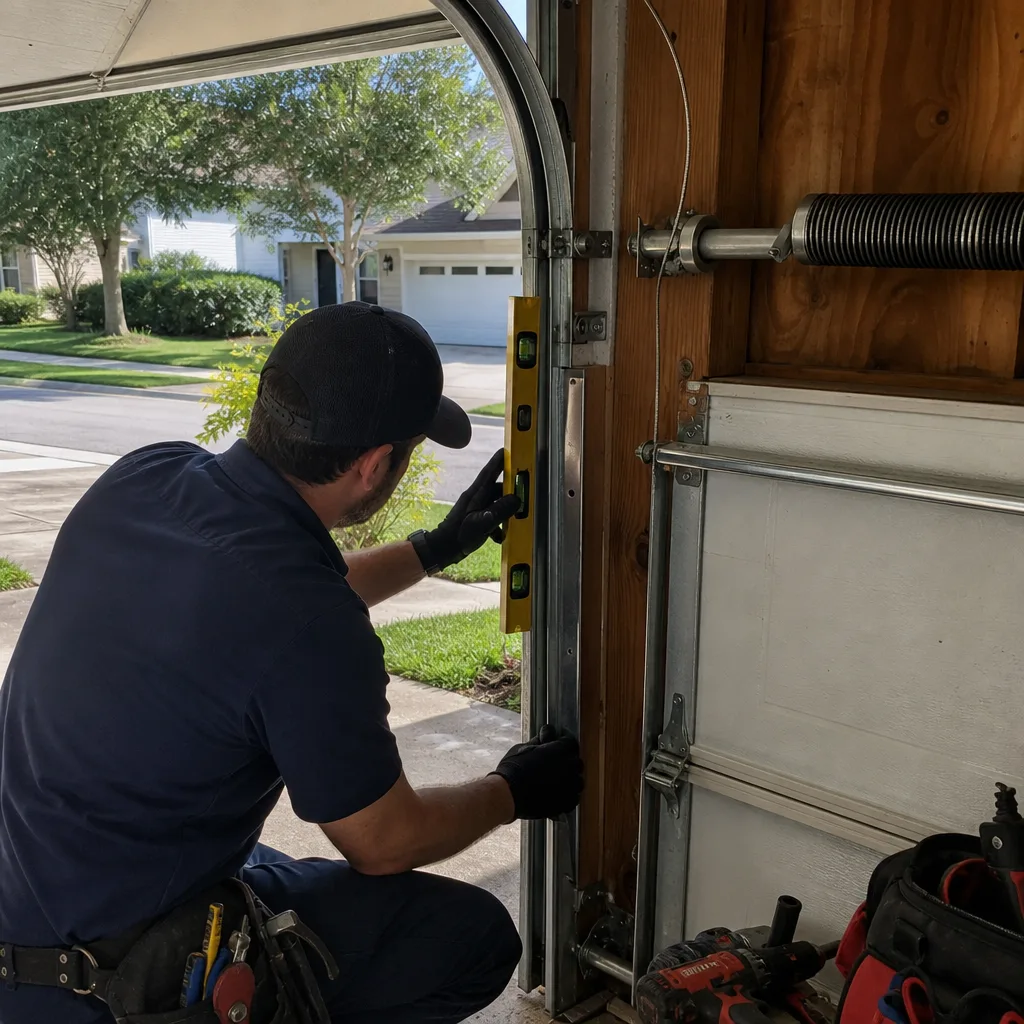
- The Load Line: How to Decide in 60 Seconds
- What’s Genuinely DIY-Safe (and What Still Goes Wrong)
- Stored Energy: The Torsion Spring Math Nobody Quotes
- Florida Building Code and Clermont Permits: What’s Legal vs What’s Advisable
- The Real Cost Comparison: DIY Parts vs Professional Service
- Documenting Your DIY Work: The Service History That Saves You Later
- Common Mistakes to Avoid
- When to Call a Professional
- Frequently Asked Questions
- The Bottom Line
BeforeAfterThe Load Line: How to Decide in 60 Seconds
The question that separates safe DIY from danger is simpler than most guides make it: “Is this component under load or tension when the door is in this position?” If the answer is yes, you’re not working on a part. You’re working on a stored-energy system, and the failure mode is not a stripped screw, it’s a sudden release of force directed at your hands, face, or torso. In Clermont’s housing stock, which skews toward homes built between 1990 and 2020 with attached garages on slab foundations, the systems vary, but the physics don’t. A torsion spring on a 16-foot Clopay or Amarr door stores the same energy whether the house is in Greater Pines or along Lake Minneola.
Here’s the load line, component by component:
- Under tension at rest: torsion springs, extension springs, lift cables, bottom brackets. Never attempt repair on these without professional training and proper winding bars.
- Under load during motion only: rollers, hinges, track, opener carriage. Safer to inspect and maintain, but replacing parts requires the door to be supported properly.
- No load at rest: weatherseal, safety sensor brackets, opener remote programming, lubrication points. These are genuinely DIY territory.
In our experience across Clermont and the surrounding Lake County area, the majority of injuries we hear about started the same way: a homeowner watched a video, removed the wrong bolt first, and the spring unwound in under a second. The component didn’t fail. The sequence did.
What’s Genuinely DIY-Safe (and What Still Goes Wrong)
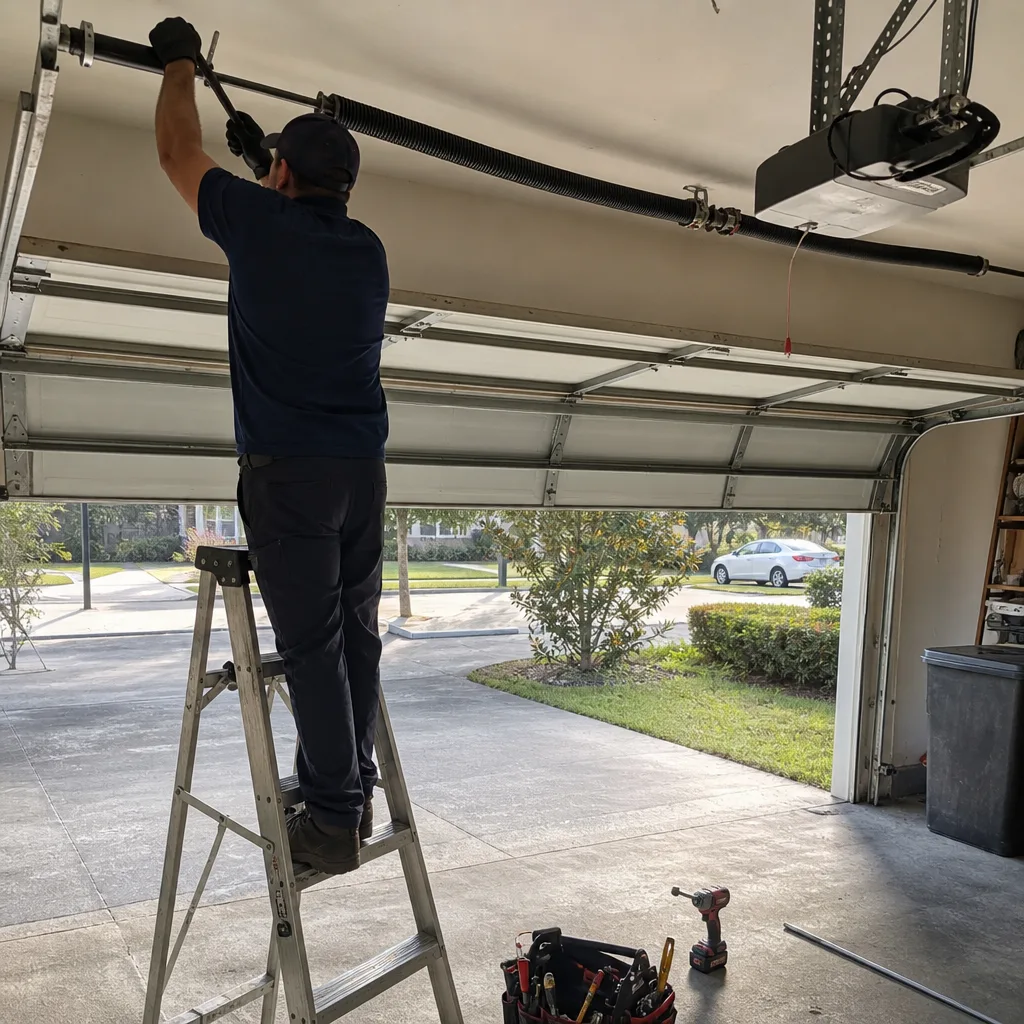
Four tasks are safe for a homeowner with basic tools, and doing them yourself is reasonable. None of them involve stored energy when the door is closed and the opener is disengaged.
1. Lubrication
Every garage door in Clermont needs lubrication twice a year, more often if the door faces west into the afternoon sun where heat dries out the rollers and hinges. Use a white lithium grease on the hinges and rollers, and a silicone-based spray on the torsion spring. What goes wrong: people use WD-40, which is a solvent, not a lubricant. It strips the existing grease and accelerates wear. The rollers are fine. The spring coating is not.
2. Safety Sensor Alignment
The photo-eye sensors at the bottom of each track get knocked out of alignment by bicycles, garbage cans, and Florida’s afternoon thunderstorms that rattle the door. If the opener blinks and reverses, the sensors are the first check. Loosen the bracket wing nut, re-aim the two sensors so the lights are solid on both, tighten. That’s it. What goes wrong: homeowners replace the sensor pair when the issue was a sun-strike problem, which is common in Clermont on east-facing garages in the morning. Shield the sensor with a cardboard tube to test first.
3. Weatherseal Replacement
The rubber strip along the bottom of the door degrades in Florida heat within three to five years. Replacement involves pulling the old seal out of its aluminum retainer and sliding the new one in. The door stays closed. No tension involved. What goes wrong: buying the wrong profile. Clopay, Amarr, and Wayne Dalton doors use different seal cross-sections, and the one at the big-box store fits only about half of them. Bring the old seal in or order by door brand.
4. Track Cleaning and Inspection
The vertical and horizontal tracks collect dust, insect debris, and the fine sand that blows in from construction sites around Clermont’s expanding subdivisions. Wipe them with a dry cloth, inspect for dents or kinks, and check that the track brackets are tight. What goes wrong: homeowners attempt to straighten a dented track with a hammer. Tracks carry the door’s full weight during travel, and a hammered track creates a pinch point where rollers bind. If a track is visibly bent, replacement is required, and that’s professional work.
None of these tasks require a permit, a licensed contractor, or anything beyond a stepladder and common sense. For everything else, keep reading.
Stored Energy: The Torsion Spring Math Nobody Quotes
A standard residential torsion spring on a 7-foot door is wound through seven to eight full turns from its relaxed state. Depending on the door weight and spring wire diameter, the spring at full wind stores between 80 and 140 foot-pounds of torque. That number means something concrete: if the winding bar slips during installation, the spring unwinds that torque in under one second, and the bar becomes a projectile moving fast enough to fracture a forearm. That’s the figure. Most DIY guides use the word “careful” without ever quantifying what’s being managed.
The wire diameter matters for installation, too. A spring measured at 0.250-inch wire requires roughly 30 quarter-turns per side on a standard 12-foot-by-12-inch door. If the replacement spring is even one size off, the door is unbalanced, the opener strains, and the spring fails prematurely. This is why professional garage door repair in Clermont begins with measuring the failed spring, not assuming a part number.
What homeowners can do safely with a torsion spring is this: inspect it. Look for a visible gap where the coil has separated, indicating a clean break. Run a flashlight along the spring’s length and check for rust bloom, which on Clermont doors near the lake means salt-air exposure is accelerating the wear. If the spring is intact but the door feels heavy when you disengage the opener and lift it manually, the spring is losing tension, and replacement is indicated within weeks, not months. None of this requires touching the spring under load.
Florida Building Code and Clermont Permits: What’s Legal vs What’s Advisable
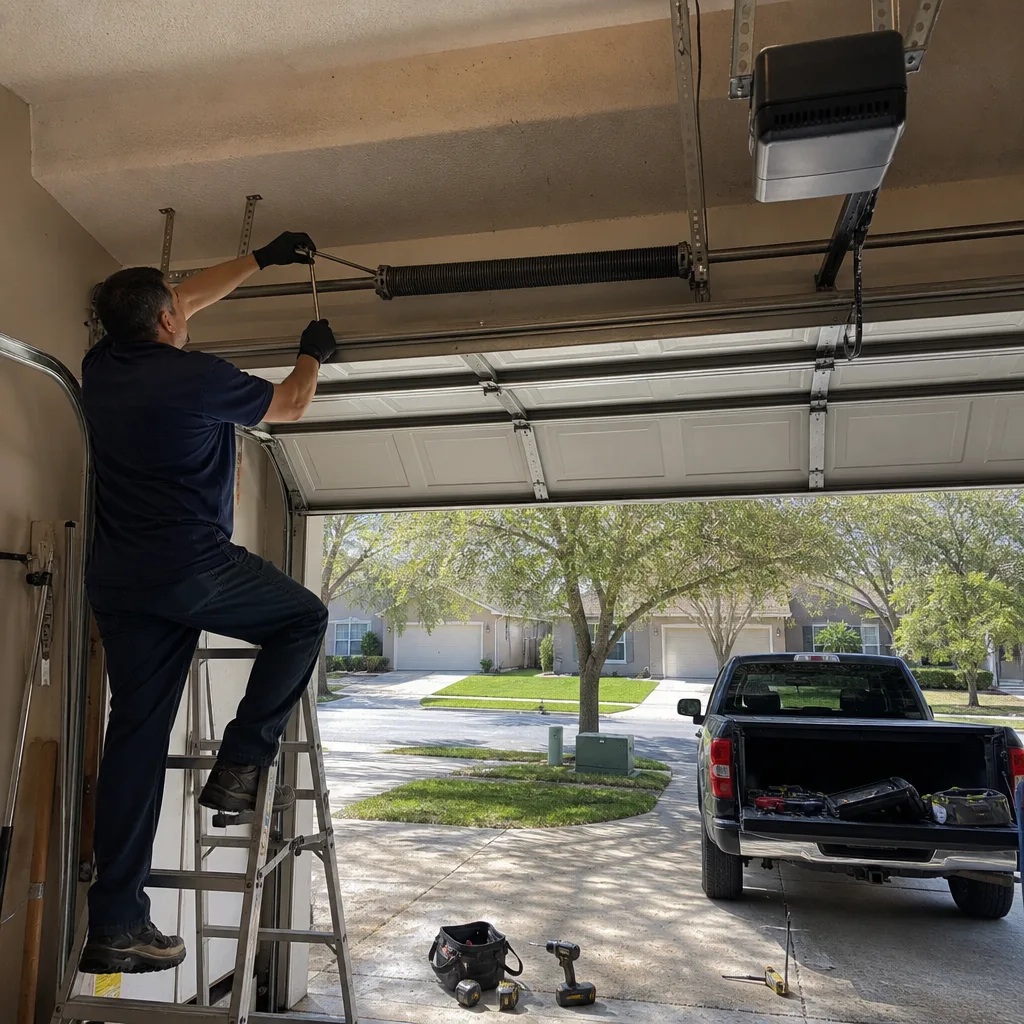
Garage Door Permits, Codes & Inspections in FL: What You Need to Know starts with Florida Building Code Section 612, which covers garage door installation and replacement, and Lake County enforces it. The short version: any work that changes the structural attachment of the door, the door system’s wind-load rating, or the opener’s hardwired electrical supply requires a permit and, in most cases, a licensed contractor. That’s not a nudge. That’s the statute.
Here are the specific lines in Clermont practice:
- Full door replacement: requires a permit. The door must meet Florida’s wind-load requirements for the region, which in Clermont means a design pressure rating that matches the home’s exposure category. A homeowner who installs a non-rated door has created a liability if the door fails during a hurricane event and damages the structure or a vehicle.
- Opener hardwiring or circuit changes: requires an electrical permit. The opener outlet work, not the motor attachment itself. Replacing an opener on an existing dedicated outlet is generally not permitted work, but running new romex or adding a circuit is.
- Torsion spring replacement: the permit question is gray in practice across Florida, but the code’s intent is clear about who may perform work involving stored-tension systems. Homeowner-permitted work is limited to tasks that do not create a life-safety hazard. A mis-wound spring that lets a 300-pound door drop is exactly that.
- Liability: if a homeowner performs unpermitted structural or electrical work and a failure injures someone, the homeowner’s insurance may deny the claim. This is not a garage-door company’s policy. This is standard underwriter language.
What this means for the DIY-versus-professional decision in Clermont is that the legal line and the safety line run in the same place. The tasks you can legally do yourself are the tasks that are safe to do yourself. The gray area is where injuries happen, and where insurance adjusters start asking questions.
The Real Cost Comparison: DIY Parts vs Professional Service
The honest cost comparison on the same repair, done once correctly, looks like this.
Torsion Spring Replacement
| Item | DIY Cost | Professional Cost |
|---|---|---|
| Spring pair (correct wire size) | $85-$140 | Included |
| Winding bars (proper steel, not rebar) | $35-$60 | Included |
| Labor time | 3-6 hours first attempt | 45-90 minutes |
| Diagnostic error risk | Wrong spring = second trip | Warranty covers correction |
| Total, done correctly once | $120-$200 | $280-$420 installed |
The DIY savings look real on paper: roughly $150 to $200. But the hidden costs are where the comparison collapses. The most common failure we see in Clermont is a homeowner who ordered the right spring but installed it with the wrong number of winds. The door worked for two weeks, then the spring broke again. The parts cost was spent twice, the time was spent twice, and the professional repair was eventually paid for anyway. The second-attempt cost wipes out the savings entirely.
Now look at the same comparison for a task that is genuinely DIY-safe:
Weatherseal Replacement
| Item | DIY Cost | Professional Cost |
|---|---|---|
| Seal material (correct profile) | $15-$30 | Included |
| Time | 30 minutes | Service call minimum |
| Total | $15-$30 | $85-$135 |
Here, DIY wins cleanly. There’s no stored energy, no diagnostic ambiguity, and no second-attempt risk. The lesson is not “DIY is a trap” or “professionals are always worth it.” The lesson is that the cost comparison breaks down by component, and the spring numbers above are the only place where the comparison matters, because the spring is the only component where a mistake costs more than the repair itself.
For any work that lands on the professional side of that line, Servo Garage Doors Clermont operates on a flat, written price before any work starts. Clause 1 of The Haven Standard. The number on the written estimate is the number on the invoice, and the technician photographs the failed component before quoting the replacement. That’s Clause 4. The customer sees the broken spring. Not a drawing of one. The actual part.
Documenting Your DIY Work: The Service History That Saves You Later
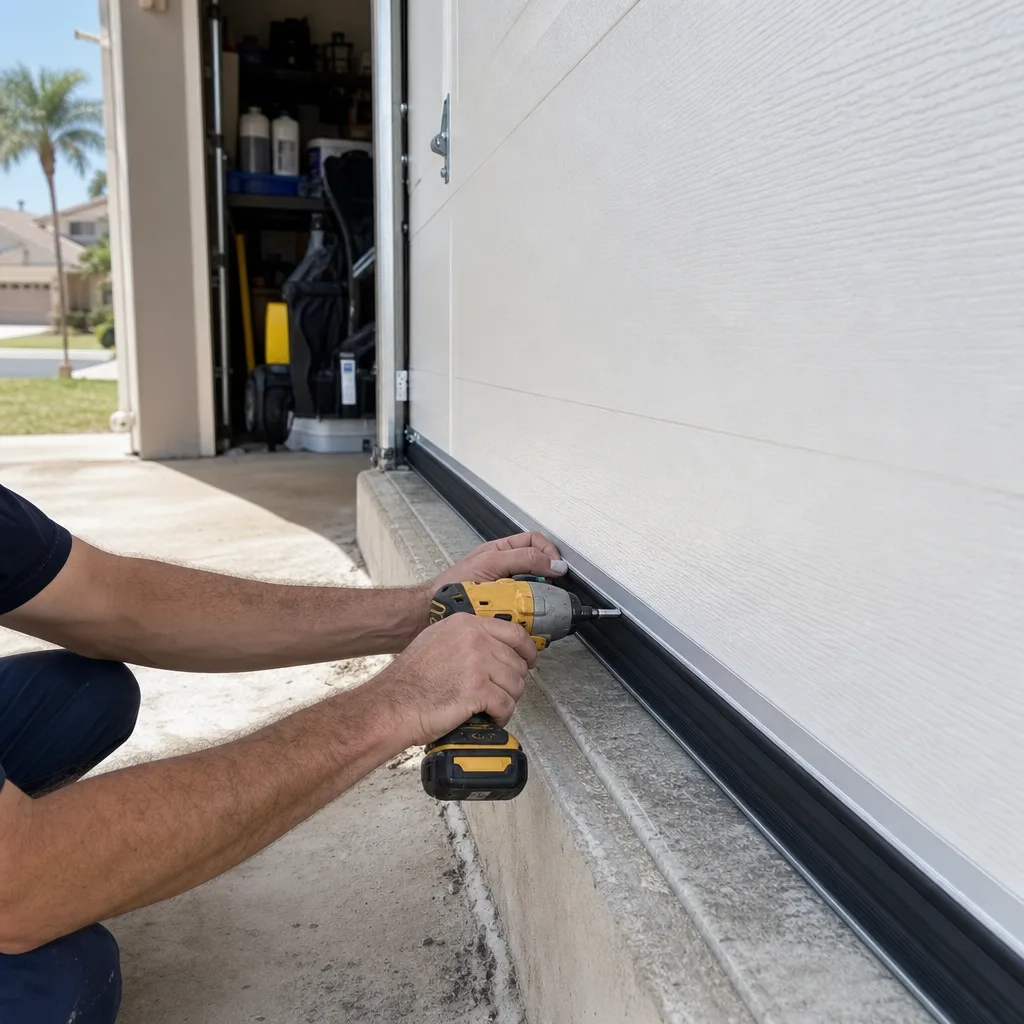
Most Clermont homes change hands within five to eight years. The next buyer’s home inspector will open the garage door, note the opener’s age, and if there are visible signs of repair work, the questions begin. “Who replaced this spring? When? Was the door balanced afterward?” If the answer is “we don’t know,” the inspector flags it, and the negotiation starts from a weaker position. This is avoidable, and it costs nothing.
Here’s what to document after any DIY repair, whether it’s a weatherseal or a complete roller set replacement:
- Date and component: Write it on painter’s tape and stick it to the inside of the door panel, then also on paper in a garage folder. The door itself is the most reliable record-keeping location.
- Brand and part number: If you replaced rollers, note the stem size and wheel material. If it’s a spring, note the wire diameter and inside diameter you measured, even if you didn’t replace it yourself.
- Tools and torque settings: If you removed and retightened brackets, note the setting on the impact driver. The next technician will want to know what’s already been torqued and what’s untouched.
- Photograph the finished work: Two photos per component. One wide, one close. File them where you file home documents, not in the camera roll that gets wiped.
- Note anything you observed but didn’t fix: “Track shows a small dent at the 5-foot mark, left side, not impeding travel.” That sentence saves the next person a diagnostic visit.
This service history matters less for the component you repaired and more for the one you didn’t. If a future technician or inspector sees a documented record of your careful weatherseal work, they read the rest of the door differently than if they find mystery parts with no history. The unknown is what triggers the expensive scrutiny.
One more note on documentation: if you’re looking at a professional repair, ask for this record from the technician. At Servo, every visit closes with a documented photo record of findings and completed work. It’s not an add-on. It’s the receipt for what you paid for. The next buyer of your Clermont home gets that file, and the uncertainty disappears.
Common Mistakes to Avoid
- Using rebar or screwdrivers instead of proper winding bars. Winding bars are 18 inches of half-inch round steel, heat-treated, and designed to seat fully in the spring cone. Rebar is neither heat-treated nor dimensionally consistent. A bar that seats shallow can eject. This is the most common injury mechanism in torsion spring accidents.
- Replacing one spring instead of both. When one torsion spring breaks, the other is typically at the same cycle count and within weeks of failing. Most Clermont doors are set up as two-spring systems, and replacing a single spring leaves a mismatched pair that wears unevenly. The savings on paper disappear within a year.
- Disconnecting the opener before releasing the emergency cord. If the door is in the open position and you pull the release cord without supporting the door, a failed or weak spring means the full weight of the door comes down at once. A 300-pound panel descending without resistance can sever fingers at the pinch point.
- Fixing the symptom instead of the cause. A door that reverses halfway has a problem. The problem might be the sensors, the force settings, or a broken spring. Replacing the opener when the spring is broken is a $400 mistake. Diagnose first, then buy parts.
- Ignoring the annual balance test. Disengage the opener, lift the door to halfway, and let go. It should stay. If it falls, a spring is losing tension, and the opener is about to work harder than it was designed to. Catching this in Clermont’s summer heat, when doors expand and bind, means a cheaper spring replacement and a longer-lived opener.
- Buying garage door parts from sellers who don’t ask for measurements. If you can add a torsion spring to a cart without specifying wire diameter, inside diameter, length, and wind direction, you’re buying a generic part, not a matched spring. Generic parts are how second-purchase stories begin.
When to Call a Professional
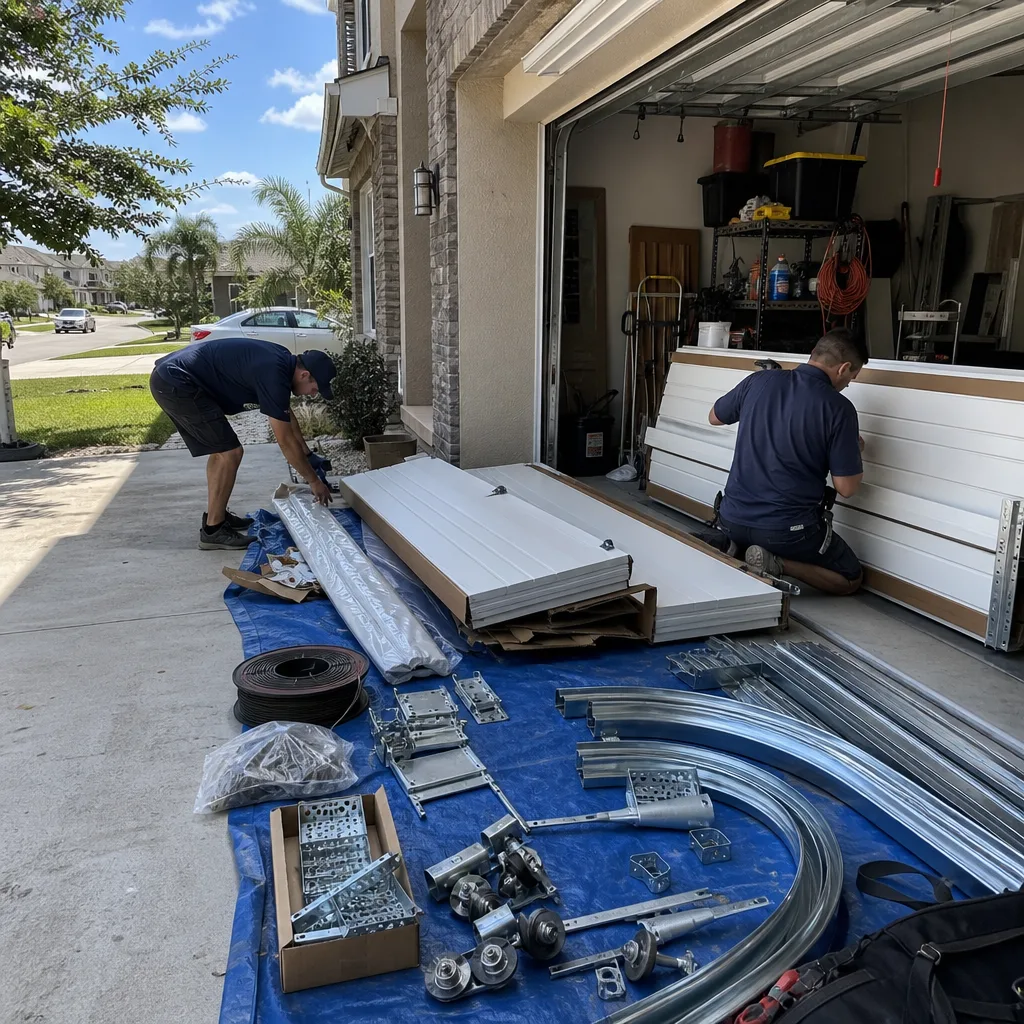
Call a professional when the component is under load or tension at rest. That’s the torsion spring, the extension spring, the lift cables, and the bottom brackets that anchor them. Call a professional when the repair involves the door’s structural attachment to the house: flag brackets, track replacement, or any work that requires drilling new anchors into concrete. Call a professional when the opener’s logic board is involved, because the diagnostic pathway is not visible and the parts are not universal. Call a professional when the door has fallen off its tracks, because the safe re-seating procedure involves supporting the full panel weight and re-tensioning the cables in sequence. And call when you’ve attempted the repair and the door is worse than when you started. No judgment on that call. We’ve all been there. Garage door opener repair and installation in Clermont is routine work, and the honest technician will tell you when the opener is fine and the problem is elsewhere. Servo Garage Doors Clermont offers free estimates in Clermont. Call (689) 400-2825 and the number on the written estimate is the number on the invoice.
Frequently Asked Questions
Professional torsion spring replacement in Clermont typically runs between $280 and $420 installed for both springs on a standard 7-foot door, with the exact price depending on spring wire diameter and cycle rating. That price includes the springs, the winding, the balance test, and the documentation. DIY parts alone run $85 to $140 for a matched pair plus $35 to $60 for proper winding bars, but a winding error doubles that cost on the second attempt. Call (689) 400-2825 for an exact quote. Estimates are free, and the price is written before any work starts.
A homeowner can legally install a new garage door in Clermont if they obtain the proper building permit and the door meets Florida’s wind-load rating for the home’s exposure category. In practice, most homeowners don’t have the equipment or time to do this correctly, and an incorrectly installed wind-rated door is a liability if it fails in a hurricane event. The permit process is straightforward, but the installation work is not where the savings live.
Torsion spring replacement, extension spring replacement, lift cable replacement, bottom bracket replacement, and track replacement should never be DIY. These components are under load or tension at rest, and their failure mode is sudden, silent, and directed at the person working on them. The risk is not difficulty. It’s stored energy measured in foot-pounds of torque that most guides never mention.
The most common DIY mistake we see in Clermont is ordering a torsion spring without measuring the existing one. Spring sizing depends on wire diameter, inside diameter, length, and wind direction, and even one size off leaves the door unbalanced. The opener compensates for a few weeks, then the strain burns out the gear and sprocket assembly. The spring mistake becomes an opener mistake, and the total repair bill doubles.
Yes. Servo Garage Doors Clermont answers calls 24/7 with a live person, not a recording, and we can dispatch a technician to your Clermont home the same day for emergency garage door situations. The technician arrives with the right tools on the truck, quotes a flat written price before any work begins, and documents the findings with photos before touching anything. Call (689) 400-2825.
No. Clause 1 of The Haven Standard means the flat written price and the written scope are delivered before any work starts, and the number on that document is the number on the invoice. If the technician finds something unexpected during the repair, that finding is shown to you with photos before any additional work is quoted. The price you approve is the price you pay. Call (689) 400-2825 for a free estimate.
The Bottom Line
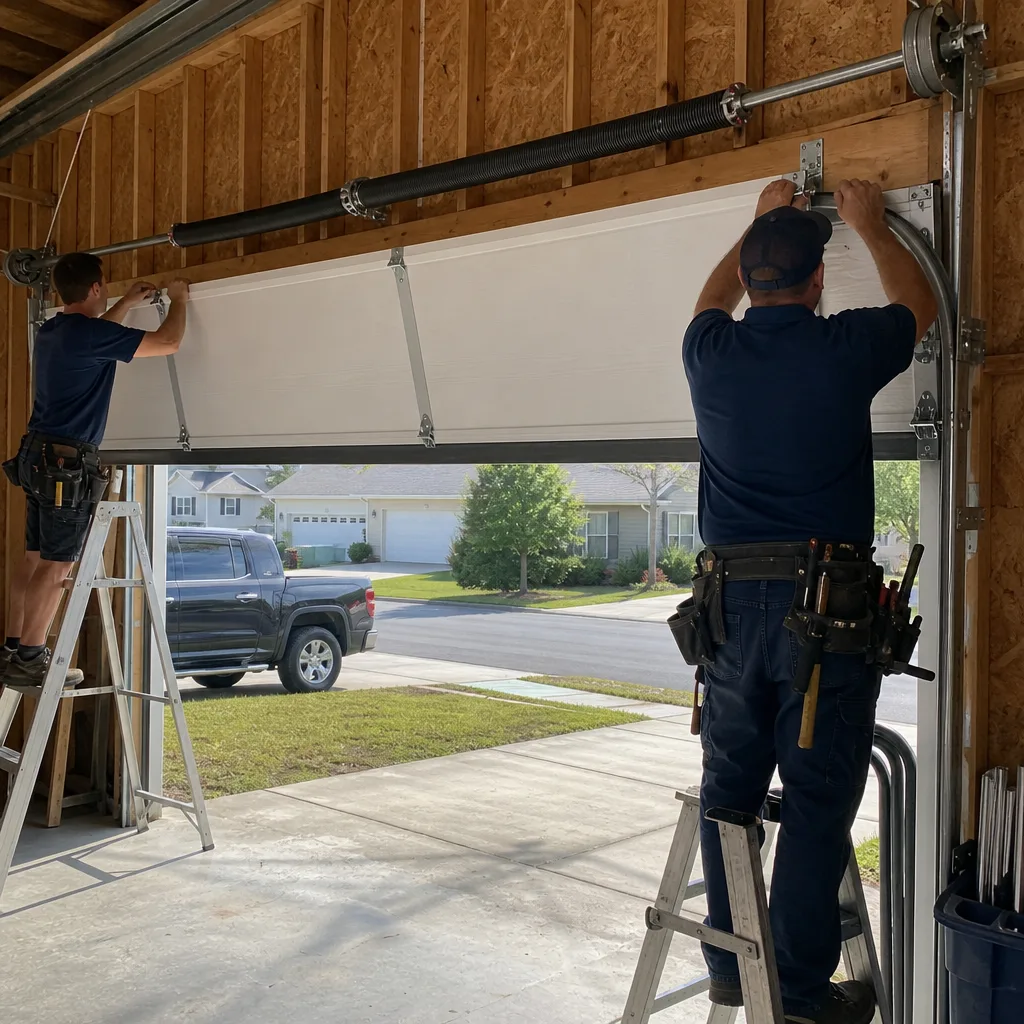
Garage door repair is not one question. It’s forty questions, and each component answers differently. The weatherseal job is a Saturday morning task with a $20 part. The torsion spring is a stored-energy system that stores enough torque to break bone if the winding bar slips. The line between the two is not skill level or confidence. It’s the load at rest. In Clermont, that line aligns with what the Florida Building Code classifies as permitted work and with where insurance liability begins. For the tasks on the safe side, do them yourself, document them properly, and enjoy the savings. For the tasks on the professional side, get a written price, a photo record, and a warranty. The math works out either way when you draw the line in the right place.
Written by Marcus Deller, Owner at Servo Garage Doors Clermont, serving Clermont since 2015.