
Last updated September 20, 2026
Full 25-point door and opener safety check with every visit - springs, cables, rollers, tracks, and your LiftMaster or Chamberlain opener included
You get a price before we start. It does not change when the truck arrives.
LiftMaster openers
 Before
 After
After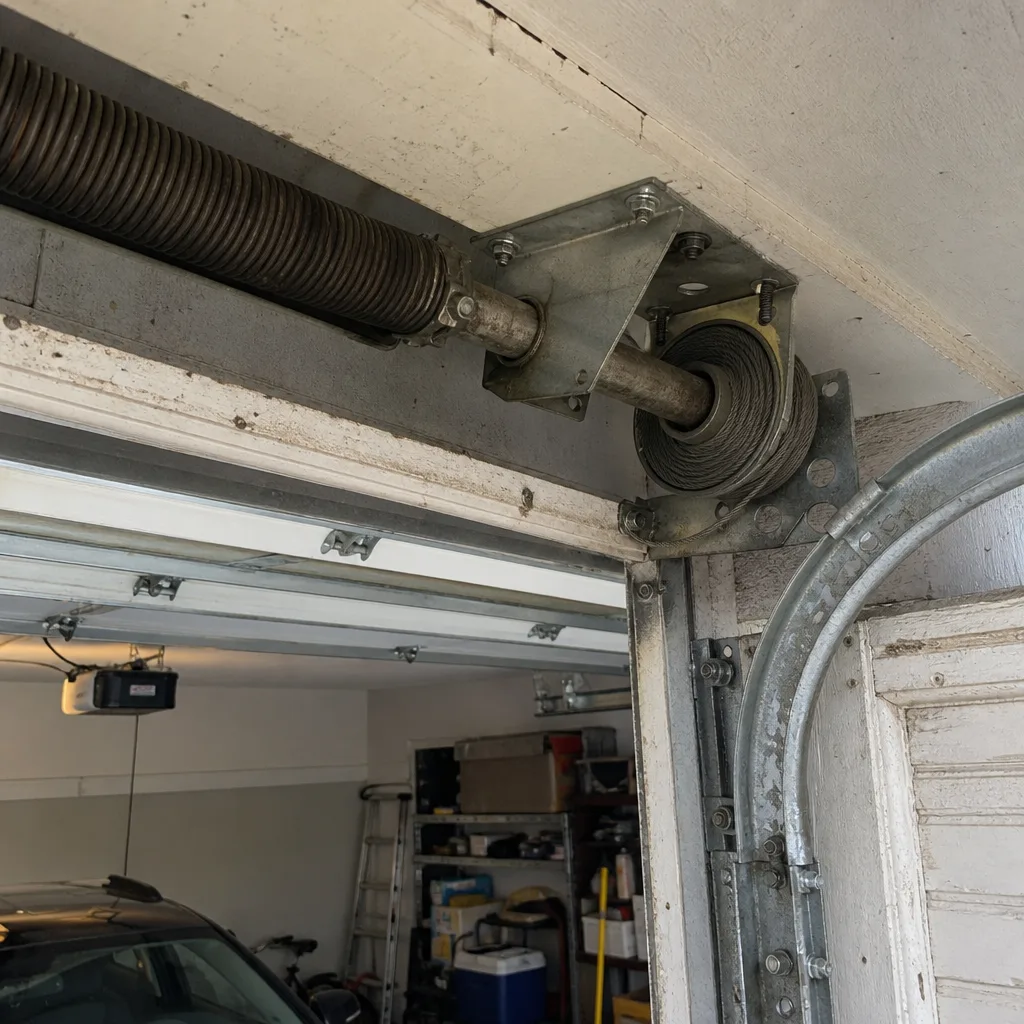 Before
 After
After Before
 After
AfterGarage Door Warning Signs: A Clermont Homeowner’s Reference Guide
A garage door that reverses before closing is showing one of at least six distinct failure modes, and the repair cost across those six modes runs from $0 for a sensor realignment to roughly $400 for a logic board replacement. The symptom alone tells you nothing about the bill. This guide and our complete guide to garage door in Clermont map each observable warning sign to its most likely failed component, the diagnostic step that confirms it, and the documented cost corridor, so you know whether you’re looking at a $15 roller or a $250 cable drum before you ever pick up the phone. We’ve written this for the homeowner who wants the mechanism named, the price range stated in dollars, and the diagnostic reasoning laid out in plain language.
Quick Answer
Garage door warning signs in Clermont fall into eight observable categories: reversal before closing, grinding or squealing during operation, hesitation on open, visible sag or imbalance, cable fraying, vibration or shaking, slow response from the opener, and unusual gaps at the door’s edges. Each maps to a specific component or adjustment, and the repair cost ranges from $0 for a sensor clean or alignment to roughly $400 for a logic board replacement. Most warning signs you can identify yourself in under five minutes, but anything involving torsion springs or cable assemblies requires a trained technician, no exceptions.
Table of Contents
- Reversal Before Closing: Six Failure Modes, One Symptom
- Grinding, Squealing, and Rubbing: What the Sound Tells You
- Hesitation on Open: Why Minor Delays Matter More in Clermont
- Visible Sag or Imbalance: Reading the Door Like a Carpenter’s Level
- Cable Fraying: The Warning Sign You Should Never Photograph and Ignore
- Vibration and Shaking: Separating Normal Movement from Component Failure
- Slow Opener Response: Logic Board, Limit Switch, or Something Simpler
- Edge Gaps and Light Leakage: When the Door Seals Wrong
- Common Mistakes to Avoid
- When to Call a Professional
- Frequently Asked Questions
BeforeAfterReversal Before Closing: Six Failure Modes, One Symptom
When a garage door starts down and then reverses before touching the floor, homeowners in Clermont almost always assume the safety sensors are misaligned. Sometimes that’s right. But the same observable behavior traces to at least six distinct components, and the repair bill ranges from zero dollars to the cost of a new logic board. Here is the breakdown, in the order we check them on a service call.
1. Photo eye misalignment or obstruction. The photo eyes are the two small sensors mounted about six inches off the floor on either side of the door opening. They project an invisible beam. If the beam is broken or the eyes are knocked out of alignment, the opener interprets it as an obstruction and reverses. This is the most common cause, and in many cases the fix is simply wiping the lens and nudging the sensor back until the indicator light glows steady. Cost: $0 if you do it yourself.
2. Sunlight interference. Clermont’s afternoon sun, particularly for east-facing garage doors in neighborhoods like Kings Ridge or Greater Pines, can blind the photo eye sensor. The beam gets overwhelmed by direct sunlight and the opener behaves as if something is in the way. The diagnostic test is simple: shade the sensor with your hand and see if the door closes normally. The fix may be as simple as repositioning the sensor slightly or fabricating a small shade. This is a Clermont-specific failure mode that homeowners in cloudier climates rarely encounter, and it’s one of the reasons we always ask about the time of day when the problem occurs. For year-round prevention tips, see our Seasonal Garage Door Care for Clermont: Year-Round Homeowner’s Guide.
3. Limit switch drift. The limit switch tells the opener where the door’s closed position is. When it drifts, the opener may believe the door has hit the floor before it actually has, triggering an immediate reversal. On LiftMaster and Chamberlain units, a limit switch adjustment is a homeowner-level fix if you’re comfortable with the control panel. On Genie models, the process varies by age. We’ve written about opener-specific quirks in our Garage Door Opener Repair & Installation in Clermont guide.
4. Tension imbalance. If one torsion spring is carrying more load than the other, the door will twist slightly as it descends, and the opener’s safety reversal may interpret the resistance as a blockage. You can check this by pulling the emergency release cord and operating the door manually. If it feels heavier on one side, the balance is off. This is where the diagnostic crosses into spring territory. Do not adjust torsion springs yourself. Cost to have this corrected: $120 to $220 for a spring replacement or re-tension, depending on spring size and cycle rating.
5. Track obstruction or misalignment. A roller that’s seized, a track that’s been knocked out of plumb, or debris lodged in the vertical track can create enough resistance to trigger reversal. The test is visual: inspect both tracks for gaps, bends, or rust. In salt-adjacent areas of central Florida, track rust is less of a factor than in coastal cities, but Clermont’s rainfall can accelerate rust on cheap tracks installed before 2010.
6. Logic board failure. When every mechanical component checks out and the door still reverses mid-travel, the logic board (the circuit board inside the opener motor housing) may be misreading the safety sensor signal. This is the most expensive repair on this list, and it’s the one most often misdiagnosed by DIY troubleshooting. A replacement logic board for a LiftMaster or Chamberlain typically runs $180 to $400 installed, depending on the opener’s age and whether the board is still manufactured.
What to tell a technician: Instead of saying “my door reverses,” say “my door reverses after traveling about three feet, and the photo eye lights are solid green on both sides.” That one sentence tells us you’ve already eliminated the most common cause, and it triggers a documented inspection rather than a reflexive sensor replacement. The Servo Garage Doors Clermont home page describes our diagnostic process in more detail.
Grinding, Squealing, and Rubbing: What the Sound Tells You
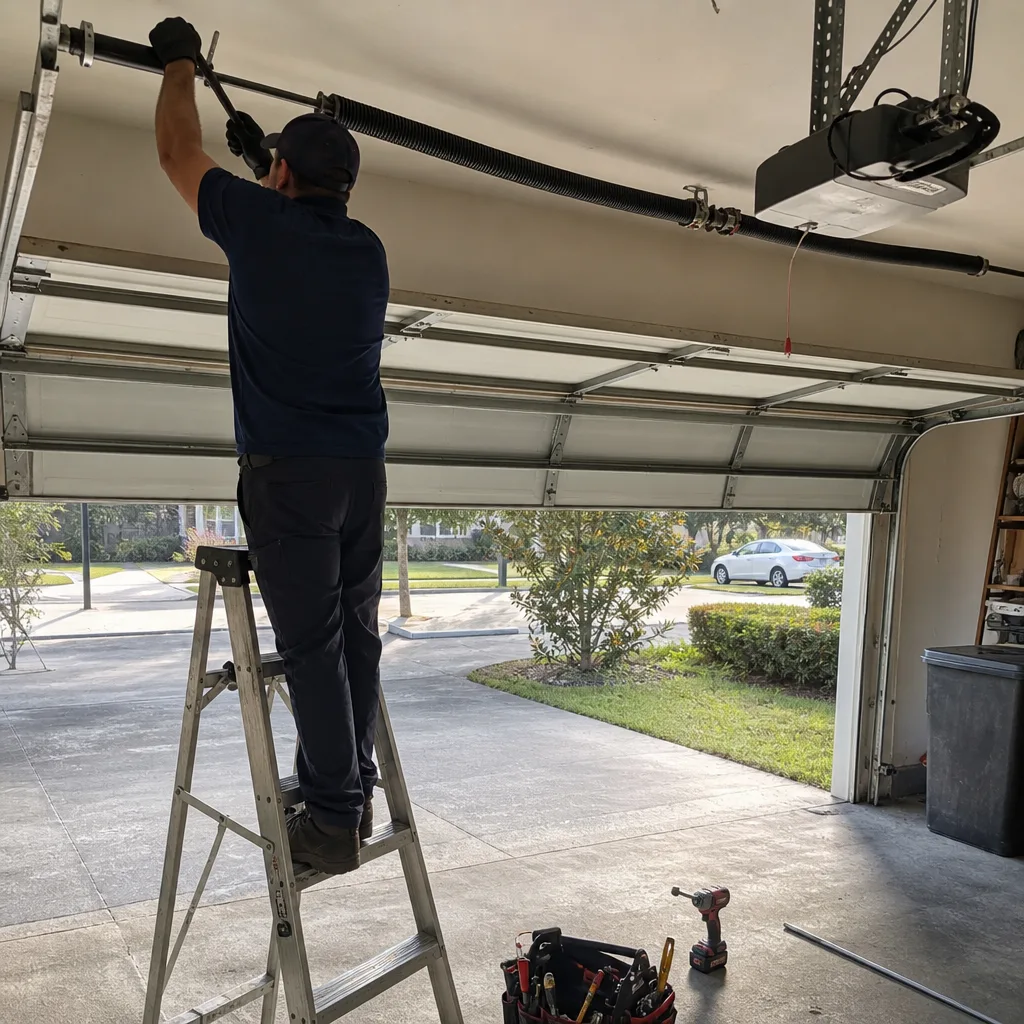
Noise is the warning sign Clermont homeowners report most often, and it’s the one that carries the least diagnostic information unless you separate it by type. Grinding, squealing, and rubbing are three different sounds, produced by three different component failures, at three different price points. Here is how to tell them apart.
Grinding is a metal-on-metal sound with a rough, gravelly quality. It usually points to rollers running dry in their tracks, or worse, rollers whose bearings have failed entirely. A sealed roller with a failed bearing doesn’t roll, it scrapes. The cost to replace a set of rollers in Clermont runs $90 to $160 for standard nylon rollers, installed. If the grinding is coming from the opener motor itself, the gear kit inside the motor housing may be stripping. That’s a $140 to $260 repair depending on the opener brand.
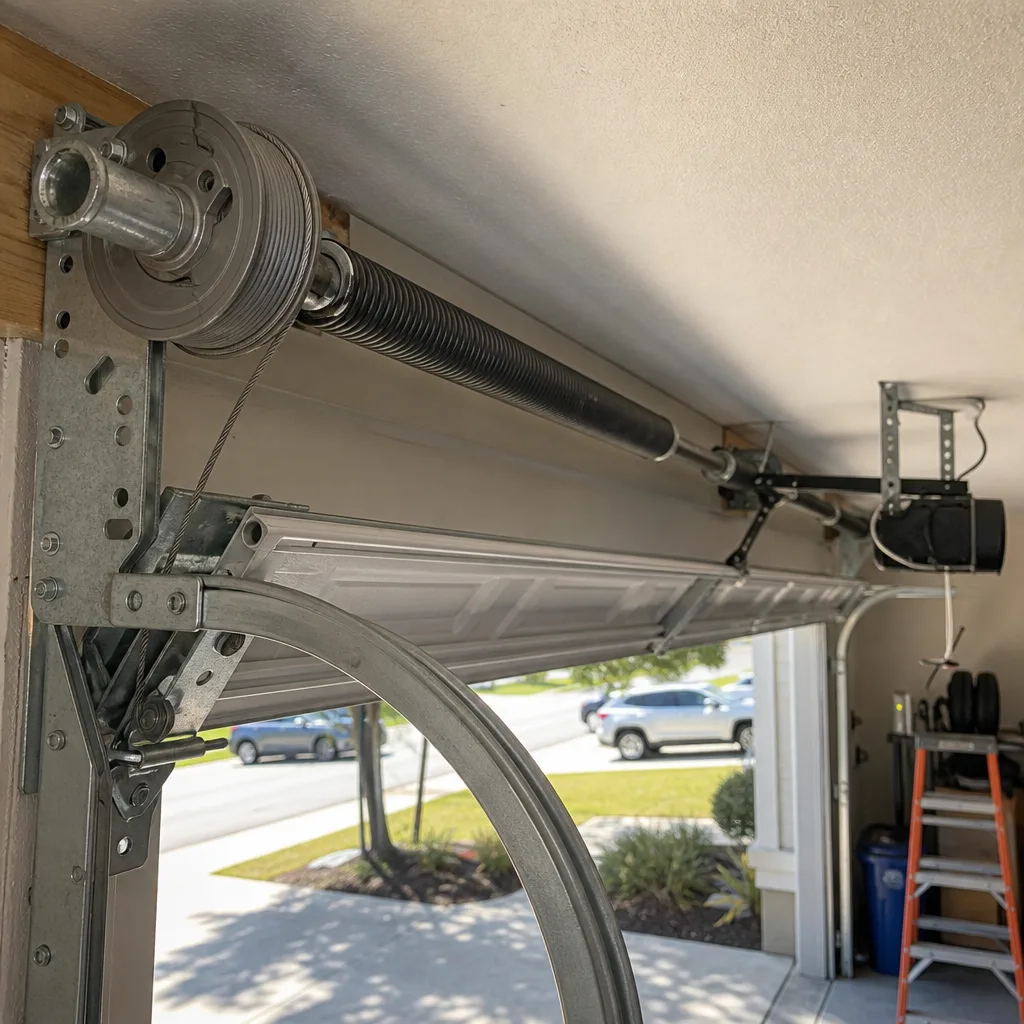
Squealing is a high-pitched, almost musical sound. On a garage door, squealing most often traces to dry or failing torsion spring coils. The torsion spring is the large spring mounted horizontally above the door opening. It stores and releases the energy that lifts the door’s weight. When its internal friction increases, it squeaks. A light application of spring lubricant can quiet it temporarily, but persistent squealing is often a precursor to spring failure. The diagnostic here is simple: if the squeal happens only while the door is moving and not when the opener is running with the door disengaged, the spring is the source. Spring replacement in Clermont runs $150 to $350 depending on wire diameter and cycle rating. This is not a DIY repair.
Rubbing is a consistent, low-frequency sound, like something is dragging. The usual cause is a track that’s slightly out of alignment, forcing the roller against the track wall. You can often see the rub mark on the track itself as a polished line. Rubbing is worth addressing quickly because it accelerates roller and track wear. A track alignment and roller inspection runs $80 to $125 as a service call in Clermont.
The real point here: “my door makes a noise” is not enough to quote a repair. “My door makes a grinding sound from the right track during the last two feet of travel” is. The specification is what separates a $10 diagnosis from a $200 guess. Marcus Deller, our owner, established the practice of photographing the failed component before quoting any replacement, and that rule applies just as firmly to noise complaints as to visible damage. If you’re planning a larger project, read How to Hire a Garage Door Contractor in Clermont: A Step-by-Step Guide first. You see the scored roller, the cracked spring, the stripped gear, before you sign anything.
Hesitation on Open: Why Minor Delays Matter More in Clermont
A half-second hesitation when the door begins to open feels minor. In Clermont, it deserves more attention than homeowners typically give it. Here’s why: the hesitation is often the first sign that the torsion spring is losing tension, and in central Florida’s humid climate, the corrosion mechanisms that cause that tension loss operate year-round.
When you press the opener button, the motor starts, but the door doesn’t move immediately. Instead, there’s a pause, sometimes accompanied by a soft clunk. That pause is the opener’s internal travel measuring its load. If the spring is weak, the opener strains for a moment before the door begins to lift. A properly tensioned spring responds instantly; the hesitation is the mechanical lag of an opener compensating for lost counterbalance.
Clermont’s humidity is the compounding factor. Torsion springs rated for 10,000 cycles will fail sooner if the coil surface corrodes, and corrosion creates micro-fractures that don’t show on a visual inspection. We see this most often on doors installed before 2015 in neighborhoods like Clermont Heights and Sawgrass Bay, where the original springs are now 10 to 15 years old. A spring that hesitates on open is a spring that’s already lost some of its designed tension, and the failure mode from that point is not gradual decline. It’s a clean break, typically while the door is closed, which is the safest possible failure point but also the most inconvenient.
The diagnostic step is straightforward and safe: pull the emergency release cord (the red handle hanging from the opener rail) while the door is closed. Lift the door manually to waist height and let go. A properly balanced door will stay put or drift very slowly. If it drops, the spring tension is insufficient. If it’s dramatically hard to lift, the spring is failing. Either way, the spring replacement cost in Clermont runs $150 to $350, and the job includes a photo record of the failed spring before the new one goes in. That’s a Garage Door Repair in Clermont call, not a homeowner adjustment.
Do not attempt to re-tension or replace a torsion spring yourself. The spring is under enough stored energy to cause serious injury if it releases unexpectedly. A trained technician winds it using the proper bars and counts the exact number of quarter-turns the spring requires for your door weight and height. Our technicians follow a documented procedure for this, and the customer receives the photo evidence of the old spring’s condition as part of the service record.
Visible Sag or Imbalance: Reading the Door Like a Carpenter’s Level
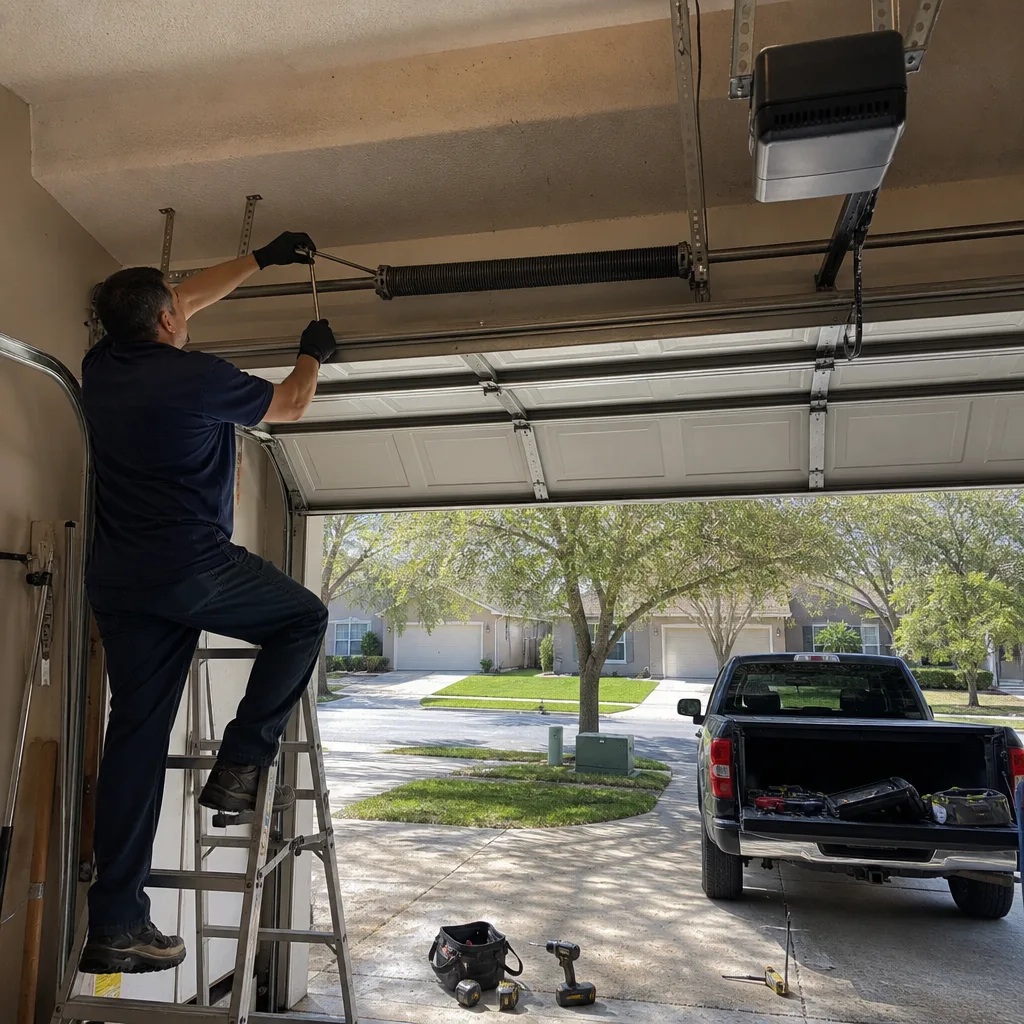
A garage door should sit perfectly level when closed and remain parallel to the ground as it travels. When it doesn’t, the observable symptoms are subtle: a wider gap at one bottom corner, a diagonal shadow line under the door, a door that cants slightly to one side when at the midpoint of its travel. These are imbalance symptoms, and they’re worth diagnosing early because the root cause, if left unaddressed, accelerates wear on every other component: rollers, hinges, cables, and the opener itself.
The first diagnostic step is a visual inspection from inside the garage with the door closed. Look at the gap under the door. If the gap is wider on the right side than the left, the door is out of level. Then pull the emergency release and operate the door manually through its full travel. A door that binds at a consistent point or drifts toward one track is telling you something specific: one side’s cable is holding more load than the other.
Here’s the component map for sag and imbalance:
- Cable slip on the drum: The lift cable wraps around a grooved drum at the top of the torsion assembly. If the cable slips a groove, that side of the door loses lift synchrony. This is a $85 to $125 repair.
- Uneven spring tension: If one spring is fatiguing faster than its paired spring, the door lifts unevenly. Spring replacement, as noted, runs $150 to $350.
- Bent track section: Usually the result of a vehicle impact, a bent track forces the door off-level as it transits the damaged section. Track replacement runs $100 to $200 per section.
- Loose hinge or bracket: A single loose lag bolt can allow the track to flex, which reads as sag. Tightening hardware is often a $0 fix if diagnosed early.
We service doors from Clopay, Amarr, Wayne Dalton, and the other major brands, and the imbalance patterns are consistent across all of them. The difference is in the hardware: Clopay and Amarr doors tend to use heavier gauge track and hinges, which resist bending longer, while some older Wayne Dalton models use a lighter track profile that bends more readily under side impact. If you’re unsure of your door’s brand, the manufacturer’s label is usually printed on the interior face of the bottom panel or on the track near the ceiling.
Cable Fraying: The Warning Sign You Should Never Photograph and Ignore
Of the eight warning signs in this guide, cable fraying is the one most likely to be noticed and deferred, and it’s the one that most reliably leads to a full door failure within weeks of first observation. A frayed cable is a broken cable that hasn’t finished breaking yet. It will finish, usually while the door is in motion, and when it does, the sudden release of tension on one side will cause the door to slam or jam sharply, often bending the track and damaging panels in the process.
Here’s what to look for: the lift cables are the two steel cables that run vertically along the outside edges of the door, from the bottom brackets up to the cable drums at the top of the torsion assembly. Fraying looks like small broken wires poking out from the cable’s surface, typically near the bottom bracket or where the cable wraps onto the drum. If you see it, the repair is a cable replacement, and it runs $100 to $185 in Clermont, including both cables. Both cables are replaced even if only one shows wear, because a matched set ensures even tension.
This is a repair that crosses firmly into professional territory. The cables operate in concert with the torsion springs, and releasing the cable from the drum without first de-tensioning the spring is extremely dangerous. The cable itself is also under load, and a snapped cable can whip. Our technicians document the frayed cable with a photo before touching it, replace both cables, adjust the tension, and re-balance the door. The photo goes into your service record along with the written scope and price, all agreed before the work starts.
We mention the photo record here because this particular warning sign is easy to visually confirm and easy for a homeowner to photograph. When you call, you can tell us “the right lift cable is frayed near the bottom bracket, and I have a photo.” That’s a call that gets a named technician dispatched, not a callback window. We answer the phone 24/7, including holidays.
Vibration and Shaking: Separating Normal Movement from Component Failure
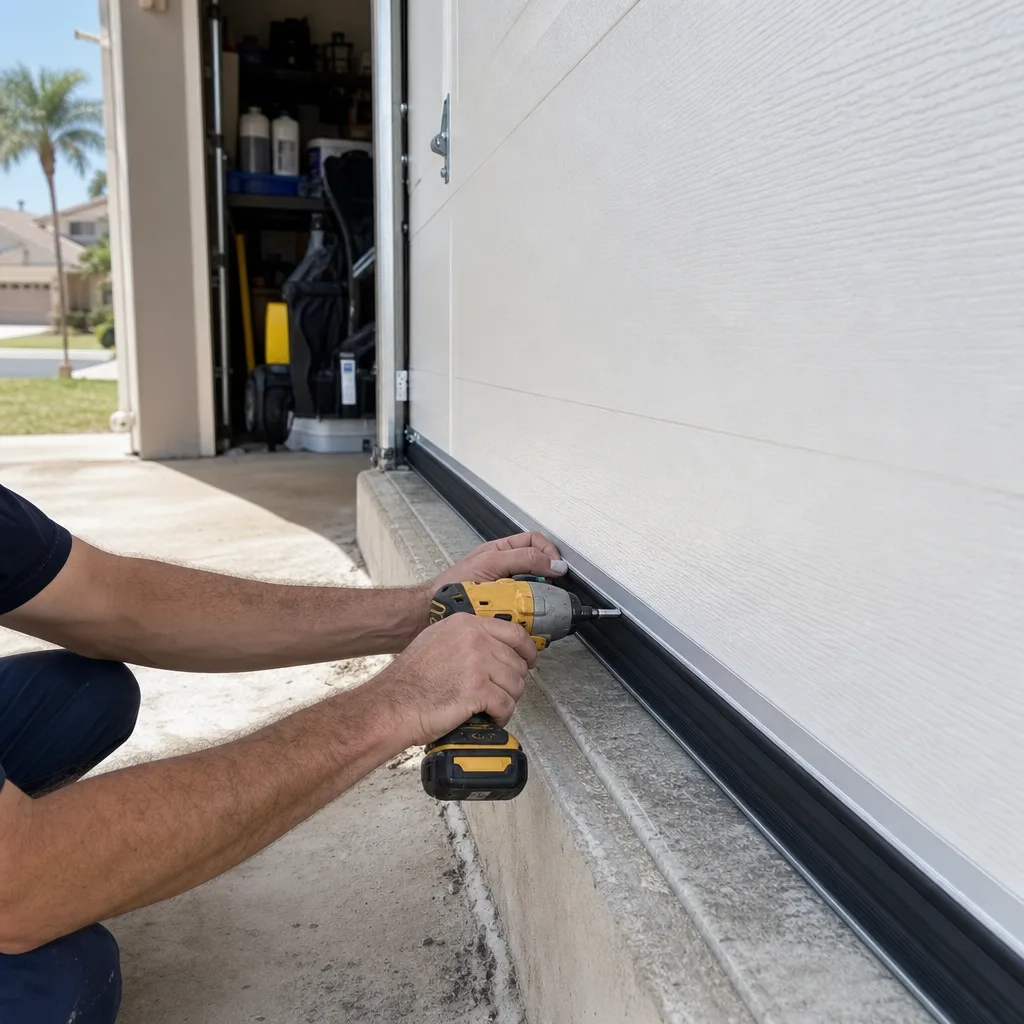
Every garage door vibrates a little. The framework isn’t rigid, and the panels flex. But there’s a difference between the normal thrum of a door in motion and the shudder that signals a failing component. The distinction is in the amplitude and the location.
Normal vibration: you can see the door panels flex slightly as the door moves, but the movement is uniform and doesn’t produce a particular sound. Abnormal vibration: the door shakes visibly at a specific point in its travel, or the opener motor housing shakes even when the door isn’t attached to it. Here’s the component map.
Worn rollers are the most common cause of abnormal vibration. A roller with a flattened bearing doesn’t rotate smoothly in the track; it stutters, and that stutter transmits through the door as a shake. The fix is a roller replacement set, $90 to $160 installed, and the difference in operation is immediately apparent. If you live in a neighborhood with high wind exposure, like a lakefront property on Lake Minnehaha or Lake Minneola, wind buffeting accelerates roller wear, and we replace rollers more frequently on exposed doors than on sheltered ones.
Loose hardware is the second cause. The vibration of years of operation loosens the lag bolts that hold the track brackets to the door frame, and once one bracket is loose, the track itself becomes a tuning fork. The diagnostic test is simple: grab the track and try to wiggle it. If it moves, the bolts need tightening. This is a $0 fix if you have a wrench and a ladder, and a $75 service call minimum if you’d rather have it done as part of a broader inspection.
Opener motor vibration isolated to the motor housing, with the door disengaged, points to a worn gear kit or a failing motor bearings. This is an opener repair issue, not a door issue, and the price range is $140 to $260 for a gear kit replacement. If you need more detail on opener diagnostics, our Garage Door Opener Repair & Installation in Clermont page covers the common failure modes by brand.
A bent panel or damaged section joint can also cause a shake as the door transits the damaged area. If the vibration happens at the same point in every cycle, note the panel position and tell your technician. That specificity is what triggers a targeted inspection rather than a general “tune-up.”
Slow Opener Response: Logic Board, Limit Switch, or Something Simpler
When you press the wall button or the remote and the door takes a beat before responding, or the opener seems to run slower than it used to, Clermont homeowners tend to assume the motor is dying. Sometimes it is. More often, the cause is simpler, and the diagnostic path runs from the cheapest fix to the most expensive.
Step 1: Check the remote and wall button. If the wall button responds instantly but the remote lags, the issue is the remote’s battery or signal interference, not the opener. Replace the battery, try again. If the remote works fine from ten feet but not from thirty, the antenna wire on the opener may have broken off or been painted over. Antenna replacement is a service-level fix, usually under $50 if it’s the only issue.
Step 2: Check the force settings. Every opener has a force adjustment, which controls how much resistance the motor will push against before reversing. If the force setting is too low, the opener may strain and reverse on the slightest resistance. This is the opener protecting itself, and it reads as “slow” or “weak” operation. Adjusting the force setting is a homeowner-level fix if you have the manual; the adjustment is usually a small dial or digital setting on the motor unit. But if raising the force setting doesn’t restore normal operation, the problem is mechanical, not electrical.
Step 3: Check the limit switch. The limit switch tells the opener where the door’s open and closed positions are. If it’s drifted, the opener may think the door is already partway open when it’s fully closed, resulting in a sluggish start. Limit switch adjustment is another homeowner fix on most LiftMaster and Chamberlain models, and the process in the manual is clear.
Step 4: Consider the logic board. The logic board is the circuit board that runs the opener’s decisions. It processes the safety sensor signals, the limit switch readings, and the remote inputs. A failing logic board can produce inconsistent behavior: sometimes the door responds instantly, sometimes it lags, sometimes the opener runs for no reason. Logic board replacement runs $180 to $400 installed, and it’s the repair we only quote after the mechanical components have been ruled out. If you call us for a slow opener in Clermont, we don’t quote a logic board on the phone. We inspect the door first, because a tight roller or a dry spring can mimic opener problems, and the photo record we take documents exactly what we found and what we did.
Edge Gaps and Light Leakage: When the Door Seals Wrong
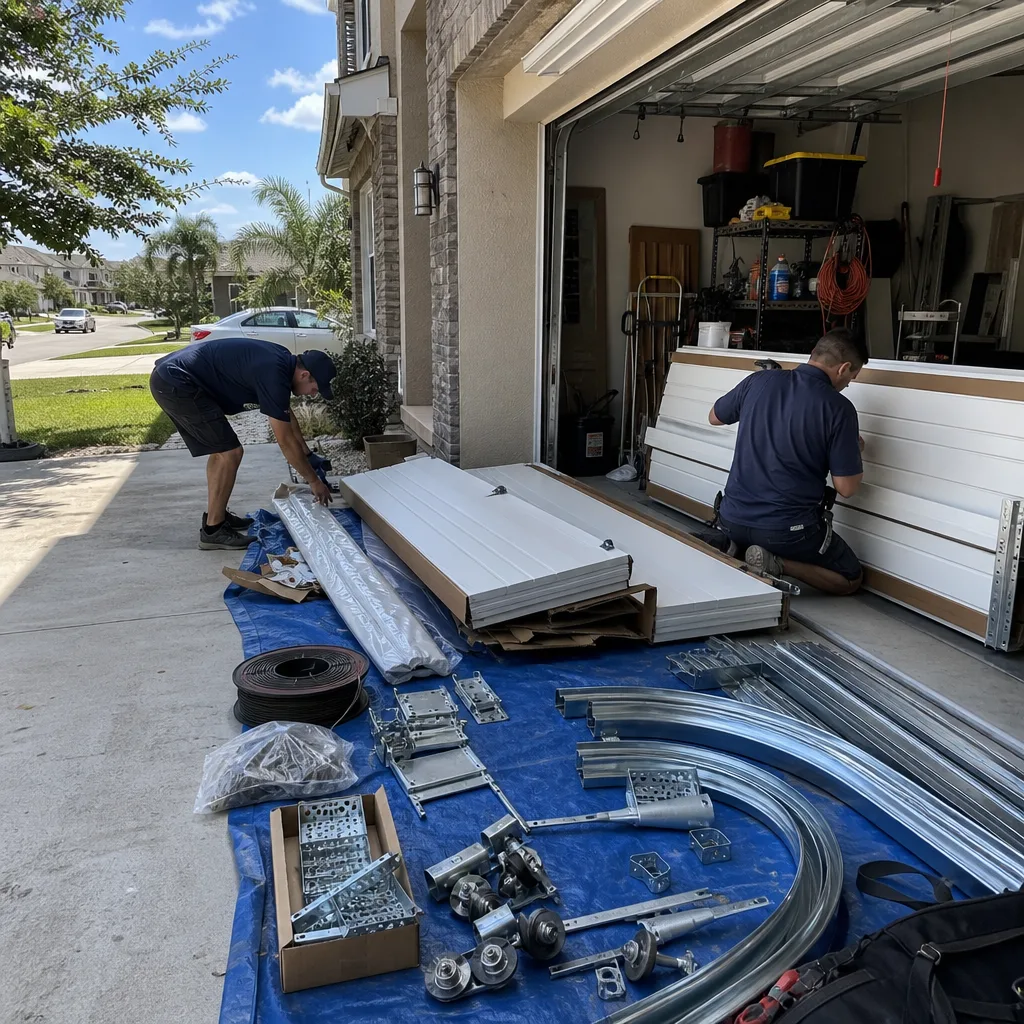
A garage door that shows daylight at the edges or along the top isn’t just an energy problem. It’s a structural warning sign, and in Clermont, it’s also a pest and moisture problem. Here’s the mapping.
Top gap: A gap at the top of the door, above the top panel, usually means the door isn’t closing fully, or the top panel has warped. If the gap is even across the entire top, the limit switch is probably stopping the door too early, which is an adjustment issue. If the gap is larger at one corner, the door is out of level, which circles back to the sag and imbalance section above.
Bottom gap: The bottom weatherstrip, also called the astragal, is a rubber or vinyl seal that runs along the bottom panel. It compresses when the door closes. After years of Clermont sun and rain, it stiffens, cracks, and stops sealing. A new bottom seal runs $85 to $160 installed, and the improvement in dust, water, and insect intrusion is immediate. This is one of the most common replacements we perform on homes built before 2015 in Clermont.
Side gaps: Side gaps are usually a track alignment issue. The vertical track holds the rollers, and if the track is pushed outward, the door panel leans away from the jamb, leaving a gap. The fix is a track realignment, $80 to $125 as a service call. In some cases, homeowners install vinyl weatherstripping along the jamb to compensate, which is a reasonable $30 to $60 hardware store fix that doesn’t address the underlying track misalignment, but does seal the gap.
Why this matters more in Clermont than in drier climates: central Florida’s rainy season runs from May through October, and a gap at the bottom or side of the door lets that rain in. The humidity also accelerates rust on the track and hardware. We see a noticeable uptick in weatherseal and track service calls starting in May, after the first heavy rains make the gaps obvious. If you’d like guidance on whether your gap is a seal replacement or a track issue before you commit to a visit, a photo sent to our team can usually settle the question.
Common Mistakes to Avoid
- Ignoring a hesitation because the door still works. A half-second delay on open is often the first sign of failing spring tension. It’s cheaper to replace a spring before it breaks than to replace the spring plus a bent panel and track after the failure.
- Lubricating a squealing spring and calling it fixed. Lubricant quiets the symptom but doesn’t restore lost tension or heal micro-fractures in the coil. If the squeal returns within a few weeks, the spring needs replacement, not more spray.
- Adjusting the opener force to overcome a binding door. If the door is hard to lift manually, the problem is mechanical, not the opener’s settings. Increasing the force to push through the resistance puts strain on every component and shortens the opener’s life.
- Replacing one cable instead of both. Cables wear as a set. A mismatched pair creates uneven tension, which reproduces the imbalance that caused the original failure.
- Delaying a second opinion on a large quote. If a competitor quotes you a full door replacement, we’ll review that written estimate for free. Clause 1 of The Haven Standard means you get a flat, written price before any work starts, and that applies to second opinions too. Bring the paperwork.
- Waiting for a “worse” symptom to justify a repair. The warning signs in this guide are the early indicators. A grinding roller doesn’t improve with time. A frayed cable doesn’t heal. The door will tell you when it’s failing; the goal of this guide is to help you hear it early enough to keep the repair small.
- Attempting DIY torsion spring work. This is the single most dangerous repair on any home, and it’s not a matter of knowing what you’re doing. It’s a matter of stored energy in the spring under maximum tension. Our technicians use proper winding bars, count the quarter-turns exactly, and document the whole process. There’s no safe way to do this without the right tools and training.
When to Call a Professional
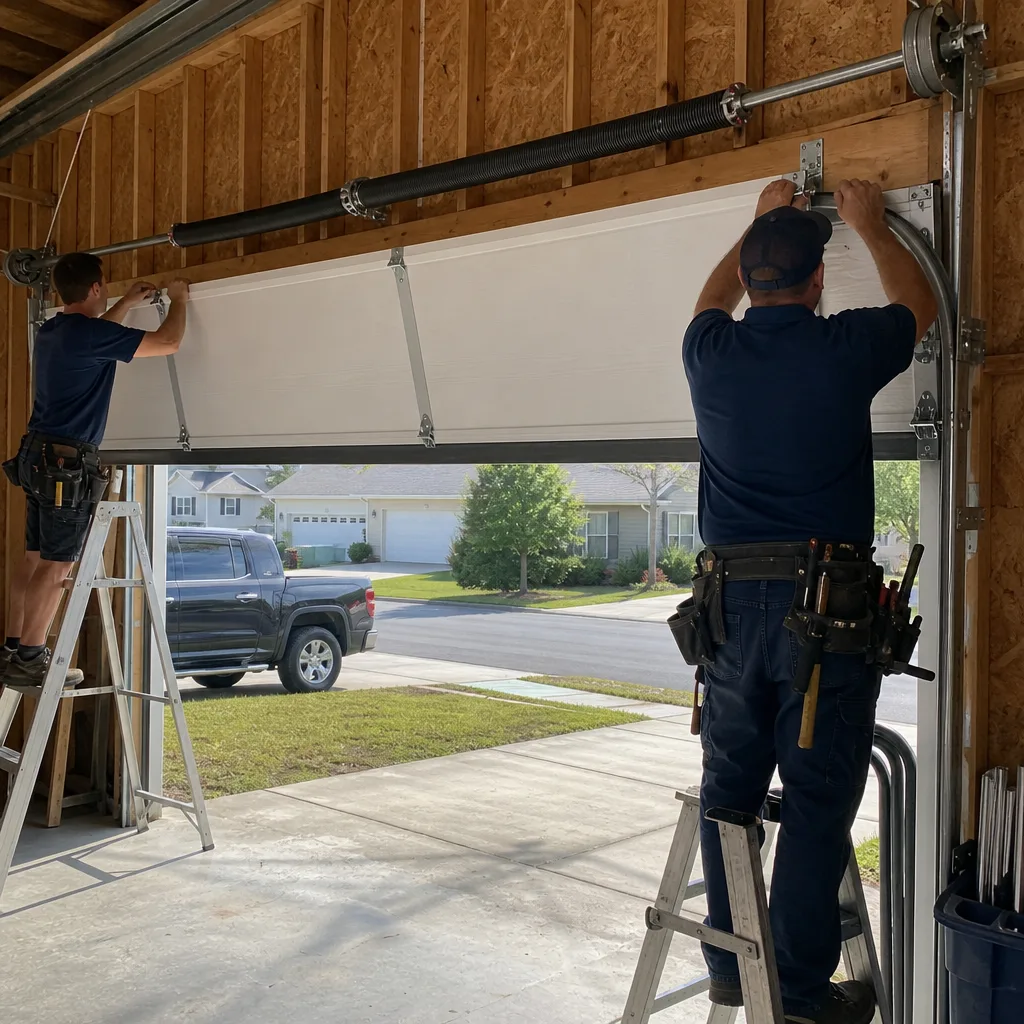
Call a professional if you see cable fraying, if your door fails the manual balance test (it drops or is extremely hard to lift), if you hear grinding from the opener motor, if the door has come off its track, or if any reverse-after-closing issue persists after you’ve cleaned and aligned the photo eyes. These are the scenarios where a trained technician’s inspection is cheaper than the damage caused by a failed component. If you’re in Clermont, Garage Door Installation in Clermont is our full-service page for new door work if you reach the point where replacement makes more sense than continued repair. Servo Garage Doors Clermont offers free estimates with a written price before any work starts. Call (689) 400-2825 and we’ll walk through the warning sign you’re seeing, quote you the diagnostic service, and schedule a time that works.
Frequently Asked Questions
A garage door that reverses before closing is usually triggered by photo eye misalignment, sunlight interference, limit switch drift, tension imbalance, track obstruction, or logic board failure. For more guides & resources, visit our blog. The repair cost ranges from $0 for a sensor clean to about $400 for a logic board replacement. If you’ve already cleaned and aligned the sensors and the problem persists, call (689) 400-2825 and describe at what point in the travel the reversal happens.
Garage door spring replacement in Clermont typically runs $150 to $350, depending on the spring’s wire diameter, length, and cycle rating. The price includes the spring, installation, and a re-balance of the door. Our written price is delivered before any work starts, and we photograph the failed spring so you see exactly what was replaced. Call (689) 400-2825 for a specific quote on your door’s spring size.
No. A frayed cable is under load from the torsion spring, and attempting to remove or replace it without de-tensioning the spring first can cause serious injury. Cable replacement should always be done by a trained technician, and both cables should be replaced as a set. In Clermont, this repair runs $100 to $185 including both cables and re-balancing.
A hesitation on open is often the first sign that the torsion spring is losing tension. The opener strains for a moment before the door begins to lift, which creates the pause. In Clermont’s humid climate, spring corrosion accelerates this process. Test the door by pulling the emergency release and lifting manually; a door that drops to the floor needs spring service, which runs $150 to $350.
We recommend a visual inspection every six months in Clermont, and a professional inspection once a year. The rainy season from May through October accelerates weatherseal wear and track rust, so an inspection in early spring catches the damage before the summer storms. The inspection itself covers the springs, cables, rollers, tracks, opener, and safety sensors, with a written report and photo record of anything we find.
Yes. Our technicians work on all eight major brands including LiftMaster, Chamberlain, Genie, Clopay, Amarr, Wayne Dalton, Craftsman, and Raynor. We also service older and discontinued models, and we’ll source parts for doors from manufacturers that are no longer in business. If you’re unsure of your door’s brand, the label is typically on the interior face of the bottom panel. Call (689) 400-2825 and we’ll identify it from your description or a photo.
The Bottom Line
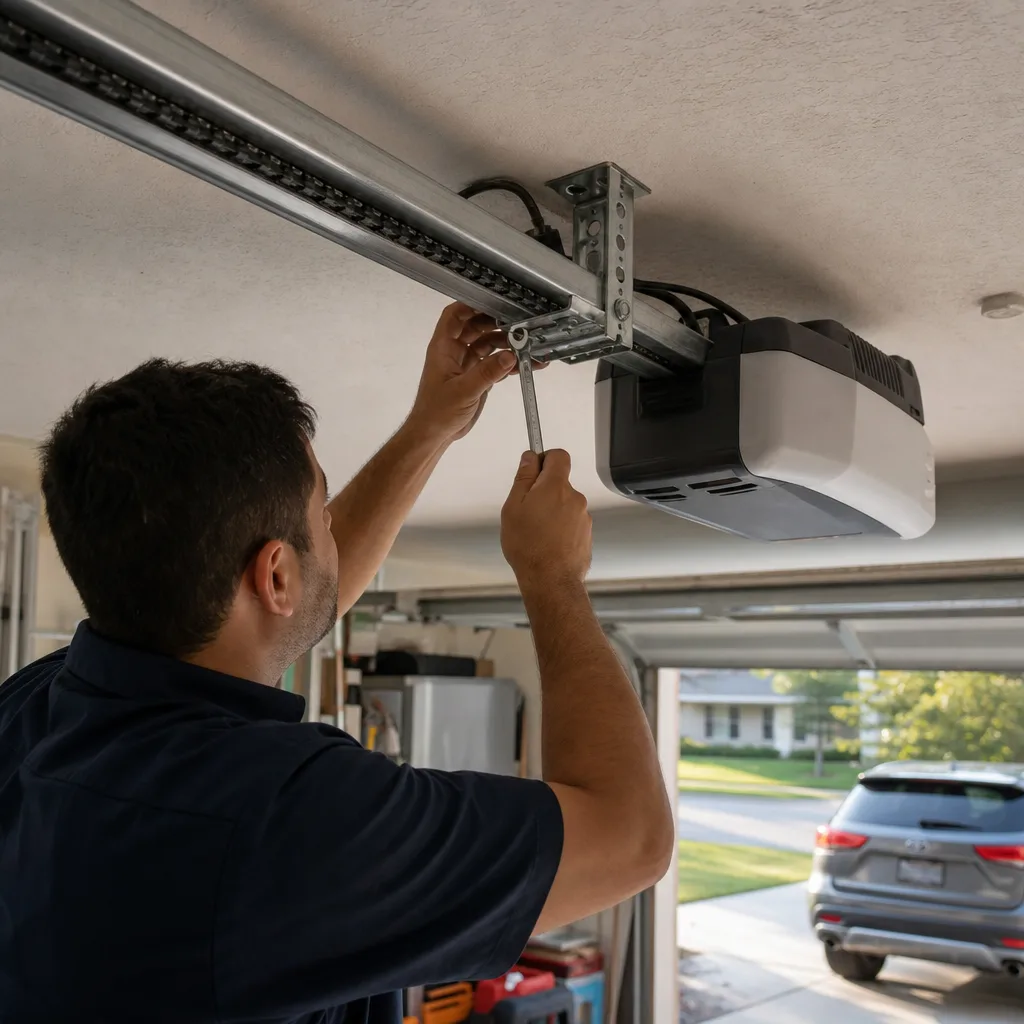
A garage door talks. The reversal, the grind, the hesitation, the sag, the fray, the shake, the slow response, the gap: each one is a specific component telling you something specific. The skill is in the translation. This guide gives you the symptom-to-component map so you can understand what you’re seeing, perform the safe diagnostic steps yourself, and call a technician with language that gets you an accurate inspection rather than a hasty replacement quote. In Clermont, where humidity, rain, and sun all work against your door’s components year-round, early attention to warning signs keeps repairs in the hundred-dollar range instead of the thousand-dollar range. When you’re ready, we’re here, written price first, photo record always.
Written by Marcus Deller, Owner at Servo Garage Doors Clermont, serving Clermont since 2015.