
Last updated September 20, 2026
Full 25-point door and opener safety check with every visit - springs, cables, rollers, tracks, and your LiftMaster or Chamberlain opener included
You get a price before we start. It does not change when the truck arrives.

LiftMaster openers
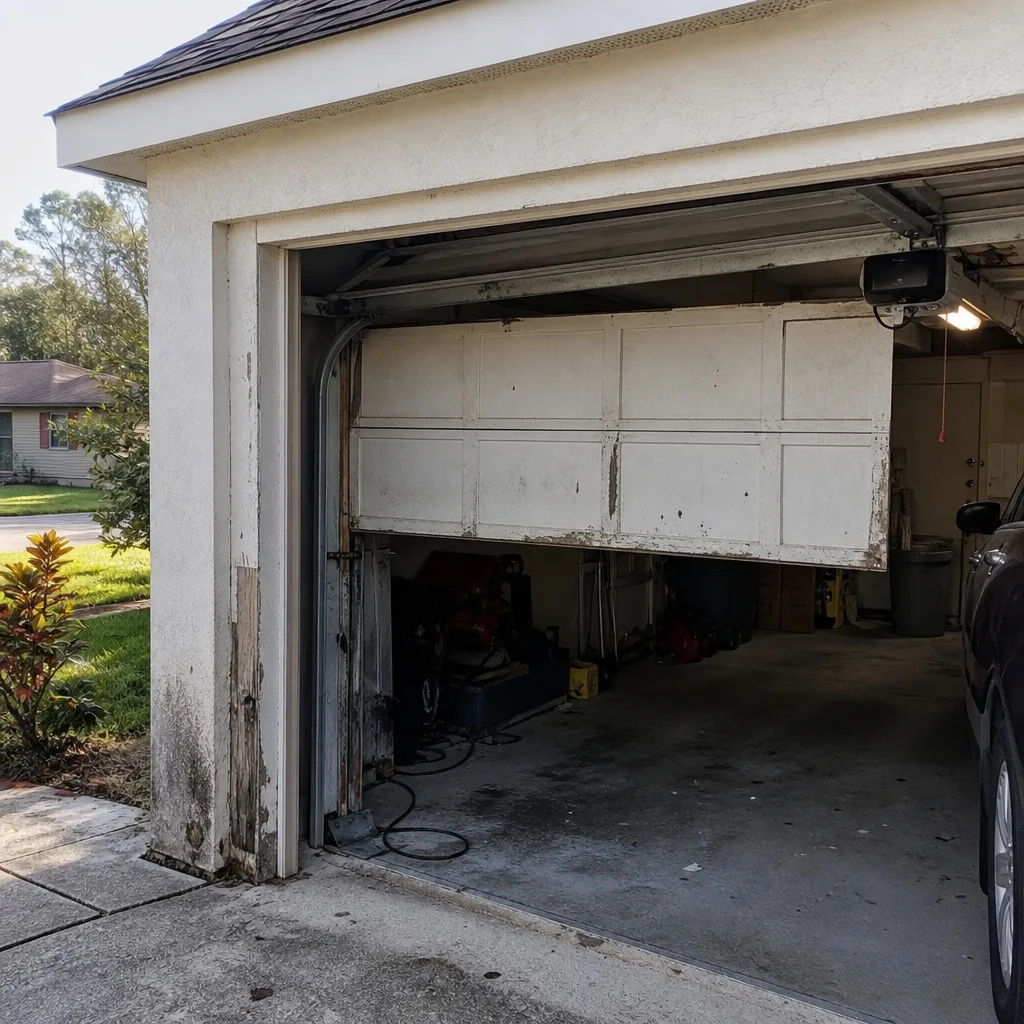 Before
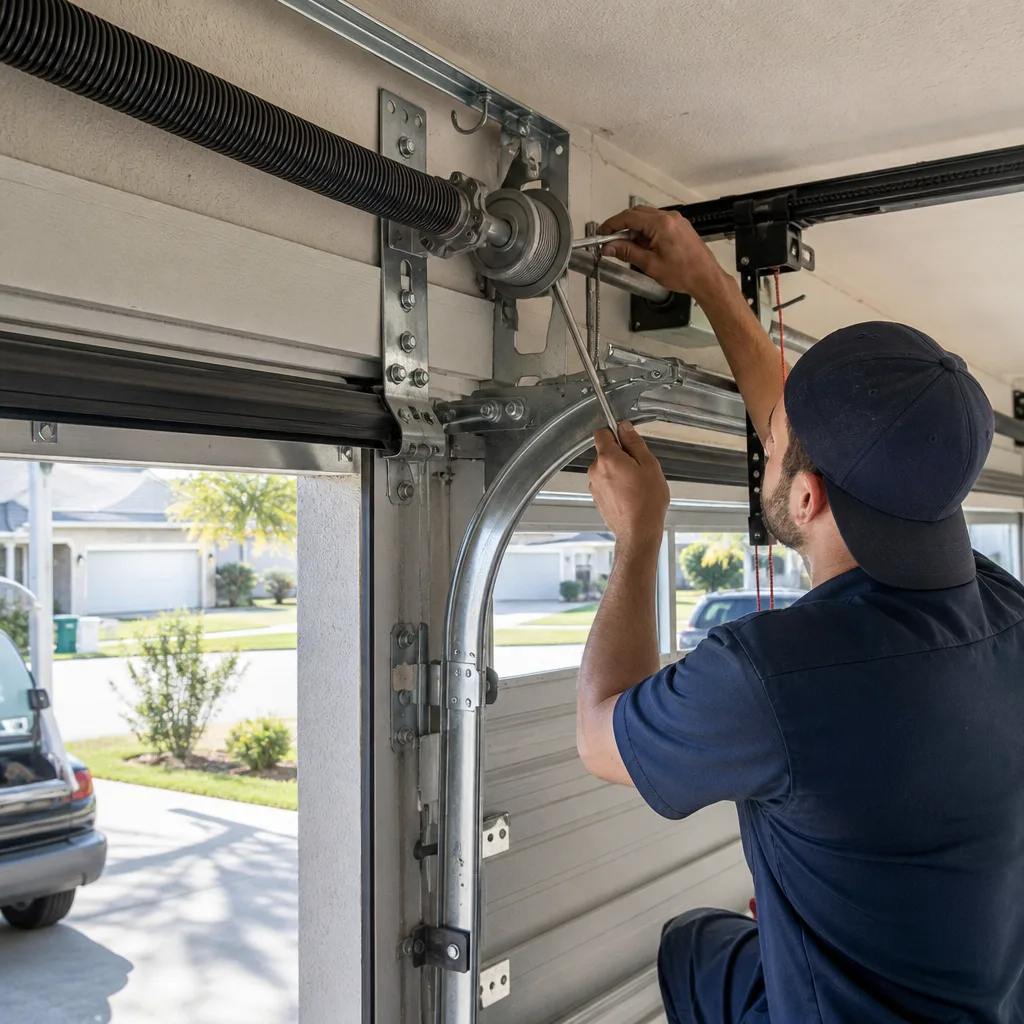 After
After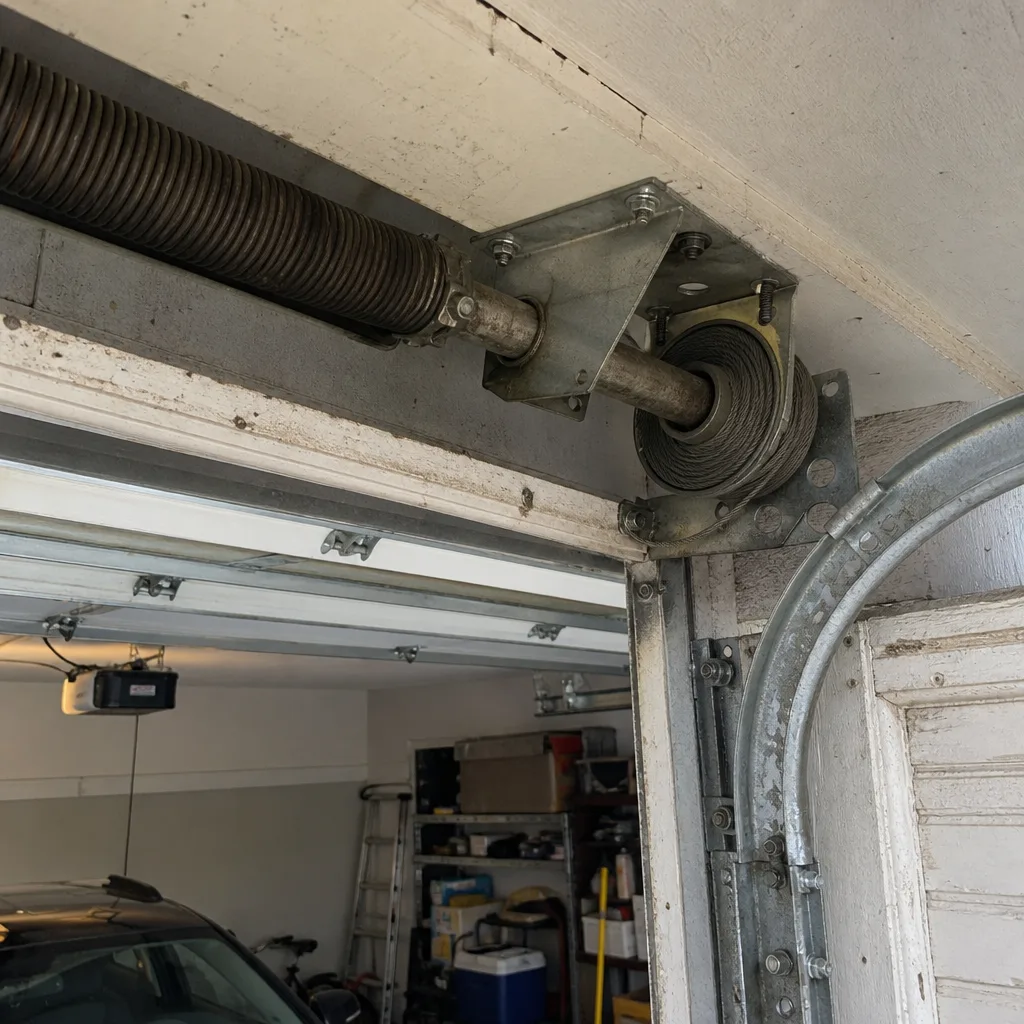 Before
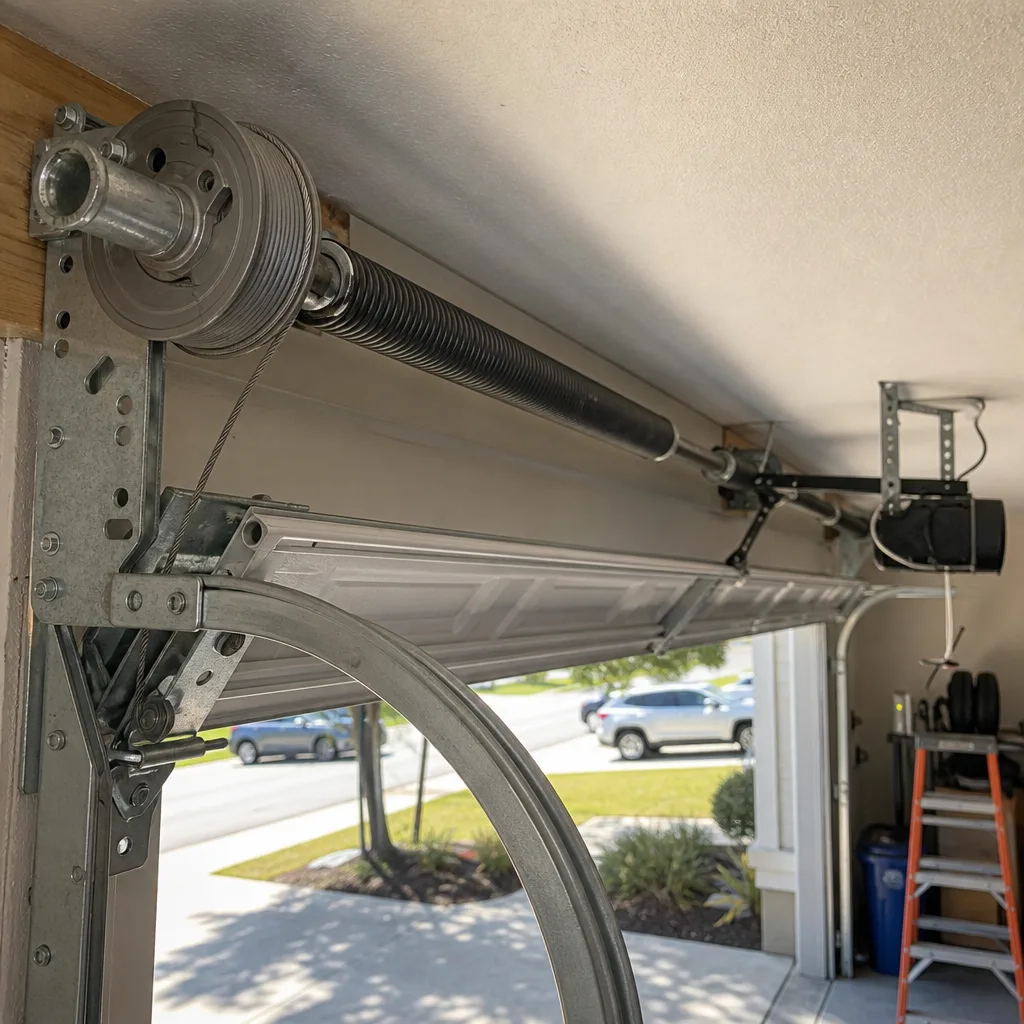 After
After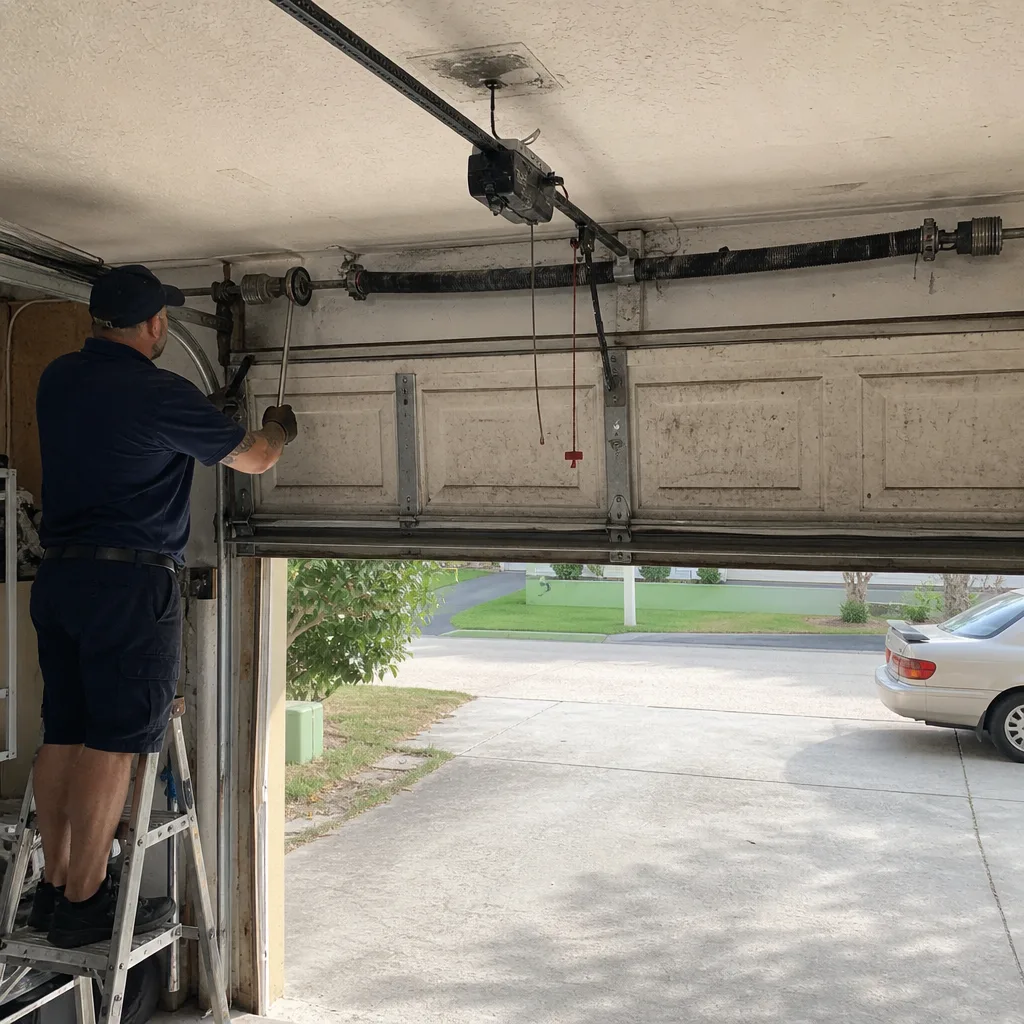 Before
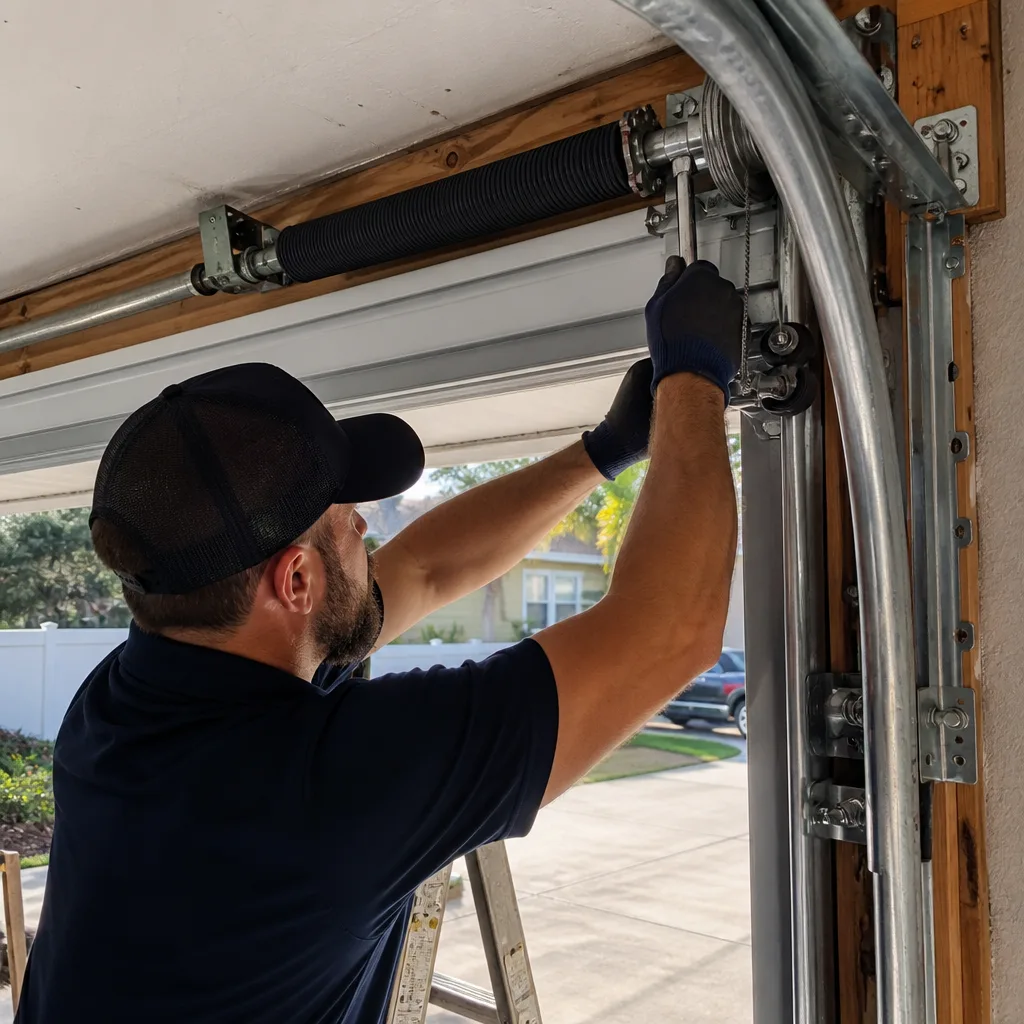 After
AfterHow to Hire a Garage Door Contractor in Clermont: A Step-by-Step Guide
A Florida contractor license number takes about 30 seconds to verify at the Department of Business and Professional Regulation website. Fewer than one in five homeowners in Clermont actually do it before the technician pulls into the driveway, which is precisely the moment the leverage shifts. This guide closes that gap. You’ll learn what to verify before you call, what to require when the technician arrives, and what documentation separates a legitimate written estimate from a verbal number that can change by the time the work is done. We’ve been doing garage door work in Clermont since 2015, and we’ve built our entire process around what we’re about to show you.
Quick Answer
To hire a garage door contractor in Clermont, verify the company’s Florida license through DBPR, confirm they quote a flat written price with a written scope before any work begins, and require documentation of the failed component before agreeing to any replacement. Ask one question up front: “Will you photograph the failed part before quoting a replacement?” A contractor who hesitates on that question hasn’t operated under a written-price-first system, and you should keep looking.
Table of Contents
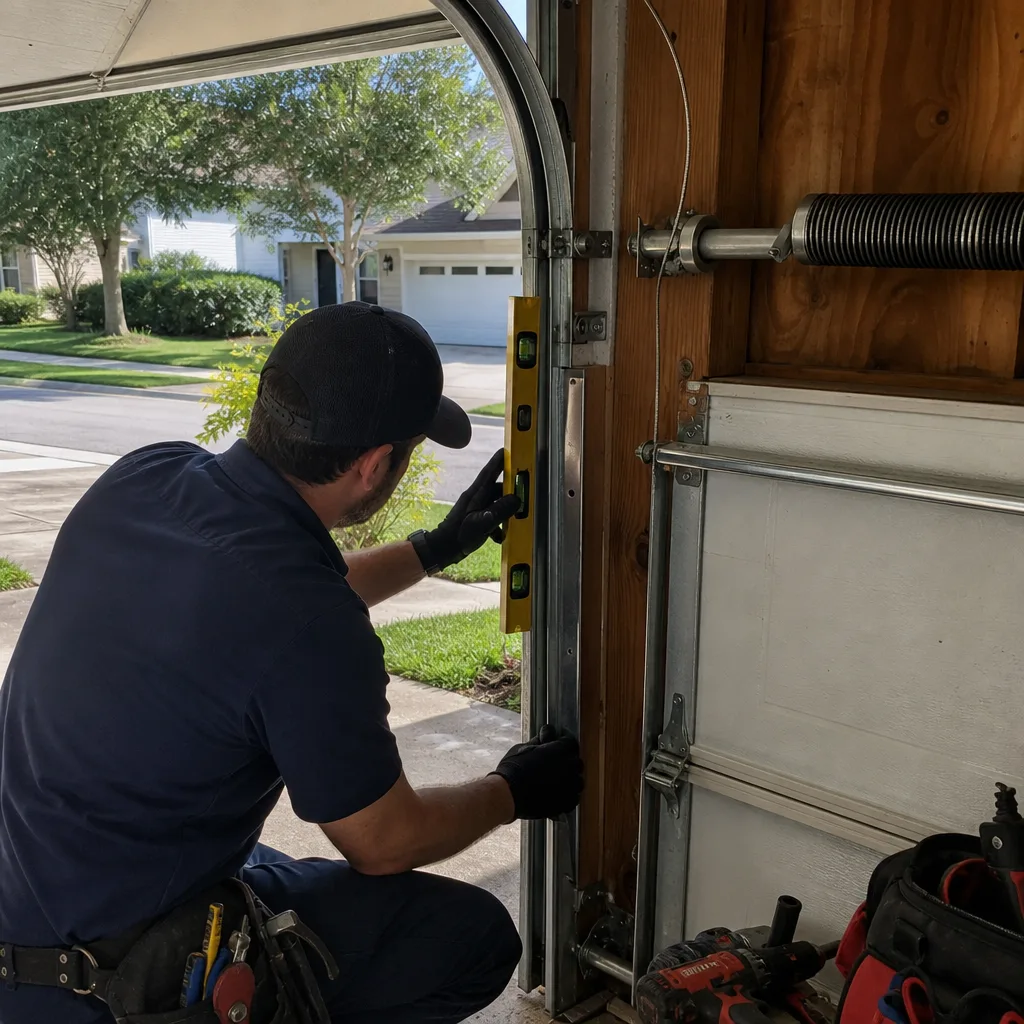
- Step 1: Verify the Florida Contractor License Through DBPR
- Step 2: Ask the Pre-Call Question That Separates Written-Price Contractors From Verbal-Estimate Contractors
- Step 3: Understand What a Legitimate Written Estimate Must Contain
- Step 4: Compare Quotes When One Is Itemized and Another Is a Flat “Repair Package”
- Step 5: Recognize Red Flags After the Technician Arrives
- Step 6: Know What Clermont’s Climate Does to Garage Doors
- Step 7: Get the Documentation You Deserve When the Job Is Done
BeforeAfterStep 1: Verify the Florida Contractor License Through DBPR
Garage door contractors in Florida are regulated through the Department of Business and Professional Regulation, or DBPR. The process is straightforward, and it’s the single most effective screen you can apply before anyone sets foot in your garage. Here’s what to do:
- Go to myfloridalicense.com, the DBPR’s public license portal.
- Search by company name or individual name. Garage door work in Florida falls under specific license types, not general contractor licensing. You’re looking for a license class that covers specialty structure work, which is what garage door installation and repair typically falls under in Florida.
- Check the license status. A legitimate contractor’s license will show as “Current, Active” with no disciplinary actions listed. If the status says anything else - suspended, revoked, or expired - that’s the end of the conversation.
- Confirm the insurance carrier. DBPR records list the liability insurance carrier on file. Call the insurer and verify the policy is current. We’ve seen Clermont homeowners skip this step and discover later that the “insured” contractor’s policy lapsed eight months prior.
- Match the name. The technician who arrives should work under the same entity you verified. If the truck says one company name and the license shows another, ask why before letting them touch the door.
What license class covers garage door work specifically? In Florida, garage door contractors often hold a specialty license under the broader construction industry categories. The key isn’t memorizing the exact code - it’s confirming that the DBPR record lists garage door work in the license scope. A pool contractor’s license doesn’t authorize garage door spring replacement, and a handyman’s county registration doesn’t either. The DBPR database will show you what the contractor is actually authorized to do. Clermont sits in Lake County, and some contractors operating in this area try to blur city-by-city registration requirements. The DBPR check cuts through that.
Step 2: Ask the Pre-Call Question That Separates Written-Price Contractors From Verbal-Estimate Contractors
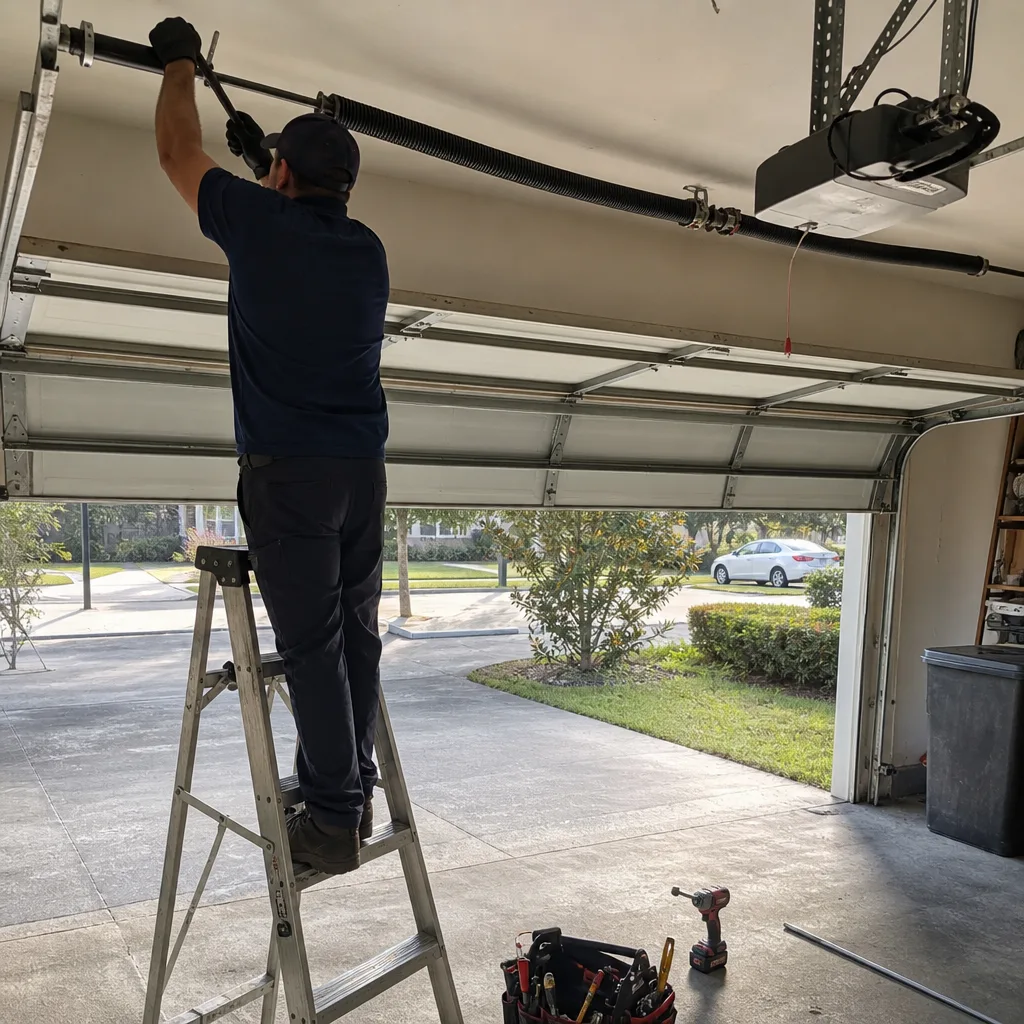
Here’s the question to ask before you schedule anything: “Will you photograph the failed component before quoting a replacement?”
It’s a simple question, and the answer tells you more than any review profile ever will. A contractor who operates on a written-price-first system will say yes without hesitating, because photographing the failed part before quoting a replacement is normal for them. A contractor who works on verbal estimates will deflect: “Well, I need to see it in person first” or “That depends on the situation.” That deflection is your signal to end the call.
This matters because the most profitable moment for an unscrupulous contractor is the one when the technician is already in your driveway with the door open and a broken spring lying on the floor. At that moment, urgency gets manufactured. You’re told the spring is “dangerous” - which, to be fair, a broken torsion spring can be, and it should be handled by a trained professional - but then you’re told the replacement needs to happen right now and the quote is verbal. That’s leverage, not service. The pre-call question eliminates that dynamic before it starts.
At Servo Garage Doors Clermont, this is Clause 4 of our Haven Standard: the technician photographs the failed component before quoting a replacement, every time. It’s been our rule since 2015, and it’s one of the reasons we can point to 18,000+ garage doors made right with a written price agreed before work started on every single one.
Step 3: Understand What a Legitimate Written Estimate Must Contain
The phrase “free estimate” gets thrown around a lot in Clermont. But a free verbal estimate is a different thing from a free written estimate, and only one of them protects you. Here’s what a legitimate written estimate needs to contain:
- The component name. “Drive belt” or “torsion spring” - not “that part over there.” Trade vocabulary used correctly is a sign the contractor knows the equipment and is willing to be specific about what failed.
- The part number, if applicable. For openers and major components, a part number makes the estimate verifiable against the manufacturer’s price. Genie and Chamberlain publish their part numbers. A contractor who writes them down is inviting comparison - which is exactly what you want.
- Labor hours. The estimate should separate parts from labor. Most residential door jobs take one to three hours. If the labor line looks inflated, ask what’s involved.
- The total. Flat, written, signed. Not a range. Not an estimate that “might change.” A flat written number with a written scope of work.
What does it mean when any of these are missing? If there’s no component name, you can’t compare the quote to anything. If there’s no part number, you can’t verify prices. If there are no labor hours, the contractor can pad the time. If there’s no flat total, you don’t have an estimate - you have an opening position in a negotiation you didn’t agree to.
One thing we hear from Clermont homeowners is that they agreed to one price over the phone, then got a different number when the technician arrived. That’s what Clause 1 of our Haven Standard is designed to prevent: a flat, written price and written scope are delivered before any work starts, on every job. Not just when it’s convenient. Not just when the customer asks. Always.
Step 4: Compare Quotes When One Is Itemized and Another Is a Flat “Repair Package”
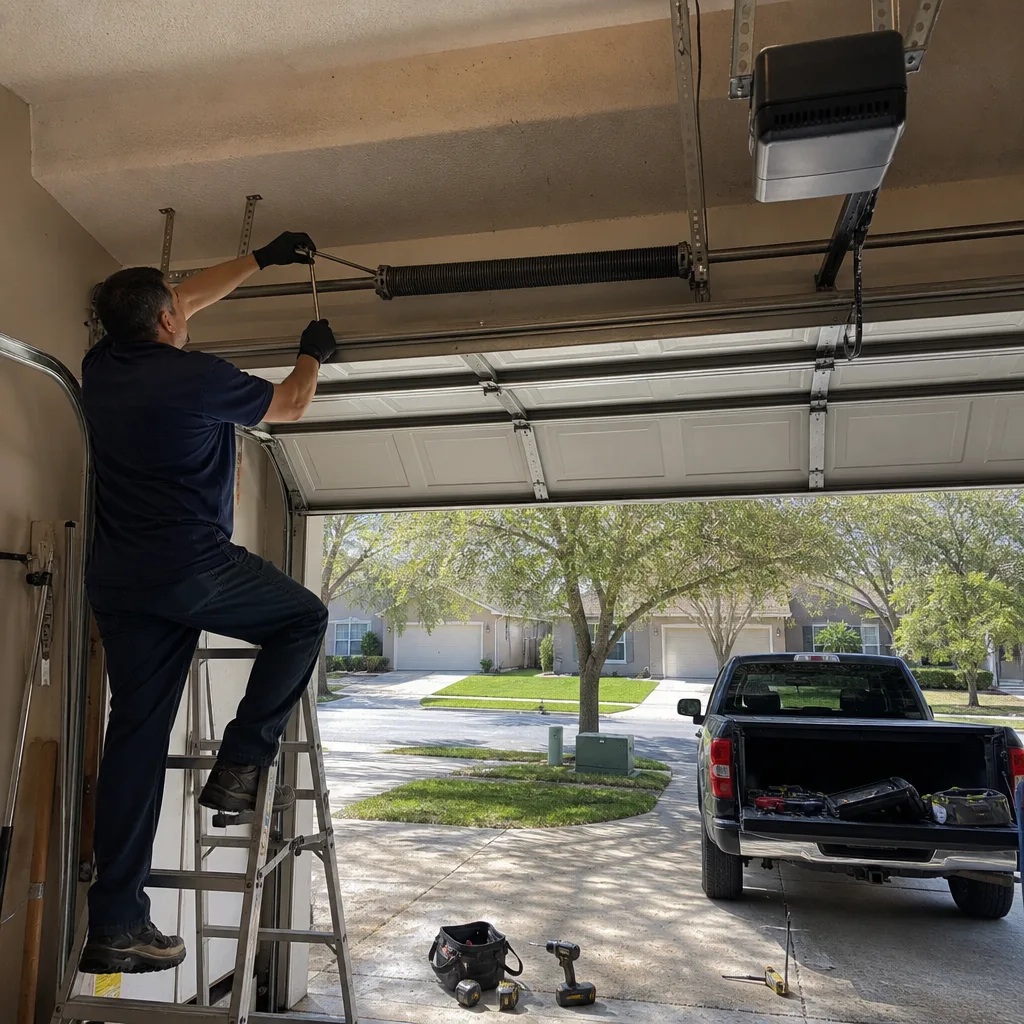
Say you’ve gotten two quotes. One is itemized: torsion spring replacement, 0.225-inch wire diameter, two labor hours, $310 total. The other says “Complete spring repair package - $425.” How do you compare them?
You compare them by forcing the flat quote into itemized terms. Call the second contractor and ask: “What spring wire diameter is quoted? How many labor hours? Which brand of spring? Will you put the component name and part specification on the written estimate?” If they can’t or won’t, the quotes aren’t comparable - and the flat package is essentially a trust exercise, which is precisely what a written-price-first system renders unnecessary.
The math that makes them comparable is simple: Total = Parts cost + Labor hours × Labor rate. If one contractor gives you all three numbers and the other gives you only one, you’re not comparing services. You’re comparing a documented commitment to an undocumented hope. In our experience, the itemized quote is the one that holds.
For context on what garage door repair costs in Clermont, see our page on Garage Door Repair in Clermont, which includes honest pricing ranges for common jobs in this market.
Step 5: Recognize Red Flags After the Technician Arrives
The license check is done. The pre-call question passed. Now the technician is in your garage. Here are the red flags that show up at this stage, and what each one means:
- Verbal upsells. “While I’m here, want me to check the opener?” translates to: the technician is working on commission structure that rewards additional sales. A written-price-first contractor quotes the scope you agreed to, and that’s what the work sticks to unless you specifically ask for more.
- Urgency language about “dangerous” components. Garage door springs genuinely can be dangerous, and a broken torsion spring should be handled by a trained professional. But a contractor who responds to a broken spring by raising their voice and saying “you can’t leave it like this” is manufacturing pressure. A broken spring can wait a day or two while you get a written estimate from another company - that’s exactly why Servo offers a Free Second Opinion on any written estimate from another company. Bring the paperwork; we’ll go through it.
- Replacement recommendations without showing the failed part. If the technician points at your door and says “the opener’s shot, you need a new one,” but won’t point at the specific component that failed - the logic board, the trolley carriage, the limit switch, whatever it is - you’re not being given a diagnosis. You’re being given a conclusion. Require the evidence.
- A quote that “might go up.” Any language suggesting the price could change once work starts is a red flag. Flat written quotes don’t come with qualifiers.
- No photo of the failed part. By this point, you’ve established that a photo is part of the deal. If the technician “forgot” to take one, that’s not forgetfulness. That’s a pattern.
These red flags are predictable, which is good news: predictability means you can screen for them before they happen. The pre-call question in Step 2 eliminates most of this list with one sentence. Clermont homeowners who do the license check and ask the photo question rarely see these red flags in person, because the contractors who survive that screening don’t operate that way.
Step 6: Know What Clermont’s Climate Does to Garage Doors
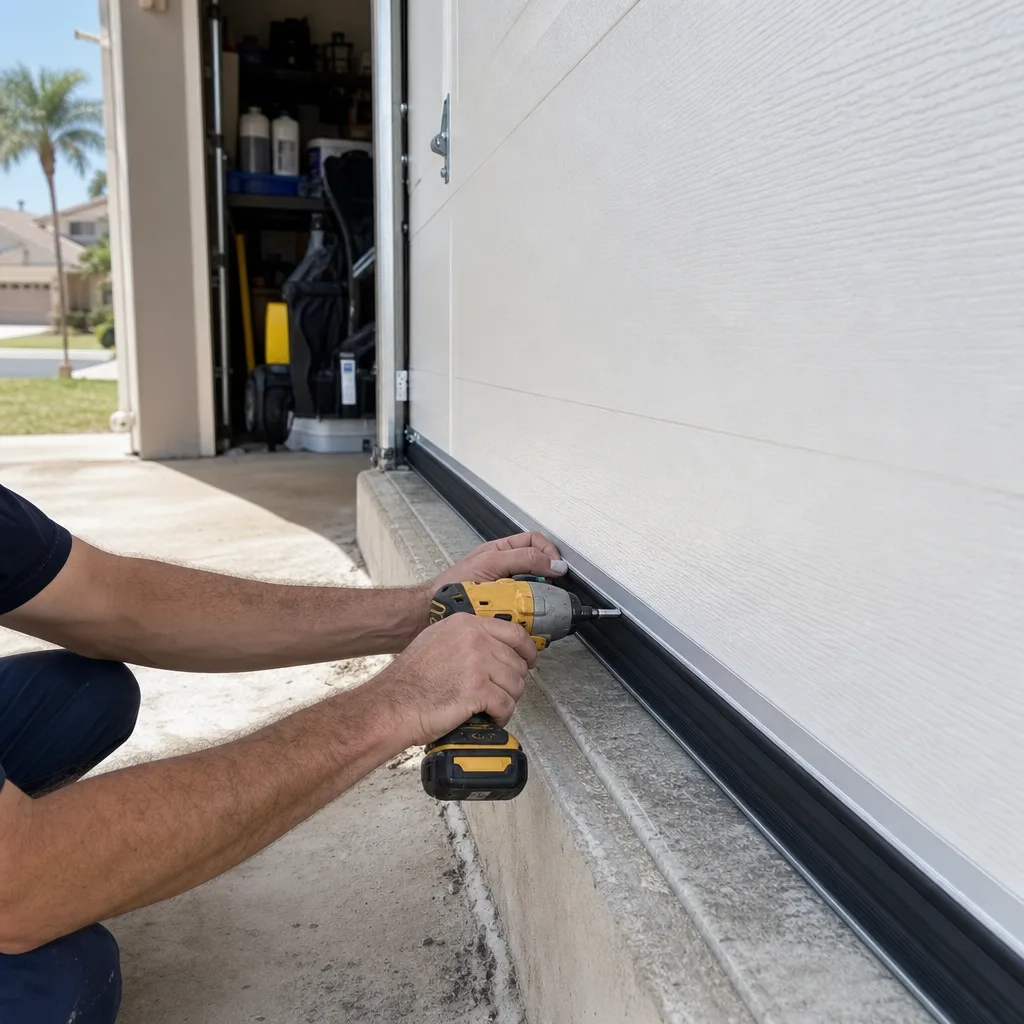
Clermont’s climate isn’t neutral on your garage door. We’re in Central Florida’s lake country, which means heat, humidity, and salt-adjacent air from the Gulf’s weather systems, paired with late-afternoon thunderstorms that roll in fast from May through September. Here’s what that does to door components:
- Torsion springs rust and snap. The high humidity accelerates oxidation on spring steel. We regularly see springs in Clermont fail at the 6-8 year mark, even when manufacturers rate them for 10,000 cycles. The rust point is usually at the coil, where moisture accumulates.
- Rollers and bearings bind. Humidity plus the fine dust from Clermont’s Lake Apopka area soil creates a gummy compound that clogs rollers. When the door starts sounding rough and shuddery, that’s usually why.
- Opener logic boards overheat. Garage air in Clermont can sit above 110°F in August. Opener motors and control boards, especially in LiftMaster and Genie units, run hot and fail more frequently here than in northern climates.
- Weather seals degrade. The rubber bottom seal cracks and shrinks under UV exposure. Clermont gets intense sun even in winter months, and the south- and west-facing doors take the brunt of it.
None of this means you should preemptively replace components on a schedule. It does mean that when something fails, the failure is likely related to heat or moisture, and a contractor who understands Clermont’s climate will diagnose accordingly. Ask what role environmental conditions played. A contractor who says “springs just fail” without noting the rust or heat stress isn’t paying attention to your door - just to the work order.
Step 7: Get the Documentation You Deserve When the Job Is Done
Hiring a garage door contractor in Clermont doesn’t end when the work is finished. The documentation you receive at the end is the difference between a completed job and a completed commitment. Here’s what to expect:
- A photo record of what was found. You saw the failed part before approving the replacement. You should also have the photographic evidence of it after the job. This isn’t just good practice - it’s the documentation that protects you if something fails again.
- A photo record of what was done. The installed component, the adjusted track, the recalibrated limit switch. Anything that was touched should be documented.
- A written warranty. Not a verbal “if anything goes wrong, call me.” A written warranty with dates, coverage terms, and what’s excluded. Read it before the technician leaves.
- The final invoice matching the original estimate. The total on the final invoice should match the flat written price you agreed to before work started. If there’s a discrepancy, you should be able to point to the written scope and ask what changed.
This documentation-first approach is the entire premise behind Servo Garage Doors Clermont. Since 2015, every job has closed with a documented photo record delivered to the customer. We don’t do this because it’s convenient. We do it because the founding rule of our company is that the customer sees the failed part before anyone quotes a replacement. Clause 4 of The Haven Standard is that rule, written down and applied to every job we touch.
Common Mistakes to Avoid
- Hiring without the DBPR check. In Clermont, a contractor’s truck can look legitimate for 30 minutes while an expired license looks legitimate for zero minutes in the DBPR database. Check first, hire second.
- Accepting a verbal estimate as a quote. A verbal number isn’t a commitment. A flat written price with a written scope is a commitment. The difference is the difference between evidence and interpretation.
- Rushing the decision because “the door is stuck open.” A stuck-open door feels urgent, and it is if it’s your only access - but it’s still worth 30 minutes to get a written estimate from a licensed contractor before committing. We answer calls 24/7 in Clermont, including emergency calls with a real person, not a recording. A phone call doesn’t require you to accept a verbal price.
- Not comparing the scope, not just the number. A $310 quote and a $425 quote aren’t comparable until you verify they cover the same work. Clermont homeowners who skip the scope comparison routinely overpay by 20-30% for “packages” that include work they don’t need.
- Ignoring the documentation requirement when the job is done. No photo record means no way to verify what was installed. No written warranty means no way to enforce coverage. Documentation isn’t paperwork. It’s your only proof.
- Not asking about the technician who will arrive. Verify the company, then verify the technician. At Servo Garage Doors Clermont, every technician is background-checked and uniformed. If a company can’t tell you who’s coming and what their qualifications are, that’s a data point you should weigh.
When to Call a Professional
Some garage door issues are genuinely dangerous - and as a company that replaces torsion springs every week in Clermont, we’re the first to say it: don’t touch them yourself. A torsion spring under tension stores enough energy to cause serious injury if mishandled. Same goes for cables, which are under tension even when the door is open, and for any work involving the opener’s electrical connections or the door’s weight-bearing components. If the door won’t open, the spring is broken, the door is off-track, or you hear grinding, call a trained professional. If you’re not sure whether your issue is routine or urgent, Servo Garage Doors Clermont home has more detail, and we offer free estimates in Clermont - call (689) 400-2825.
Frequently Asked Questions
Go to the DBPR website at myfloridalicense.com, search by the company or technician name, and confirm the license status is “Current, Active” with a scope that covers garage door work. Clermont is in Lake County, but garage door contractor licensing is a state-level matter, so the DBPR check applies no matter which city or county the contractor operates out of.
A legitimate written estimate includes the component name, the part number where applicable, labor hours, and a flat total. If any of those items are missing, the estimate isn’t protective - call (689) 400-2825 for a written flat quote from Servo Garage Doors Clermont with all four elements included.
Garage door repair in Clermont typically ranges from $180 to $340 for common spring replacements and $150 to $400 for opener repairs, depending on the component and brand. For a more detailed breakdown of what repairs cost in this market, see our page on Garage Door Repair in Clermont.
That depends on the contractor. At Servo Garage Doors Clermont, the flat written price you agree to before work starts is the price you pay when the job is done - that’s Clause 1 of our Haven Standard. Any contractor unwilling to commit to a flat, written, pre-work price is one you should think twice about hiring.
Yes. Our technicians carry common torsion spring sizes, rollers, hinges, safety sensors, and opener logic boards on every truck, which means most repairs are completed same-day in Clermont. For obscure or model-specific parts, we order directly from the manufacturer and schedule the follow-up with the written price locked before we leave.
The answer depends on the condition of the door and the components around it. If the panels are intact and the door is structurally sound, a component repair is usually the better financial decision. If the door has rusted hardware, sagging sections, or multiple simultaneous failures, replacement may make more sense. See our guide on Garage Door Installation in Clermont for more specific guidance.
For emergency calls, we answer live 24/7 at (689) 400-2825 with a named technician and an on-the-way text, not a callback window. For standard service, we usually schedule within 48 hours in the Clermont area.
Yes. Our technicians service LiftMaster, Chamberlain, Genie, and Clopay openers, along with Amarr, Wayne Dalton, Craftsman, and Raynor doors. See our page on Garage Door Opener Repair & Installation in Clermont for brand-specific service details.
The Bottom Line
Hiring a garage door contractor in Clermont comes down to three things: verify the license, require the written price before work starts, and demand documentation when the work is done. Do those three things and you’ve eliminated most of what goes wrong in this industry. Skip any one of them and you’re relying on a verbal promise that has no enforcement mechanism. The contractors worth hiring in Clermont don’t mind being held to a standard - they’ve already written it down. We built our company on that premise in 2015, and we’ve closed every job since with a documented photo record, a written price agreed in advance, and a warranty in writing. Call (689) 400-2825 for a free estimate, and we’ll show you exactly what we mean, or explore more guides & resources to prepare.
Written by Marcus Deller, Owner at Servo Garage Doors Clermont, serving Clermont since 2015.